When it comes to hotel renovation, creating a space that balances modern amenities with timeless elegance is essential. This is where strategic hotel interior design becomes crucial—it directly improves guest satisfaction and boosts repeat business. Whether you’re transforming an older property or refreshing a boutique hotel, thoughtful hotel interior design plays a critical role in shaping both atmosphere and functionality. Let’s explore ten key renovation ideas that will inspire you to reimagine your space through intentional design.
Table of Contents
Toggle1. Optimized Hotel Interior Design Layouts
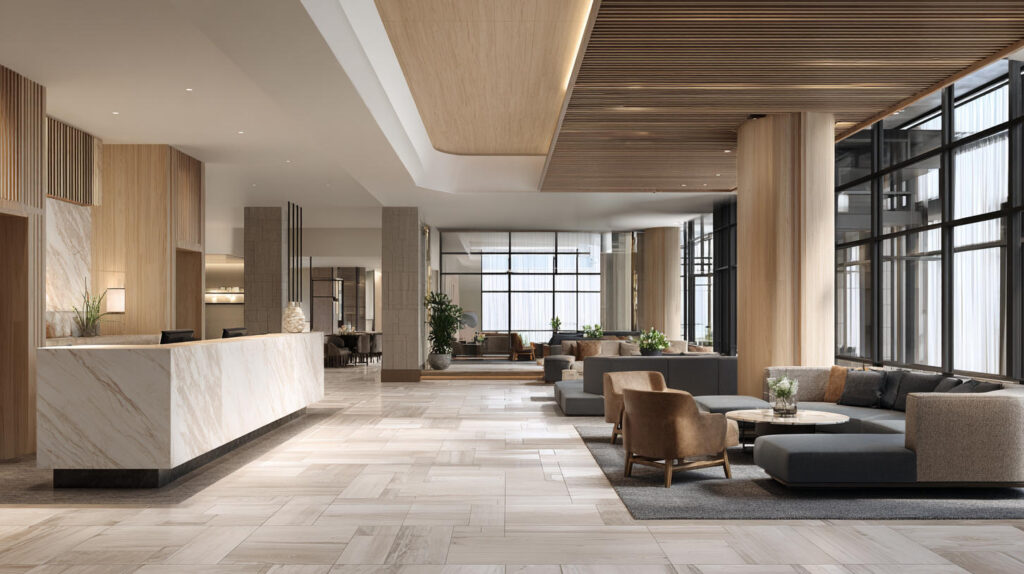
Reworking the layout of your hotel can make a massive impact. A well-planned layout improves guest flow, enhances comfort, and ensures a more intuitive experience. Consider reconfiguring common spaces, such as lobbies, lounges, or hallways. This could involve adding open seating areas or creating multiple small zones that cater to different activities, allowing guests to feel more relaxed and less crowded.
For rooms, think about maximizing space by rethinking furniture placement. Open up spaces to make rooms feel larger and more inviting, while adding multi-purpose furniture that works for a variety of needs. Creating more functional layouts can also lead to better energy efficiency, reducing the need for unnecessary lighting or heating in underused areas.
2. Lighting as a Design Feature

Lighting is more than just a necessity; it’s an opportunity to design. Modern hotels need versatile lighting systems that can change the mood of a space based on time of day or specific events. For instance, dimmable LED lighting in the lobby and public areas can set the ambiance for evening relaxation or lively social gatherings.
In guest rooms, invest in task lighting that’s both functional and stylish. Consider under-bed lighting or integrated desk lamps with adjustable brightness for reading or working. Additionally, accent lighting on art pieces or architectural features can enhance the overall hotel atmosphere and create a more luxurious feel.
3. Cabinet and Storage Hotel Interior Design

During renovations, take the opportunity to rethink storage solutions in both rooms and bathrooms. Outdated furniture can be replaced with sleek, custom-built cabinets that maximize storage space while adding to the overall aesthetic of the room. Opt for wall-mounted or under-bed storage to keep floors clear and maintain a sense of openness.
For bathrooms, upgrade vanities with more storage or modern designs. Consider floating vanities that provide more room under the sink, making it easier to maintain cleanliness and create a sense of more space.
4. Modernized Hotel Bathroom Design

The bathroom is a prime area for renovation. After all, it’s one of the first places guests notice, and an impressive bathroom can truly elevate the entire hotel experience. Upgrade old, tired features with sleek, modern designs like walk-in showers, freestanding tubs, and updated vanities.
Use high-end materials like marble or quartz for countertops and finishes. Consider adding smart technology features, such as touchless faucets, heated floors, and fog-resistant mirrors. Don’t forget to introduce thoughtful design details, like modern tile patterns and high-quality fixtures, to create a spa-like ambiance.
5. Customized Furniture in Hotel Interior Design

Custom furniture is a game-changer when it comes to hotel renovations. Not only does it provide functionality, but it also gives the hotel a unique flair. In guest rooms, replace old furniture with pieces that are both stylish and space-efficient.
For example, opt for beds with built-in storage, multi-functional desks, and comfortable lounge chairs. Custom furniture allows you to align each piece with the hotel’s overall aesthetic, whether it’s modern, classic, or eclectic, ensuring a cohesive and thoughtful design across the property.
6. Sustainability in Hotel Interior Design

Eco-conscious design is no longer a trend—it’s a necessity. Guests are increasingly looking for sustainable and environmentally friendly hotel options, and incorporating green practices into your renovation will make your property stand out.
Install energy-efficient lighting, HVAC systems, and low-flow plumbing to reduce both environmental impact and operational costs. Use recycled or locally sourced materials in furniture and flooring, and consider adding solar panels or green roofs to enhance the sustainability aspect. Small touches like compostable amenities or eco-friendly cleaning products can also help position your hotel as a responsible choice for the environmentally conscious traveler.
7. Integrating Local Culture into Hotel Design

One of the best ways to create a unique hotel experience is by integrating local culture into your design. Whether it’s through artwork, textiles, or architectural elements, reflecting the surrounding area’s cultural identity helps create a memorable stay for guests.
Consider showcasing local artists’ works in the lobby and guest rooms. Use region-specific fabrics and patterns in upholstery or bedding, or include traditional architectural details like arches, mosaics, or local stone finishes. This not only gives guests a taste of the destination but also supports the local community.
8. Smart Technology in Hotel Interior Design

In today’s digital age, integrating smart technology into your hotel renovation is essential for providing convenience and personalization to guests. From voice-controlled lighting and thermostats to mobile check-in and room service apps, technology can make a guest’s stay seamless and more enjoyable.
Think about installing keyless entry systems, automated blinds, or smart mirrors in bathrooms. These high-tech features provide added comfort, convenience, and efficiency, allowing guests to feel more in control of their environment.
9. Flexible Hotel Event Space Design

As business travel continues to thrive, hotels must provide flexible spaces that can cater to a variety of needs, from corporate meetings to social events. Renovating your event spaces to be more versatile and adaptable will make your hotel a prime location for conferences, seminars, or weddings.
Consider modular furniture, movable walls, and advanced technology setups that can transform a space from a business meeting room into a banquet hall with ease. Ensure that the event spaces are well-equipped with AV systems, fast Wi-Fi, and ample power outlets for a productive and connected environment.
10. Revitalizing the Hotel Lobby Interior

The lobby serves as the first impression of your hotel, so it’s important that it sets the right tone. A well-designed lobby can make guests feel welcome and excited about the rest of their stay.
For a modern, sleek look, consider minimalist furniture and open, airy spaces. Introduce comfortable seating areas where guests can relax or meet others. You might also want to incorporate a café, bar, or boutique to create a central gathering place for guests. The lobby should feel inviting, sophisticated, and aligned with the overall hotel theme.
Conclusion
A hotel renovation doesn’t just improve the aesthetics; it transforms the entire guest experience. By incorporating these design ideas, you can create a space that’s functional, welcoming, and tailored to today’s modern travelers. Whether you’re focusing on layout optimization, integrating smart technology, or incorporating local culture, these renovation ideas will help you elevate your hotel to new heights, attracting more guests and enhancing their stay.
FAQs
1. How can a hotel lobby design impact guest experience?
The lobby is the first impression of your hotel. A well-designed lobby with comfortable seating, stylish décor, and functional spaces creates a welcoming atmosphere that encourages guests to relax and socialize.
2. What are the benefits of integrating local culture in hotel design?
Incorporating local artwork, fabrics, and architectural elements helps create a unique, authentic experience for guests, reflecting the destination’s culture and giving your hotel a distinctive identity.
3. What are the best ways to modernize hotel furniture during a renovation?
Custom-designed furniture tailored to your hotel’s aesthetic can optimize both style and functionality. Consider investing in multi-purpose pieces, like beds with built-in storage or modular desks, to enhance guest comfort and maximize room space.
4. How can flexible event spaces improve hotel functionality?
Renovating event spaces to be adaptable and multifunctional helps cater to a wide range of events, from corporate meetings to weddings. Movable walls and modular furniture allow for quick space transformations, enhancing your hotel’s versatility and appeal to diverse guests.