A small bedroom often feels cramped the moment a bulky wardrobe takes up too much floor space and makes daily movement harder. The right small bedroom wardrobe closet design ideas can solve that problem by improving storage, saving walking space, and making the room feel more open. In a compact bedroom, the best wardrobe is not always the biggest one. It is the one that fits your layout, supports your routine, and keeps the space visually clean. In this guide, you will find smart wardrobe styles and practical tips to help you choose a design that looks good, works better, and makes your small bedroom feel more comfortable.
Table of Contents
ToggleWhat Makes a Wardrobe Work in a Small Bedroom?
A good wardrobe for a small bedroom does four things well. It fits the room, supports movement, stores things efficiently, and keeps the space visually clean.
Fit matters first. The International Residential Code sets a minimum size of 70 square feet for a habitable room, with a minimum horizontal dimension of 7 feet. That is a useful reminder: small bedrooms do not have much extra space to give away. A wardrobe that is too deep or too dominant can throw off the whole room.
Movement matters next. If opening the wardrobe makes the room feel blocked, the design is working against you. Storage should help the room function, not create daily friction.
Then comes internal planning. NAR notes that storage should reflect a homeowner’s needs and that each room benefits from storage that matches how it is used. That idea is especially important in a bedroom, where a better mix of shelves, hanging space, and drawers often solves more problems than a wider wardrobe does.
Finally, the wardrobe should reduce visual weight. Clean lines, lighter finishes, and better proportions can make a small bedroom feel far less crowded. Think of it like packing a suitcase. The goal is not just to fit everything in. The goal is to keep it organized enough that you can still find what you need.
10 Best Small Bedroom Wardrobe Closet Design Ideas
1. Floor-to-Ceiling Wardrobes for Maximum Storage
What it is
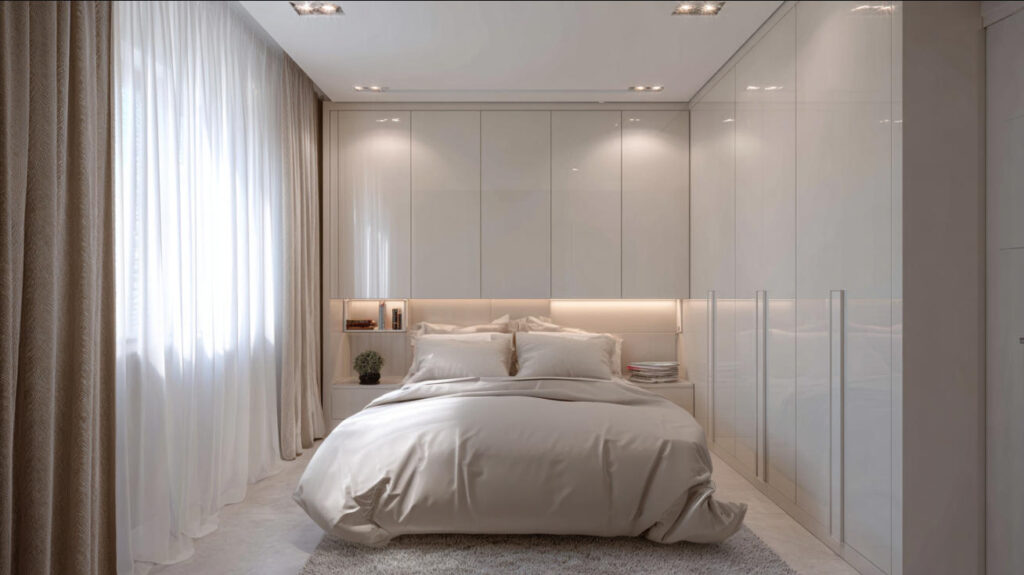
A floor-to-ceiling wardrobe for a small bedroom uses the full wall height instead of stopping short and wasting upper space. It is one of the most practical small bedroom wardrobe ideas for extra storage.
Why it works
This design gives you more storage without taking more floor area. It also creates a cleaner wall line, which helps the room feel more organized.
2. Sliding Door Wardrobes to Save Walking Space

What it is
A sliding door wardrobe for a small bedroom opens sideways instead of swinging outward. It is one of the most popular wardrobe solutions for compact bedrooms and apartments.
Why it works
It protects clearance between the bed and the wardrobe. That is a big win in tight layouts where every inch matters.
3. Built-In Wardrobes for a Clean and Custom Look
What it is
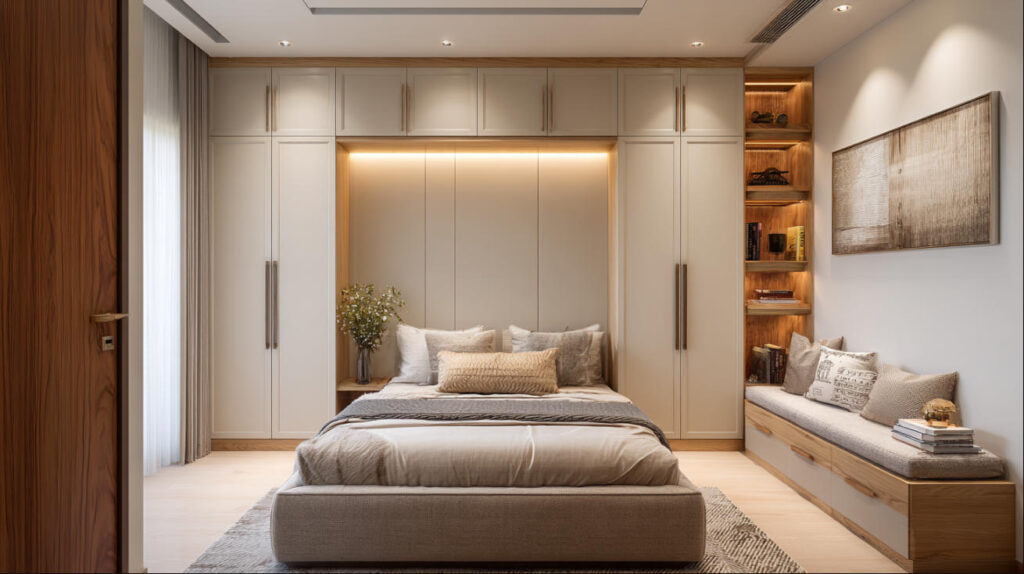
A built-in wardrobe for a small bedroom is designed to fit the exact wall, height, and shape of the room. This type of custom wardrobe creates a seamless fitted look.
Why it works
It removes awkward gaps and uses space more precisely. That is especially useful in small rooms with beams, corners, or uneven walls.
4. Mirror Wardrobe Doors to Make the Room Feel Bigger

What it is
This design adds mirror panels to the doors and works especially well in a small bedroom wardrobe closet layout.
Why it works
Mirrors reflect light and help a compact room feel more open. They also replace the need for a separate full-length mirror.
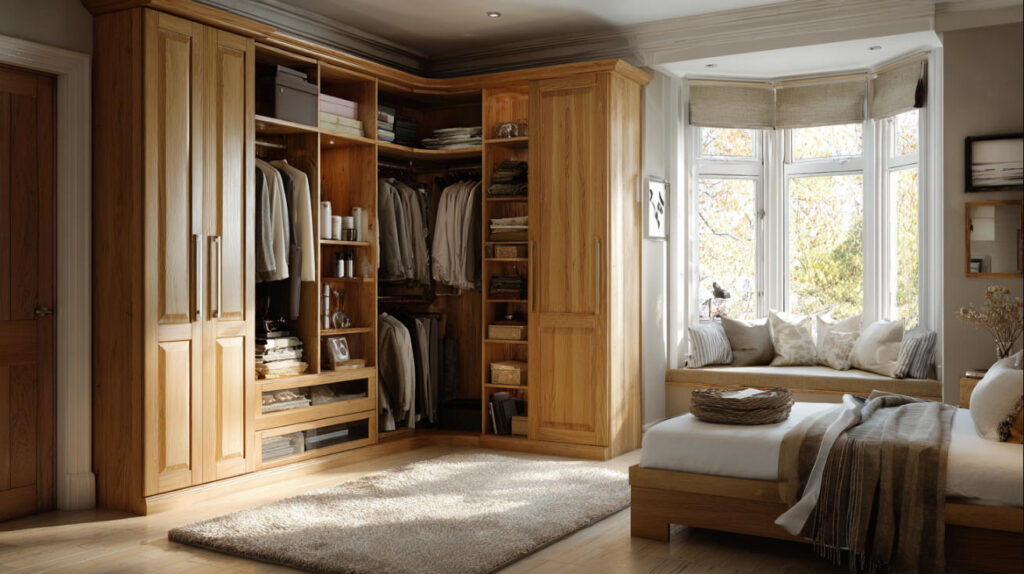
5. Corner Wardrobes for Awkward Small Bedroom Layouts
What it is
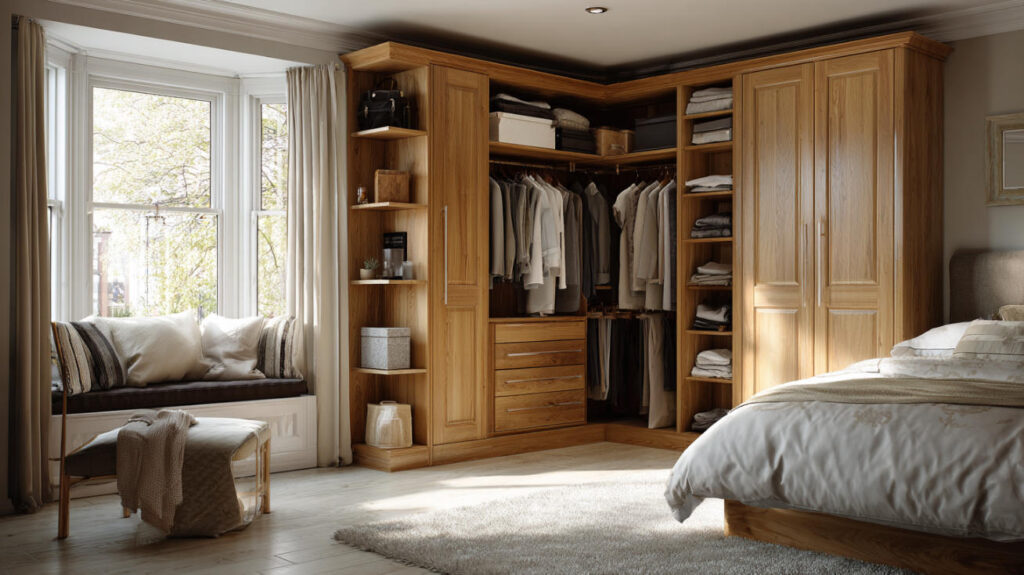
A corner wardrobe for a small bedroom turns an underused corner into functional storage.
Why it works
It helps you use space that often gets ignored. That can free up the main wall for the bed or other furniture.
6. Open Wardrobe Designs for a Light and Airy Feel
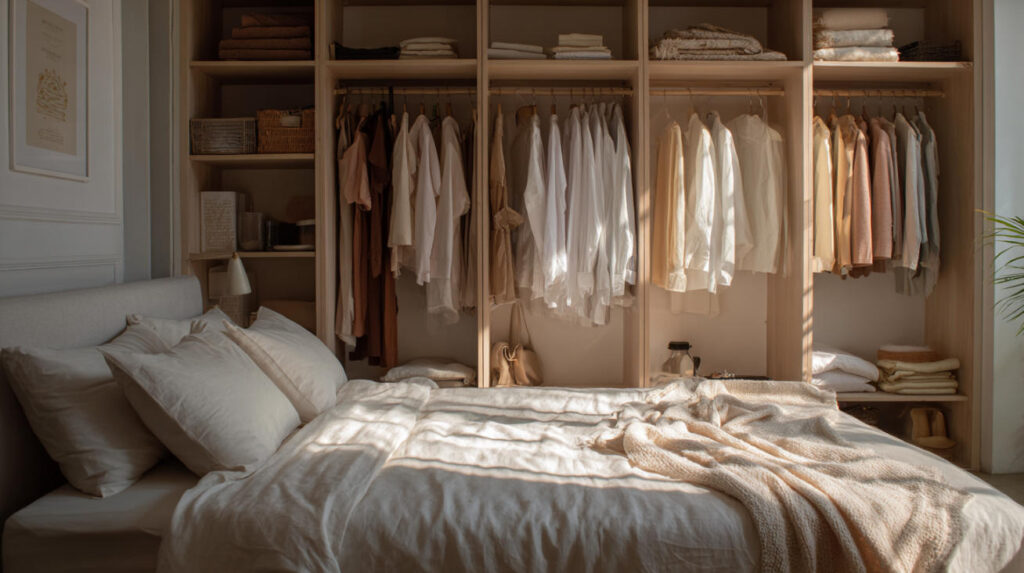
What it is
An open wardrobe removes full doors and keeps the storage visible. This can work well in small bedroom closet ideas for small spaces.
Why it works
Without heavy front panels, the room can feel less dense. It also gives quick access to everyday clothes.
7. Wardrobes with Built-In Drawers and Shelves

What it is
This wardrobe with drawers and shelves includes a better internal mix of drawers, shelves, and hanging sections.
Why it works
It improves daily use. Small items stay contained, folded items stay organized, and you spend less time digging through piles.
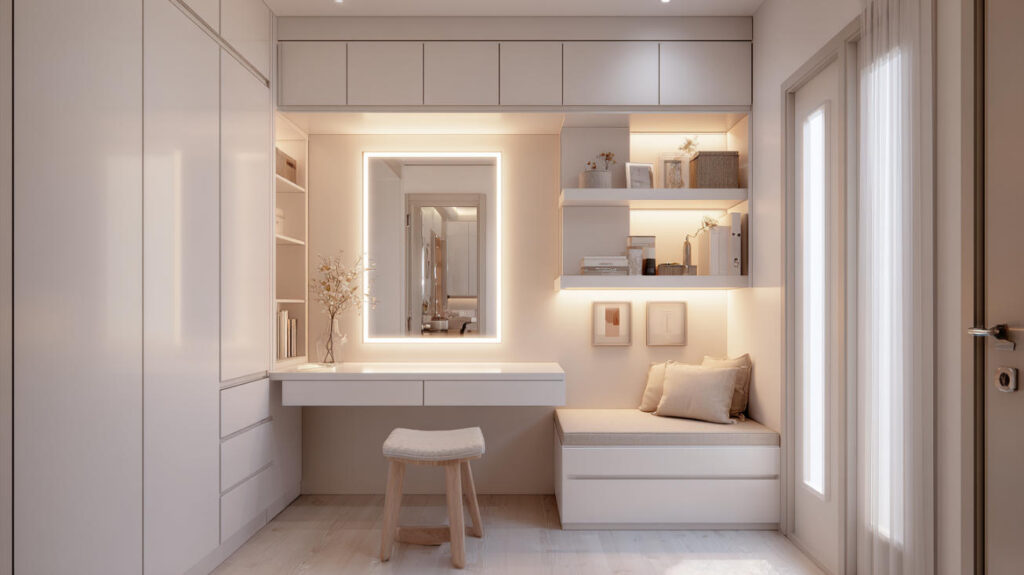
8. Wardrobe with a Study Desk or Vanity Combo

What it is
This design combines wardrobe storage for a small bedroom with a desk or vanity in one continuous unit.
Why it works
It lets one wall do two jobs. That saves floor space and makes the room work harder.
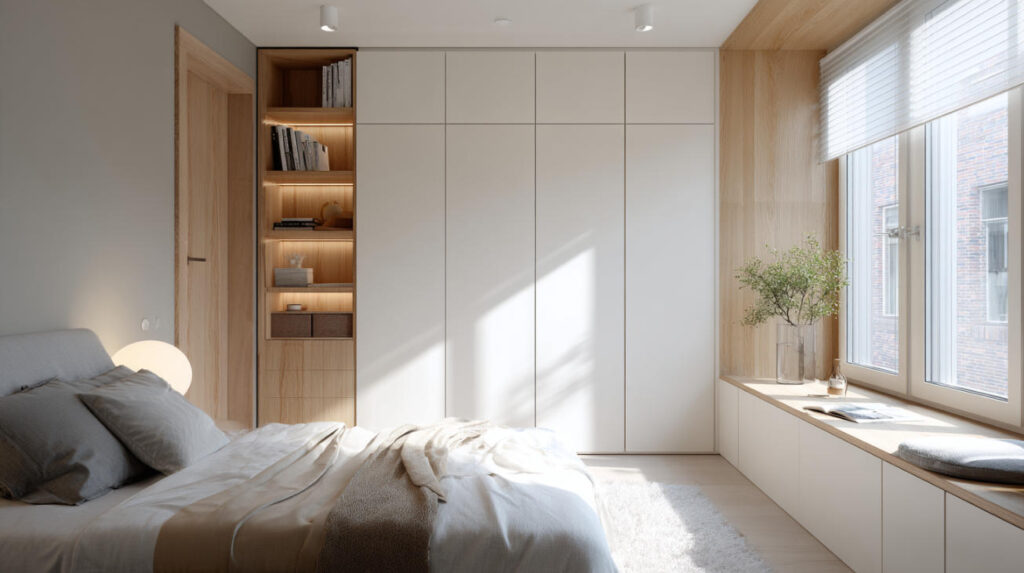
9. Minimalist White or Light Wood Wardrobes

What it is
This modern wardrobe for a small bedroom uses light finishes and simple fronts to reduce visual heaviness.
Why it works
Lighter colors reflect more light and usually make a large wardrobe feel less imposing in a small room.
10. Custom Wardrobes Designed Around Your Daily Routine

What it is
A custom wardrobe for a small bedroom is planned around your room size, clothing mix, and daily habits.
Why it works
It reduces wasted space. You get the shelves, drawers, and hanging sections you really need, not just a standard layout.
How to Choose the Right Small Bedroom Wardrobe Closet Design?
Choosing the right wardrobe is not about chasing trends. It is about choosing the design that makes your room easier to live in.
Step 1: Measure Your Room
Measure the wall width, ceiling height, and the distance between the wardrobe area and the bed. In a small room, a few inches can change how comfortable the layout feels.
Step 2: Define Your Storage Needs
Think about what you really store. Do you need more hanging space, more drawers, or more shelves? A wardrobe should follow your life, not the other way around.
Step 3: Choose the Right Door Type
If the room is tight, sliding doors are often the safer choice. If you have enough clearance, hinged doors can still work well.
Step 4: Decide Between Built-In and Freestanding
A built-in wardrobe usually uses space better. A freestanding wardrobe is easier to move and may suit renters or tighter budgets.
Step 5: Plan the Internal Layout
This step matters more than many people expect. NAR’s storage guidance emphasizes matching storage to how the room is actually used. In a bedroom, that means giving enough room to the items you use most often.
Step 6: Think About Visual Impact
A wardrobe can make the room feel lighter or heavier. Light finishes, simple lines, and mirror panels usually help a small bedroom feel more open.
Step 7: Consider Multi-Function Features
If the room is very compact, a wardrobe with a desk, vanity, or extra drawers can save space and improve daily use.
Step 8: Balance Budget and Long-Term Value
A ready-made wardrobe may cost less at first. A custom one may fit better and work harder over time. The better choice depends on how long you plan to stay and how exact your needs are.
Common Mistakes to Avoid in Small Bedroom Wardrobe Closet Design
A lot of small bedrooms feel cramped not because the room is too small, but because the wardrobe makes poor use of the space.
Here are the biggest mistakes to avoid:
- Choosing a wardrobe that is too deep for the room
- Using hinged doors where there is not enough clearance
- Focusing only on the outside and ignoring the inside layout
- Picking dark, bulky finishes that dominate the room
- Leaving unused space above the wardrobe
- Adding too many open shelves, which can make the room feel messy
- Forgetting nearby lighting, mirror placement, or outlet access
These details matter because good storage is not just about volume. It is about function. NAR’s storage coverage makes that clear, and NAHB’s buyer trend material shows that organized, practical storage remains a priority for homeowners and buyers.
Which Small Bedroom Wardrobe Closet Style Is Best for Different Needs?
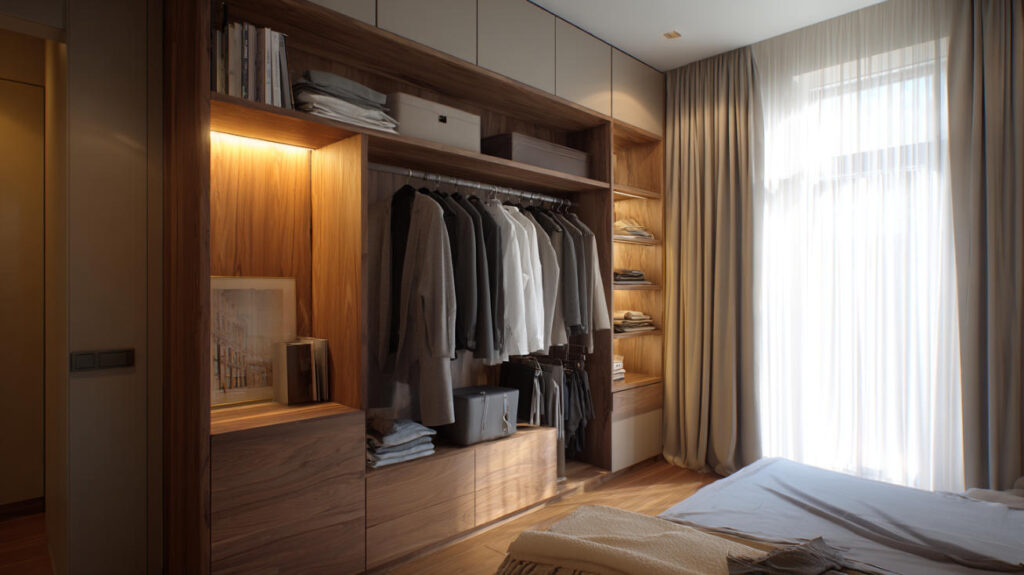
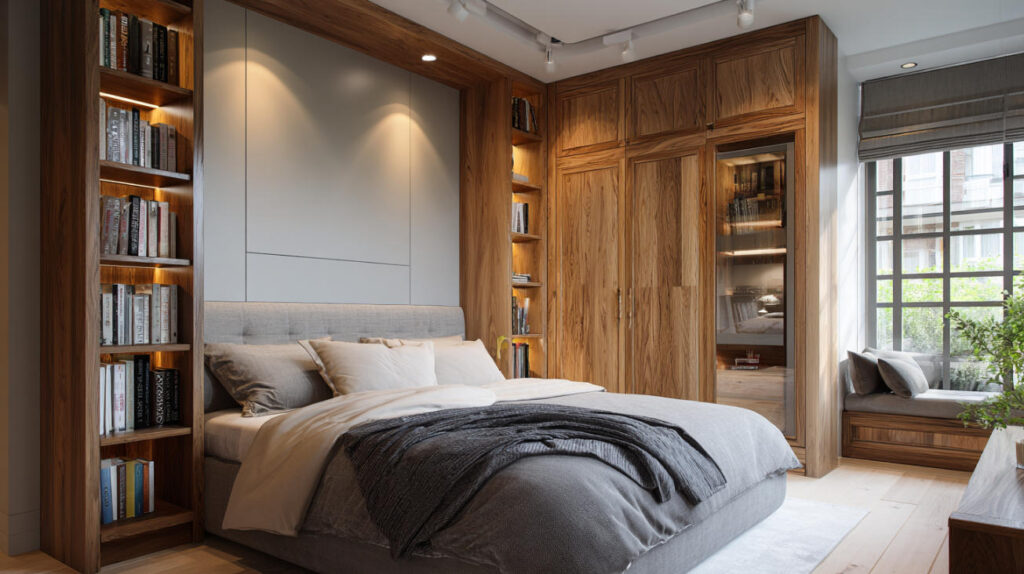
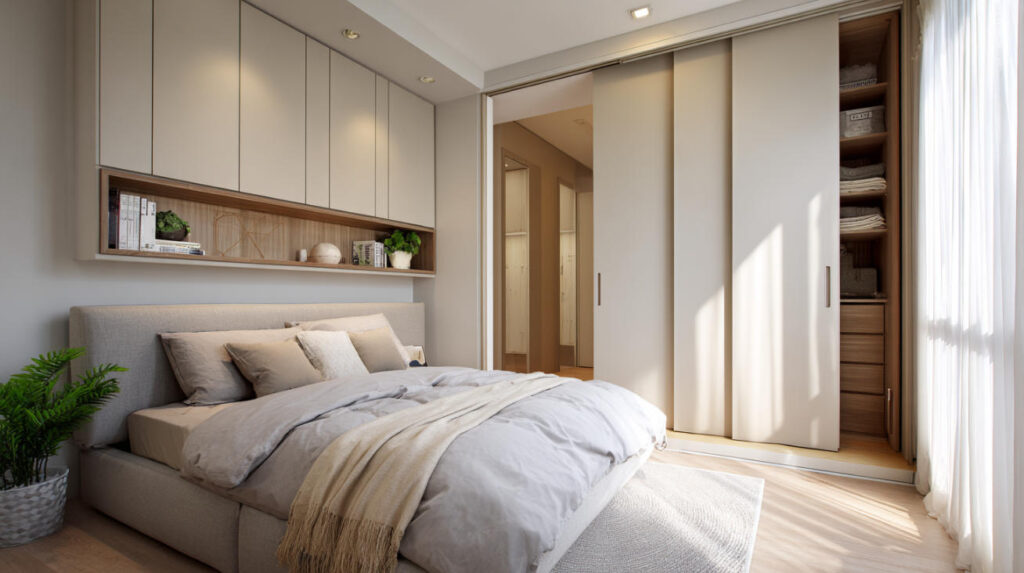
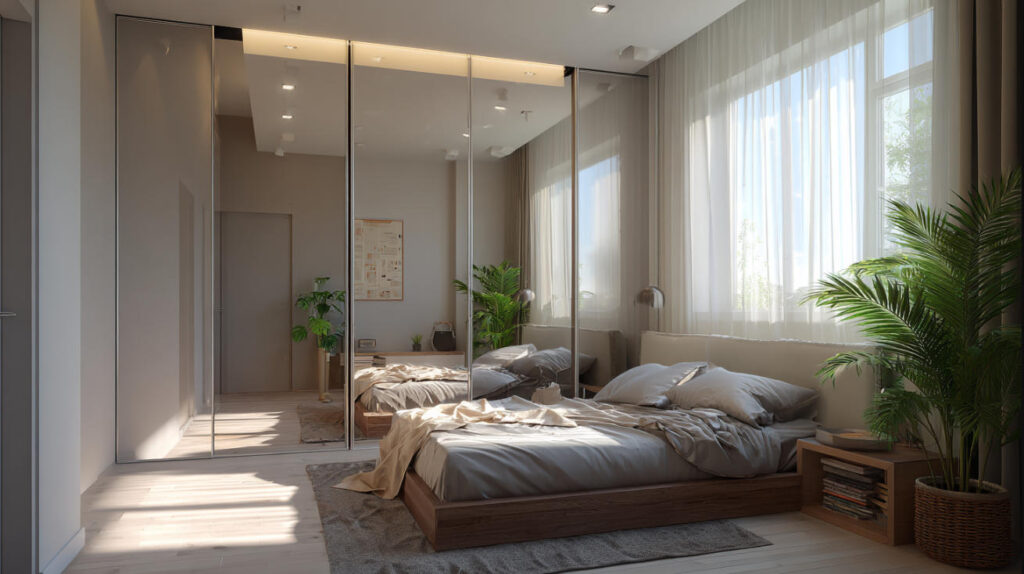
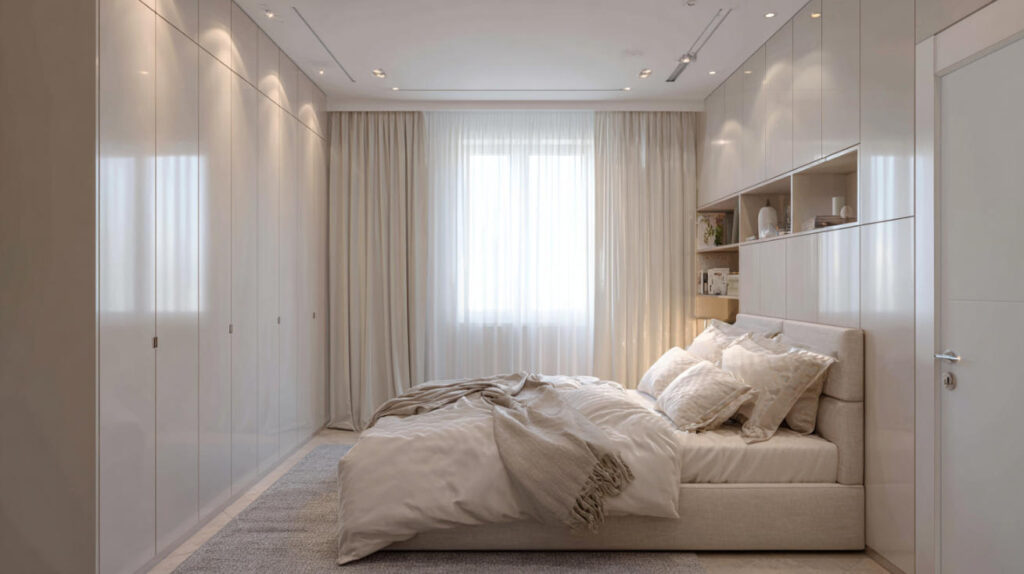
- If your room is very tight, a sliding door wardrobe is usually the best place to start.
- If you need as much storage as possible, a floor-to-ceiling wardrobe often makes the most sense.
- If your room has an awkward wall or corner, a built-in wardrobe or corner wardrobe will usually perform better than a standard piece.
- If you want the room to feel bigger, a mirror wardrobe or a light-colored minimalist wardrobe can help.
- If you need the room to do more than one job, a wardrobe with a desk or vanity combo is a smart solution.
- If your storage habits are very specific, a custom wardrobe will often give you the best long-term result.
There is no single perfect answer. The best wardrobe for a small bedroom is the one that fits your room and your routine at the same time.
Conclusion
A small bedroom does not need a bigger wardrobe. It needs a smarter one. The best small bedroom wardrobe design ideas help you save floor space, improve storage, and make the room feel more open and comfortable. When you choose the right layout, door type, color, and internal structure, even a compact bedroom can feel organized, stylish, and easy to live in.
If you are planning a new wardrobe for a small bedroom, PA HOME can help you create a solution that fits your space and your daily routine. From custom wardrobe layouts to practical storage planning, our team can help you find the right design for both function and style. Contact us to explore wardrobe ideas that make small bedrooms work better.
FAQs
1. What type of wardrobe is best for a small bedroom?
A sliding wardrobe for a small bedroom or a floor-to-ceiling wardrobe is often the best choice. These small bedroom wardrobe ideas save floor space, improve storage, and help compact bedrooms feel more comfortable.
2. Are built-in wardrobes worth it in a small bedroom?
Yes. A built-in wardrobe for a small bedroom use wall space more efficiently and reduce wasted gaps. They are a smart option if your room has an awkward layout or limited floor area.
3. What wardrobe color makes a small bedroom look bigger?
White, off-white, beige, and light wood usually work best for a small bedroom wardrobe. These finishes reflect more light and make the wardrobe feel less heavy in the room.
4. How do I choose the right wardrobe for a small bedroom?
Start by measuring the room, then think about your storage needs, door type, and layout. The best wardrobe for a small bedroom should fit your space, match your routine, and keep enough walking room around the bed.