Choosing durable, moisture resistant kitchen cabinets can be challenging because every kitchen faces different conditions. Cabinets near sinks, cooking areas, and humid spaces require different levels of protection depending on moisture exposure and daily use.
Table of Contents
ToggleThe right choice is not only about choosing the best material for kitchen cabinets. It also depends on surface finishes, edge protection, hardware quality, and overall construction. Different kitchen cabinet materials can perform differently depending on where they are used.
This guide compares plywood, moisture-resistant MDF, PVC, and other cabinet materials to help you understand which options work best for different kitchen environments.
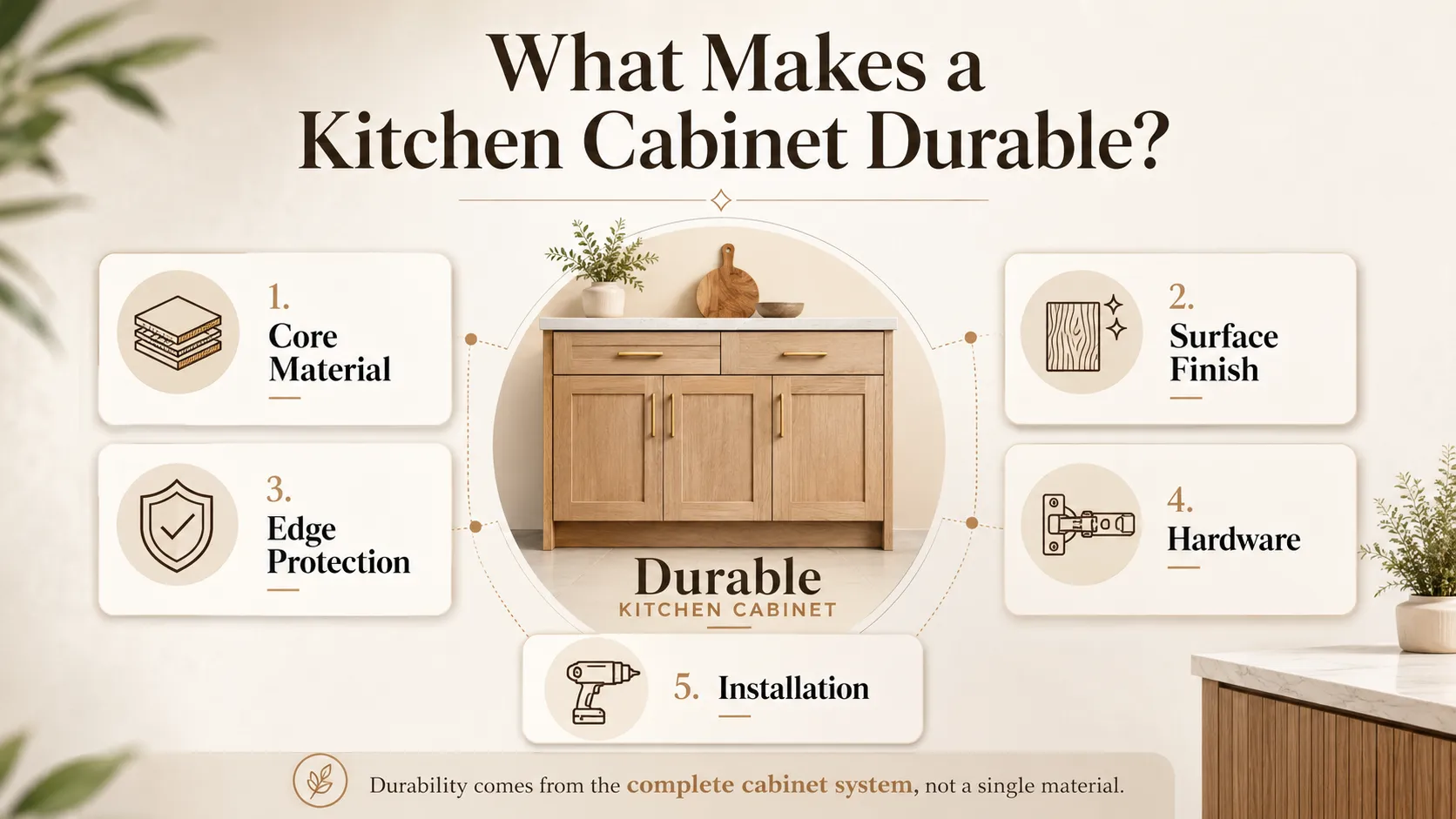
What Actually Makes Kitchen Cabinets Durable?
When choosing kitchen cabinets, many homeowners focus on the material first. However, the material alone does not determine long-term performance.
A durable kitchen cabinet depends on how the entire construction works together. Core material, surface finish, edge protection, hardware, and installation all influence how cabinets handle daily use, humidity, and moisture exposure.
Most moisture problems appear around areas such as exposed edges, sink cutouts, and joints. This is why choosing moisture-resistant kitchen cabinets requires looking at the complete construction, not just the material name.
For engineered wood products, moisture performance also depends on panel structure and manufacturing methods. MDF and particleboard products can experience dimensional changes when exposed to humidity variations, as explained in the Composite Panel Association’s technical bulletin on dimensional stability. Factors such as thickness swelling and dimensional stability help evaluate how these panels perform over time.
Moisture-Resistant vs Water-Resistant vs Waterproof Kitchen Cabinets
The terms moisture-resistant, water-resistant, and waterproof are often used when comparing kitchen cabinets. However, they describe different levels of moisture protection.
Moisture-Resistant Kitchen Cabinets
Designed to handle humidity and limited moisture exposure.
General kitchens, storage areas, and humid environments.
Requires proper edge protection and construction details for long-term performance.
Water-Resistant Kitchen Cabinets
Designed to handle short-term contact with water.
Sink areas and spaces with occasional water splashes.
Performance depends on surfaces, joints, cutouts, and exposed edges.
Waterproof Kitchen Cabinets
Designed for higher levels of water exposure.
Specific wet environments requiring stronger water protection.
The waterproof claim should apply to the complete cabinet construction.
These terms do not mean a cabinet can resist all types of water exposure. A moisture-resistant kitchen cabinet may perform well in humid conditions, but continuous leaks can still damage exposed edges or internal areas.
For waterproof kitchen cabinets, always check whether the protection applies to the complete cabinet construction or only the visible surface.
What Is the Best Material for Durable Kitchen Cabinets?
There is no single best material for kitchen cabinets because each material offers different advantages. The right choice depends on where the cabinet is used, how much moisture it may face, and the level of durability you expect.
A sink cabinet, for example, faces different challenges from a tall pantry cabinet or a painted kitchen island. Factors such as moisture exposure, structural needs, appearance, budget, and maintenance requirements all influence the best option.
Kitchen Cabinet Material Selection Guide
The right kitchen cabinet material depends on where it will be used. You should consider moisture exposure, durability requirements, and the overall look you want to achieve before making a choice.

High Moisture Areas
Suitable for kitchens where cabinets may face higher moisture exposure.

Balanced Durability & Appearance
Suitable when you need a balance of durability, appearance, and everyday performance.

General Cabinet Applications
Suitable for standard kitchen cabinetry with proper construction details.
After identifying the materials that fit your kitchen needs, you can compare their strengths and limitations to find the right balance of durability, appearance, and maintenance.
Kitchen Cabinet Materials Comparison
| Material | Moisture Performance | Best Used For | Key Consideration |
|---|---|---|---|
| Plywood Kitchen Cabinets | Good moisture performance when properly protected. | Cabinet boxes and premium cabinetry. | Exposed edges still require sealing. |
| Moisture-Resistant MDF Cabinets | Performs well in humid kitchen conditions. | Painted doors and decorative panels. | Not designed for prolonged water exposure. |
| PVC Kitchen Cabinets | Very high moisture tolerance in suitable systems. | Moisture-prone areas. | Construction quality affects long-term performance. |
| HPL Cabinets | Strong surface protection for daily use. | Everyday kitchen cabinets. | Surface protection depends on the core material. |
| HMR Particleboard / MFC Cabinets | Improved moisture resistance compared with standard particleboard. | General cabinetry applications. | Edge sealing remains important. |
| Stainless Steel Cabinets | Excellent water tolerance. | Heavy-use or wet environments. | Style and cost may not suit every kitchen. |
The best kitchen cabinet material is not always the most expensive one. The right choice depends on where the cabinets are installed, how much moisture they will face, and how the kitchen is used every day.
Plywood kitchen cabinets are often chosen for their strength and structural stability. Moisture-resistant MDF cabinets are popular for painted finishes and modern designs. For areas with higher moisture exposure, PVC or stainless steel cabinets may offer better protection.
Instead of looking for one material that works everywhere, homeowners should choose the material that fits each kitchen area and its long-term needs.
1. Plywood Kitchen Cabinets
Plywood kitchen cabinets are often selected for their strength and structural stability. Many cabinet manufacturers use plywood for cabinet boxes because it provides reliable screw holding and helps maintain cabinet strength over years of daily use.

Plywood is a good option for homeowners who want durable kitchen cabinets with a premium feel. Its main advantage is the solid internal structure behind the finished kitchen design.
However, plywood is not completely waterproof. Moisture can still cause problems when it reaches exposed edges, sink cutouts, or poorly sealed joints. A plywood cabinet performs best when the panel quality, edge protection, and overall cabinet construction are properly considered.
2. Moisture-Resistant MDF Cabinets
Moisture-resistant MDF cabinets are commonly chosen when a smooth and consistent finish is a priority. The dense surface of MDF works well for painted kitchen doors, allowing homeowners to achieve clean lines and modern cabinet designs.

Compared with standard MDF, moisture-resistant MDF offers better performance in humid kitchen environments. It is often used where appearance and finish quality matter as much as everyday durability.
However, improved moisture resistance does not make MDF waterproof. Exposed edges and areas near water sources still need proper protection to prevent moisture from reaching the inner panel.
3. PVC Kitchen Cabinets
PVC kitchen cabinets are considered by many homeowners who need better protection against moisture exposure. Unlike many wood-based materials, PVC has low water absorption and handles contact with moisture differently.

PVC cabinets are often seen in kitchens where humidity, splashes, or frequent cleaning are concerns. However, not every PVC cabinet offers the same level of performance.
The internal structure, hardware support, and installation quality still affect long-term durability. A moisture-resistant material works best when the complete cabinet system is designed properly.
4. HPL and Laminate Cabinets
Laminate cabinets are popular in modern kitchens because they provide a durable surface that is easy to clean and maintain. HPL (high-pressure laminate) is often used as the outer layer to improve resistance against scratches, stains, and daily wear.

However, the laminate surface is only one part of the cabinet. The core material underneath, edge protection, and overall construction still affect long-term performance.
For homeowners comparing HPL kitchen cabinets, it is important to look beyond the finish and understand what material supports the cabinet structure.
5. HMR Particleboard / MFC Cabinets
For homeowners comparing kitchen cabinet materials, HMR particleboard / MFC cabinets provide a balance of cost, appearance, and everyday performance.

Compared with standard particleboard, HMR panels offer better resistance to humidity. However, exposed edges, damaged edge banding, and poorly sealed joints still need protection from moisture.
6. Stainless Steel Cabinets
When moisture exposure and heavy use are major concerns, stainless steel cabinets offer excellent durability and water resistance.

They are commonly found in commercial kitchens and high-moisture environments because they are easy to clean and maintain. The main considerations are cost and the more industrial appearance.
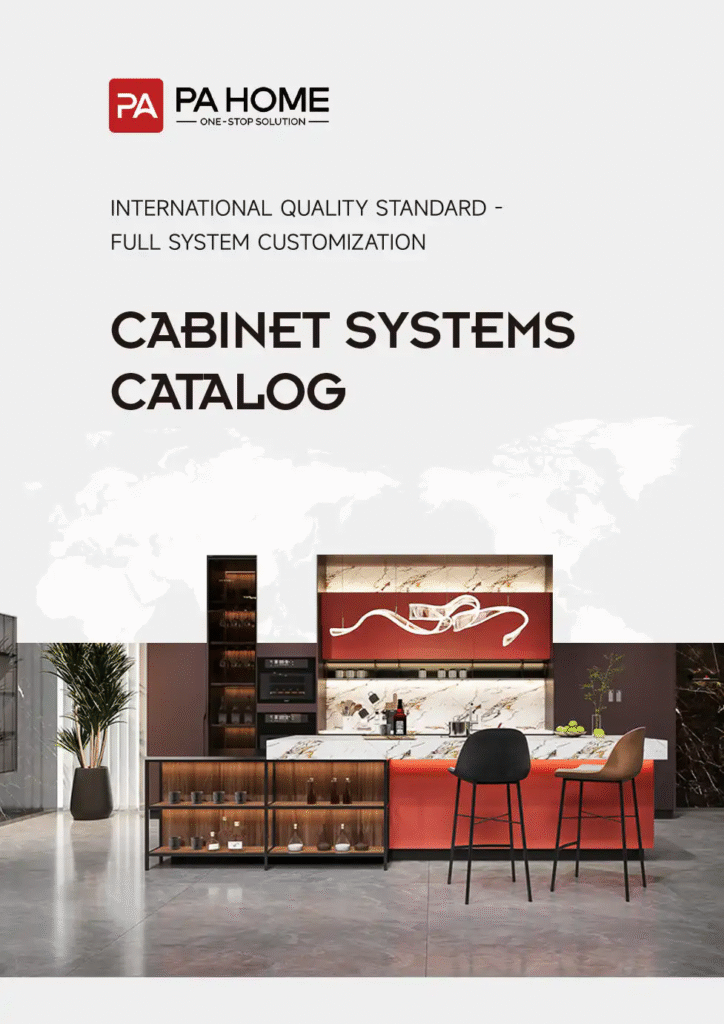
Looking for more kitchen cabinet ideas? Explore our latest designs, finishes, and customization options in our kitchen cabinet catalog.
Which Cabinet Material Works Best in Wet or Humid Areas?
A humid kitchen does not mean every cabinet needs the same level of moisture protection. When choosing kitchen cabinets for humid areas, the right material and construction should match the level of moisture exposure each cabinet may face.
Moisture-resistant kitchen cabinets are designed to better handle humidity, steam, and occasional water exposure, but different cabinet locations still require different solutions. A sink cabinet faces very different conditions from a pantry or wall cabinet, where leaks, splashes, and daily use create different performance requirements.
| Moisture Condition | Common Kitchen Areas | What Matters Most |
|---|---|---|
| Humid Air | Pantry, tall cabinets, storage areas | Stable materials and good ventilation |
| Cooking Steam | Cabinets near cooking areas | Durable finishes and protected edges |
| Daily Splashes | Sink-side cabinets | Sealed edges, joints, and cutouts |
| Water Leaks | Sink base cabinets | Moisture-resistant construction |
| Frequent Water Exposure | Utility or wet areas | Low-absorption materials |
Humidity and water leaks are not the same problem.
A humid climate requires moisture-resistant kitchen cabinets that remain stable over time, while sink areas need stronger protection against liquid water reaching exposed areas.
A well-designed kitchen uses different protection levels based on how each cabinet is used.
Why Sink Cabinets Need Extra Moisture Protection?
Sink cabinets face more moisture risk than most areas of the kitchen because they combine daily splashes, plumbing connections, and hidden leak possibilities.

Unlike cabinets in dry areas, sink bases need stronger protection around exposed edges, joints, and openings. These areas can allow moisture to reach the inner structure of the panel if they are not properly sealed.
The Best Material Can Change Within the Same Kitchen
The best material for kitchen cabinets may not be the same for every area of the kitchen. Different sections face different demands based on their function, moisture exposure, and daily use.
| Cabinet Area | Key Requirement | Common Materials |
|---|---|---|
| Cabinet Box | Structural Strength | Plywood, engineered panels |
| Door Fronts | Finish Quality | MDF, laminate, veneer |
| Sink Base | Moisture Protection | Moisture-resistant materials, sealed construction |
| Shelves | Load Support | Strong, stable panels |
| Back Panels | Cabinet Stability | Stable engineered panels |
| Hardware | Durability and Movement | Corrosion-resistant components |
A material that works well for one cabinet area may not be the best option for another.
Kitchen Cabinet Durability Depends on More Than Materials
Cabinet materials play an important role in kitchen performance, but they are not the only factor. Finishes, hardware, and installation quality also influence how cabinets look, function, and perform over time.

Cabinet Finishes
Finishes affect appearance, cleaning, and resistance to daily wear.
- HPL and laminate
- Melamine
- Painted finishes
- Veneer
Kitchen Cabinet Hardware
Hinges and drawer systems affect smooth operation and long-term reliability.
- Load capacity
- Corrosion resistance
- Smooth operation
- Adjustment capability
Cabinet Installation
Proper installation helps maintain alignment, stability, and moisture protection.
- Cabinet alignment
- Secure connections
- Wall and countertop fitting
Kitchen Cabinet Moisture Protection Checklist
You should check these key areas before choosing kitchen cabinets, especially for kitchens exposed to moisture.
Core Material
Different cabinet materials respond differently to humidity, water exposure, and long-term use.
Moisture Protection
Check whether protection applies to the surface only or the complete cabinet structure.
Edge Sealing
Exposed edges, cutouts, and joints are common areas where moisture can reach the panel core.
Sink Area Protection
Sink cabinets need extra protection because plumbing connections and leaks create higher moisture risks.
Hardware Quality
Reliable hinges and drawer systems help maintain smooth operation in humid kitchen environments.
Material selection is only one part of cabinet performance. Working with an experienced kitchen cabinet manufacturer can also help ensure consistent quality, construction standards, and customization options for your project.
How to Keep Kitchen Cabinets Dry and Durable?
Even a well-built kitchen cabinet can perform better with proper care. Simple daily habits can help prevent moisture problems and keep finishes, hardware, and cabinet structures in good condition over time.
01. Keep Sink Areas Dry
Water exposure is more common around sinks. Wiping away splashes and checking the area under the sink regularly can help prevent moisture from reaching the cabinet structure.
02. Address Leaks Before They Cause Damage
Small plumbing issues can become bigger problems when water reaches cabinet panels, edges, or joints. Early repairs help reduce unnecessary moisture exposure.
03. Control Kitchen Humidity
Cooking steam and poor ventilation can affect cabinets over time. Proper airflow helps maintain a more stable kitchen environment.
04. Check Cabinet Edges and Hardware
Edges, joints, hinges, and drawer systems experience daily use. Regular checks can help identify loose hardware or damaged areas before they affect cabinet performance.
Conclusion
The best kitchen cabinet material is not always the most expensive or most waterproof option. It is the one that matches your kitchen environment, moisture conditions, and long-term needs. For custom kitchen cabinet projects, our team can help with material selection, design, and production requirements.
FAQ
The best kitchen cabinets for humid climates depend on the level of moisture exposure. Stable core materials, moisture-resistant finishes, sealed edges, and proper construction are important for long-term performance.
Common moisture-resistant options include plywood, moisture-resistant MDF, PVC-based panels, HMR particleboard, and laminate systems. The right choice depends on the cabinet location and how much moisture it may encounter.
Sink cabinets face higher moisture risks because of plumbing connections, splashes, and possible leaks. Materials with lower moisture absorption, protected edges, and sealed joints can provide better protection in these areas.
There is no single material that performs best in every situation. Cabinet durability depends on the combination of material quality, construction method, finish, edge protection, hardware, and installation.
Not always. A waterproof claim may refer only to the surface layer rather than the complete cabinet system. Buyers should check the core material, exposed edges, joints, and high-risk areas before making a decision.
Common kitchen cabinet materials include plywood, MDF, PVC-based panels, HPL, HMR particleboard, and stainless steel. Each material has different strengths depending on the application, moisture exposure, and design requirements.