Choosing the right front door is more than a design decision. It affects your home’s security, insulation, weather resistance, maintenance cost, and first impression.
Table of Contents
ToggleIn this guide, we’ll explain how to choose a suitable entry door by comparing materials, climate performance, security features, design styles, energy efficiency, and supplier support.
What Should You Consider Before Choosing a Front Door?
A good exterior door should balance appearance, durability, security, style and long-term value. Start by thinking about your local climate, the level of protection you need, your home’s exterior style, and your budget.
Climate
Choose a door system that fits your local weather. Hot areas need UV-resistant finishes, while humid, rainy, or coastal homes require weatherproof materials and corrosion-resistant hardware.
Security
A secure entrance needs more than a strong panel. Check the frame, lock system, hinges, safety glass, and installation quality before you buy.
Style
Match the entrance style to your home design. Modern homes often suit aluminum, steel, glass-panel, or pivot doors, while traditional homes work well with wood or wood-look finishes.
Cost & Maintenance
Look beyond the upfront price. Wood usually needs more care, while aluminum, uPVC, fiberglass, and coated steel can help reduce maintenance costs over time.
Which Front Door Material Is Best for Your Home?
The best front door material depends on your climate, security needs, maintenance expectations, and budget. Each option has clear strengths, so the goal is not to find one perfect material, but to find the right fit for your home.
Wooden Doors
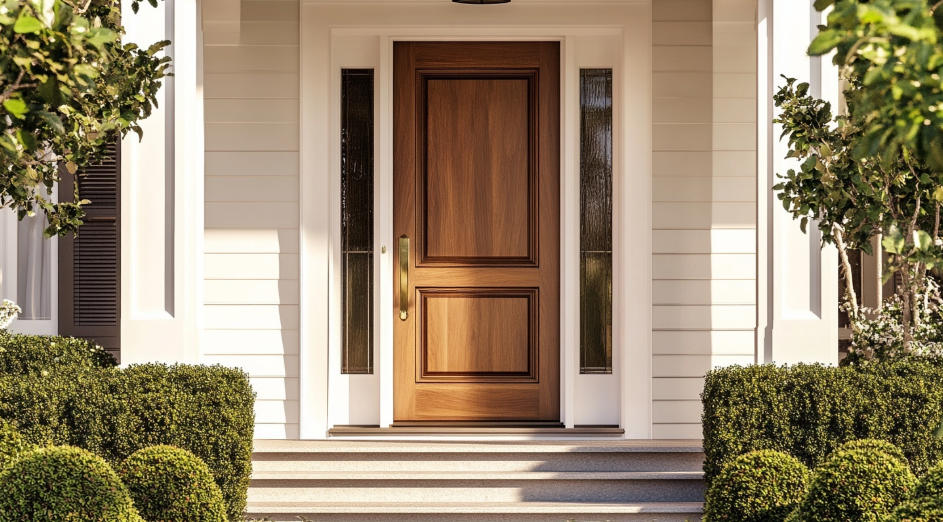
Wood offers warmth, texture, and a premium appearance that many other materials try to imitate. A wooden door works especially well for protected entrances, classic homes, and high-end residential projects.
However, wood needs regular care. Moisture, termites, sunlight, fading, and warping can affect its performance, so proper sealing and outdoor-grade finishing are important.
Aluminum Doors

Aluminum suits homeowners who want a clean look without heavy upkeep. It is lightweight, rust-resistant, and well suited to humid, tropical, or coastal climates. A aluminum entrance door also supports slim frames, glass panels, custom colors, and modern door designs. Before choosing one, check the coating quality, hardware, frame strength, and insulation performance.
Steel Doors

Security is where steel stands out. A steel exterior door works well for urban homes, apartments, commercial buildings, and entrances that need stronger protection. To get the best performance, pair it with a reinforced frame, reliable lock system, heavy-duty hinges, and anti-rust coating, especially in wet or coastal areas.
uPVC Doors

For budget homes, rental properties, and simple residential projects, uPVC offers a clean and low-maintenance solution. A uPVC entrance door resists moisture, is easy to clean, and does not require frequent repainting. Its main limitation is appearance. Compared with wood, aluminum, or steel, it usually feels more basic.
Fiberglass Doors

Fiberglass works well when insulation and weather resistance are important. A fiberglass front door can mimic the look of wood while requiring less maintenance, making it suitable for energy-efficient homes and colder climates. Availability and cost vary by market, so it is worth checking local supply before making a decision.
Glass Doors

Glass creates a brighter and more open entrance, especially for villas, patios, and homes connected to gardens or outdoor views. A glass entry door should use tempered or laminated glass for safety. Pairing it with an aluminum or steel frame can improve durability, security, and long-term performance.
Which Front Door Material Should You Choose?
| Front Door Material | Recommended For | Main Advantages | Main Drawbacks |
|---|---|---|---|
| Wood | Classic homes, luxury houses, and protected entrances | Natural warmth, premium appearance, and high customization potential | Needs regular sealing, finishing, and inspection |
| Aluminum | Modern homes, humid climates, tropical regions, and coastal areas | Rust-resistant, durable, lightweight, and low-maintenance | Needs quality coating, strong hardware, and proper insulation design |
| Steel | Security-focused homes, apartments, and commercial entrances | Strong, protective, impact-resistant, and long-lasting | Can rust if poorly finished or exposed edges are not sealed |
| uPVC | Budget homes, rental properties, and simple residential projects | Affordable, moisture-resistant, easy to clean, and low-maintenance | May look less premium than wood, aluminum, or steel |
| Fiberglass | Energy-efficient homes, cold climates, and wood-look designs | Good insulation, stable performance, and lower maintenance than wood | Availability and cost can vary by market |
| Glass | Villas, patios, garden entrances, and modern homes | Bright, open, elegant, and visually modern | Needs tempered or laminated glass, privacy planning, and a strong frame |
How Do You Choose the Right Front Door Design and Color?
A good entrance design should feel connected to the whole home. Before choosing a style, consider the exterior walls, window frames, roof color, entrance size, and surrounding landscape.
Modern Design

Modern exterior door design usually features clean lines, large panels, slim frames, and simple colors. It works well with minimalist homes, contemporary villas, and urban residences.
For a sharper look, choose flat panels, dark finishes, glass side panels, or slim metal frames. Aluminum and glass-panel doors often create a cleaner, lighter appearance. Steel can create a bolder entrance, while wood-look finishes add warmth without losing the modern feel.
Traditional Design

A traditional entry door design should feel warm, balanced, and timeless. It often works well with paneled doors, natural wood tones, classic handles, and covered entrances.
This style suits classic homes, heritage-style houses, and exteriors with softer architectural details. A wooden front door design creates the most authentic traditional look, while fiberglass or wood-look finishes can provide a similar appearance with a more practical finish.
Villa or Luxury Design

Villa and luxury entrance door designs should create a stronger first impression. Larger entrances can support oversized doors, pivot front doors, wide frames, custom finishes, and glass-metal combinations.
The design should match the scale of the home. A tall pivot door can feel dramatic and architectural. A glass and metal front door can make the entrance feel brighter and more open. Natural wood tones or bronze finishes can add warmth and luxury.
Front Door Colors and Finishes
Front door color should support the home’s exterior palette. Black, gray, white, bronze, natural wood tones, and dark metal finishes are versatile choices for many home styles.
Match the door color with exterior walls, window frames, roof color, and landscape elements. In hot and sunny regions, darker colors may absorb more heat, so choose a finish that can handle sun exposure and maintain its appearance over time.
What Front Door Works Best for Different Climates?
Climate should shape the type of front door you choose. Instead of looking only at the material, consider the full door system: finish, frame, hardware, seals, glass, threshold, and installation. A good exterior door should be built for the weather it faces every day.
| Climate or Location | Recommended Front Door | Why It Works | What to Check Before Buying |
|---|---|---|---|
| Hot and sunny climates | Powder-coated aluminum entry door, insulated fiberglass front door, or properly finished steel entrance door | These options can handle strong sunlight better when paired with UV-resistant finishes. | UV-resistant coating, color stability, surface finish quality, and direct sun exposure |
| Humid or tropical climates | Weatherproof aluminum front door, uPVC front door, fiberglass front door, or treated metal front door | They resist moisture, swelling, rust, and frequent maintenance better than untreated wood. | Sealed frame, corrosion-resistant hardware, durable exterior coating, and ventilation around the entrance |
| Coastal homes | Powder-coated aluminum door system with stainless-steel hardware | This front door system performs better against salty air and corrosion. | Coating quality, hinge material, handle finish, frame sealing, threshold drainage, and salt-air resistance |
| Cold climates | Insulated fiberglass front door, insulated steel front door, or well-sealed wooden front door | These options help reduce drafts and heat loss when properly sealed. | Insulated core, weather stripping, thermal breaks, tight frame installation, and sealed threshold |
| Rainy regions | Weatherproof exterior door with waterproof seals and proper drainage | A rain-resistant front door should reduce water entry and protect the lower edge of the door. | Canopy, recessed doorway, sloped threshold, weather stripping, waterproof seals, and durable hardware |
How Can You Make Your Front Door More Secure?
Security depends on the full entrance system, not just the door panel. Locks, frames, hinges, glass, and installation all affect protection.
1. Choose a stronger lock system
A basic latch lock is not enough for a secure front door. A deadbolt adds stronger protection, while a multi-point locking system secures the door at several points along the frame. Smart locks can add convenience, but they should be paired with solid mechanical hardware.
2. Reinforce the front door frame
The frame should match the strength of the door panel. A reinforced frame with proper anchoring helps the lock system perform better and reduces weak points around the entrance.
3. Use heavy-duty hinges
Low-quality hinges can weaken the whole front door system. Choose heavy-duty hinges that support the door’s weight. For outward-opening doors, concealed hinges or security pins can help reduce tampering risks.
4. Choose safety glass for glass panels
If the entrance includes glass, use tempered or laminated glass instead of ordinary glass. Avoid large glass panels near the lock area. For better strength, combine glass with an aluminum or steel frame.
How Can Your Front Door Improve Comfort and Energy Efficiency?
A well-designed entry door affects more than appearance and security. It can also improve indoor comfort, noise control, dust protection, and energy efficiency. If the system is poorly sealed, heat, cold air, water, dust, insects, and outside noise can enter through small gaps around the frame.
1. Check insulation and sealing
Good insulation starts with the door structure and installation. An insulated core, tight frame fit, and properly sealed threshold can help reduce drafts and heat transfer. This is especially important in cold climates, hot regions, or homes that use air conditioning frequently.
2. Use quality weather stripping
Weather stripping helps close the gaps around a front door. It can reduce air leakage, water entry, insects, dust, and outside noise. It is useful in both hot and cold climates because it helps maintain a more stable indoor environment.
3. Choose energy-efficient materials
Some front door materials perform better for insulation than others. Fiberglass and insulated steel are strong options for energy efficiency. uPVC can also provide good insulation with low maintenance. If you choose an aluminum front door, look for proper thermal design, tight sealing, and quality installation.
What Mistakes Should You Avoid When Buying a Front Door?
A good front door should look right, perform well, and last for years. Avoid these common mistakes before making your final choice.
Choosing by appearance only
A beautiful front door is not always the right one. Make sure the design also fits your climate, security needs, maintenance expectations, and daily use.
Ignoring the full door system
The panel is only one part of the entrance. Check the frame, lock system, hinges, seals, threshold, and installation quality before buying.
Choosing the wrong material for outdoor exposure
Exterior doors need outdoor-rated materials and finishes. The wrong front door material can warp, rust, fade, swell, or require frequent repairs.
Overlooking glass and security details
If your front door includes glass, use tempered or laminated glass. Also check deadbolts, multi-point locks, reinforced frames, and heavy-duty hardware.
Focusing only on the lowest price
A cheaper front door may cost more over time through repairs, repainting, hardware replacement, poor sealing, or early replacement.
How Do You Choose a Reliable Front Door Supplier?
A reliable front door supplier should help you choose a complete entrance solution, not just a door panel. Before making a decision, check whether the supplier can support your material choice, design needs, climate conditions, installation details, and project requirements.
1. Compare material options
Look for a supplier that offers different front door materials, such as wood, aluminum, steel, uPVC, fiberglass, glass, or custom combinations. More importantly, the supplier should explain which material fits your climate, security needs, maintenance expectations, and budget.
2. Check customization capability
Customization matters when your entrance needs a special size, color, finish, panel style, glass type, hardware, or opening method. This is especially important for villas, luxury homes, project homes, apartments, and non-standard entrance sizes.
3. Review climate and installation knowledge
A good supplier should recommend materials, coatings, locks, frames, seals, and hardware based on your local climate. Installation quality is just as important as the door itself, because poor sealing or alignment can lead to drafts, leaks, sticking, or security problems.
4. Look for a complete door system
A complete front door solution should include the door panel, frame, hinges, lock, glass, surface finish, threshold, sealing, and installation support. These parts need to work together for better durability, security, comfort, and long-term performance.
5. Evaluate project experience
Project experience is important for contractors, developers, hotels, apartments, villas, and large residential projects. With 17 years of industry experience and 4,200+ completed projects, PA HOME supports homeowners and project clients with customized front door and whole-home solutions.
Conclusion
Your front door is the first detail people see and one of the hardest-working parts of your home. The right choice should look good, feel secure, handle your local climate, and stay practical to maintain.
Instead of choosing by style or price alone, compare the full door system: material, frame, lock, glass, finish, sealing, and installation. When these details work together, your front door becomes more than an entrance. It becomes a long-term investment in comfort, safety, and curb appeal.
Planning a custom entrance door or whole-home project? Contact PA HOME to find a door system that fits your design style, local climate, and project needs.
FAQ
The best front door material depends on your climate, security needs, style, and budget. Aluminum is low-maintenance, steel is secure, wood looks premium, uPVC is budget-friendly, fiberglass insulates well, and glass creates a brighter entrance.
Steel and reinforced aluminum front doors are strong security choices. For better protection, combine the door with a reinforced frame, deadbolt or multi-point lock, heavy-duty hinges, and tempered or laminated glass if glass panels are included.
For hot, humid, or coastal climates, choose a weatherproof front door with corrosion-resistant hardware and durable exterior finishes. Aluminum, uPVC, fiberglass, and properly coated steel doors can work well with good sealing and drainage.