Finding the best material for interior doors is not as simple as picking a style you like. The wrong interior door material can cause problems later. A bathroom door may swell in humidity. Some wood doors need more maintenance than expected. Cheap hollow-core doors often lack good sound control.
Table of Contents
ToggleIn Indonesia, interior door material should be chosen with long-term use in mind. You need to look beyond appearance. Humidity, termite risk, maintenance, legal wood sourcing, and low-emission boards all matter. This guide will help you compare the main options and choose the right one for each room.
What “ Interior Door Material” Really Means
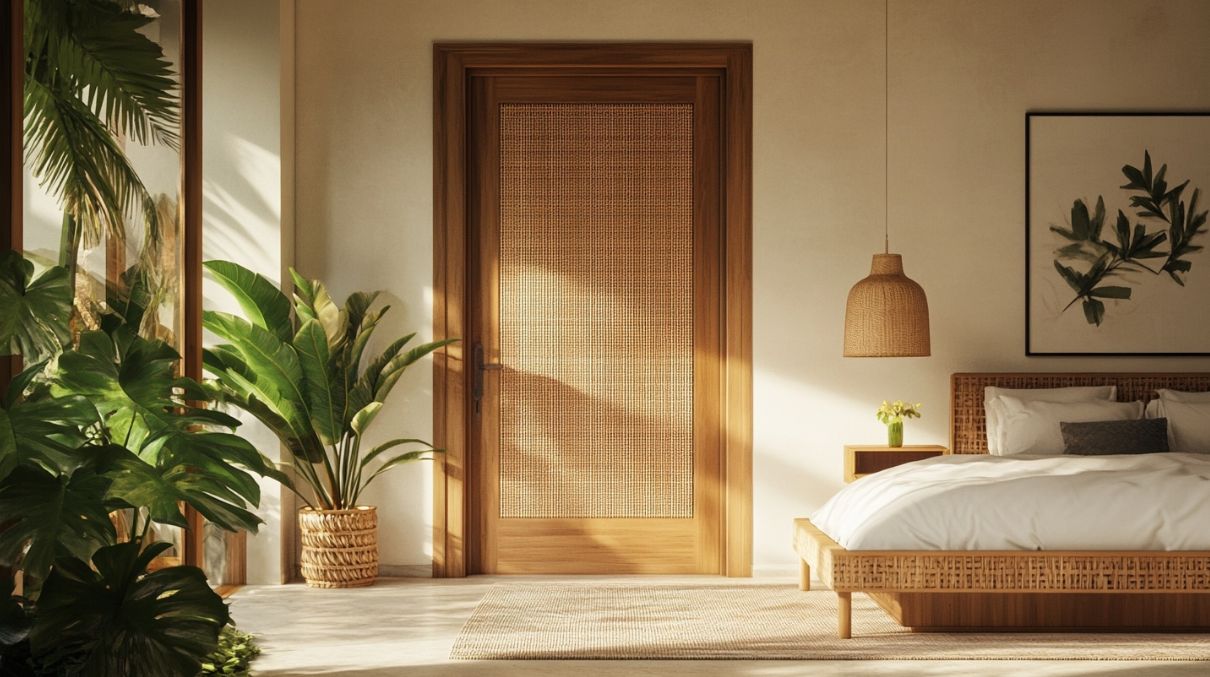
Interior door material is not just one layer. It usually contains four parts: face material, core, frame, and finish. Many people think a wood door or an MDF door is made from one material only. In reality, most interior doors are built from several parts.

That is why a wood door or an MDF door is rarely just one material. Most interior doors are a combination of these four parts.
The Main Interior Door Material Options
Once you understand how an interior door is built, it becomes much easier to compare the main interior door materials. This is the part that really helps when you are trying to choose the best material for interior doors for different rooms, budgets, and daily needs. Some options look similar at first, but they can perform very differently over time. In Indonesia, that matters even more because humidity, moisture, maintenance, and sound control all affect long-term use.
1. Solid Wood Doors

Solid wood doors are made mainly from natural timber. They are one of the most traditional wood interior doors and are often chosen for their natural grain and premium feel.
Pros:
- Natural wood grain and richer texture
- Premium look and heavier feel
- Strong design value for upscale interiors
Cons:
- Higher cost
- More sensitive to humidity
- Needs better sealing and regular maintenance
Best For: master bedrooms, formal living spaces, and other premium dry interiors. They work best where natural wood is part of the design and moisture exposure is low.
2.Engineered Wood with Veneer

This option uses an engineered structure with a real wood veneer surface. It gives you the look of wood while offering better stability than many full solid wood doors.
Pros:
- Real wood look with better stability
- More practical than many full solid wood doors
- Good balance of appearance and performance
Cons:
- Veneer quality can vary
- Edge details matter a lot
- Not ideal for wet rooms without proper protection
Best For: bedrooms, guest rooms, home offices, and most dry living areas. It is a strong choice for homeowners who want a warm wood look without going fully solid wood.
3.MDF / HDF Painted Doors

These doors usually use MDF or HDF for the visible surface and are finished with paint. They are common in modern homes because they create a clean and smooth look.
Pros:
- Smooth surface for painted finishes
- Clean and modern appearance
- More budget-friendly than many wood options
Cons:
- Better for dry areas only
- Poor edge sealing can reduce durability
- Board quality and emissions should be checked
Best For: bedrooms, kids’ rooms, closets, and modern dry interiors. MDF interior doors are especially suitable when you want a neat painted finish instead of visible wood grain.
4.Hollow-Core Molded Composite Doors

These doors usually have a lightweight inner structure with a molded composite skin. They are widely used in budget-friendly residential projects.
Pros:
- Affordable
- Lightweight
- Easy to install
Cons:
- Weaker sound control
- Less solid feel
- Not ideal for privacy-focused rooms
Best For: storage rooms, pantries, utility closets, and other secondary spaces where budget matters more than sound control or door weight.
5. Solid-Core Engineered Door
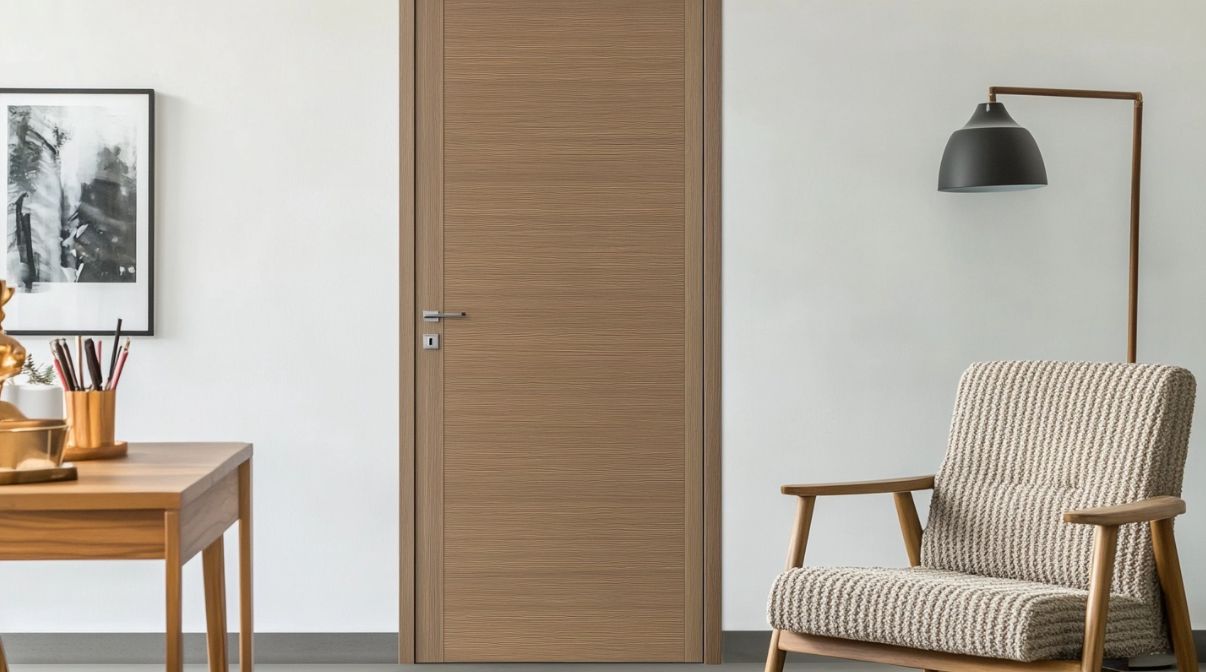
These doors use an engineered outer construction with a denser core inside. They are different from solid wood doors, even though many buyers confuse the two.
Pros:
- Better sound control
- Heavier and more solid feel
- Good all-around choice for daily use
Cons:
- More expensive than hollow-core doors
- Heavier to install and handle
- Not the cheapest option for large projects
Best For: bedrooms, home offices, study rooms, and family homes where privacy matters. In the solid core vs hollow core doors comparison, this option usually performs better for comfort and sound control.
6.PVC / WPC Doors for Moisture-Prone Areas

These doors are chosen mainly for moisture resistance rather than natural wood appearance. They are often used in wet or service areas.
Pros:
- Better moisture resistance
- Easy to clean
- Low maintenance for wet zones
Cons:
- Less natural than wood doors
- Premium feel may be lower
- Design range depends on product quality
Best For: bathrooms, laundry rooms, service spaces, and other moisture-prone areas. If you are looking for the best door material for bathroom use, PVC or WPC is often one of the most practical choices.
7. Aluminum and Glass Doors
These doors use an aluminum frame with glass panels or similar infill materials. They are often chosen for utility-focused areas that need moisture resistance and easy cleaning.
Pros:
- Handles humidity well
- Easy to maintain
- Good for bright and practical utility spaces
Cons:
- Less warmth than wood interior doors
- Privacy depends on glass choice
- Not ideal for bedrooms or quiet rooms
Best For: bathrooms, laundry areas, and selected service spaces. Frosted glass versions work especially well when you want privacy with a lighter visual look.
Interior Door Material Comparison
Here is a quick comparison of the most common interior door materials for different rooms and needs.
| Material | Best for | Main advantage | Main drawback | Cost & maintenance |
|---|---|---|---|---|
| Solid wood | Master bedrooms, premium dry interiors | Natural wood grain and premium feel | More sensitive to humidity | High cost, more maintenance |
| Engineered wood with veneer | Bedrooms, guest rooms, home offices | Wood look with better stability | Veneer and edge quality matter | Mid to high cost, moderate maintenance |
| MDF / HDF painted | Bedrooms, kids’ rooms, closets | Smooth painted finish and clean look | Better for dry areas only | Moderate cost, low to medium maintenance |
| Hollow-core molded composite | Storage rooms, pantries, secondary spaces | Affordable and lightweight | Weaker sound control | Low cost, low maintenance |
| Solid-core engineered | Bedrooms, study rooms, home offices | Better privacy and sound control | Heavier and more expensive than hollow-core | Mid to high cost, low to medium maintenance |
| PVC / WPC | Bathrooms, laundry rooms, wet areas | Better moisture resistance | Less natural look than wood | Low to mid cost, low maintenance |
| Aluminum and glass | Utility rooms, bathrooms, service zones | Easy to clean and handles humidity well | Less warmth and less acoustic privacy | Moderate cost, low maintenance |
Why Material Choice Matters More in Indonesia?
Choosing the best material for interior doors in Indonesia is not only about style. Many buyers start with model pintu minimalis. Some compare different jenis pintu rumah. Others look for a simple pintu kamar minimalis for a bedroom. That is normal. But a good-looking door is not always the right one. The right interior door material should also match the room, the climate, and the amount of maintenance you can accept.
1.Humidity and Rainy-Season Exposure
- Indonesia’s climate is humid, and that can affect how a door performs over time. Stability, edge sealing, and surface finish can all be affected.
- A material that works well in a dry bedroom may not be the right choice for a bathroom or laundry area.
- For dry rooms, painted or wood-look doors are often a good fit. For wet zones, many homeowners prefer pintu kamar mandi PVC or pintu aluminium because these options are usually easier to manage in humid conditions.
2. Termite Risk
- Wood doors can still be a very good choice in Indonesia. But they need more careful selection.
- It is smart to check whether the wood is treated, how well it is sealed, and what kind of maintenance will be needed later.
- This matters even more when comparing wood interior doors, veneer doors, and other wood-look options that may seem similar at first glance.
3. Legal Wood and Healthier Boards
- If you choose wood or veneer doors, legal sourcing matters.
- If you choose MDF, HDF, or other engineered boards, board quality matters too, especially in bedrooms and kids’ rooms.
- Some buyers also consider pintu HPL because it offers a clean and modern finish. But the surface alone should not decide the purchase. The material underneath matters as well.
4.Style Should Match the Climate
- Warm wood tones and simple lines remain very popular in Indonesia. That is why model pintu minimalis and pintu kamar minimalis continue to attract many homeowners.
- But style should still match real use. A bedroom door can focus more on appearance. A bathroom or laundry door should focus more on moisture resistance and easy maintenance.
- The best result comes from balancing style, climate fit, and long-term practicality.
Best Interior Door Materials by Room
Choosing the best material for interior doors becomes much easier when you start with the room, not just the style. Some spaces need better sound control. Some need more privacy. Others need stronger moisture resistance. That is why the right interior door material for a bedroom may not be the best choice for a bathroom, laundry area, or pantry.
The table below gives a more practical way to compare interior door materials by room. It can also help you decide between wood interior doors, MDF interior doors, solid core interior doors, and the best door material for bathroom or laundry use.
Interior Door Material Comparison by Room
| Room | Best choice | Acceptable choice | Avoid if possible |
|---|---|---|---|
| Bedroom | Solid-core engineered door | Engineered wood with veneer, MDF / HDF painted door | Hollow-core door if sound control matters |
| Master bedroom | Solid wood door, solid-core engineered door | Engineered wood with veneer | Hollow-core door |
| Kids’ room | MDF / HDF painted door, solid-core engineered door | Engineered wood with veneer | Solid wood in high-maintenance settings |
| Home office | Solid-core engineered door | Engineered wood with veneer | Hollow-core door |
| Bathroom | PVC / WPC door, aluminum and glass door | Moisture-resistant engineered option | Standard MDF door, untreated wood door |
| Powder room | MDF / HDF painted door, PVC / WPC door | Aluminum and glass door | Standard hollow-core door in humid layouts |
| Laundry area | PVC / WPC door, aluminum and glass door | Moisture-resistant engineered option | MDF door, solid wood door |
| Walk-in closet | MDF / HDF painted door | Hollow-core molded composite door | Heavy solid wood door if not needed |
| Pantry or storage room | Hollow-core molded composite door | MDF / HDF painted door | Solid wood door |
How to Choose the Right Interior Door for Each Room?
- Bedrooms and home offices usually work best with solid-core engineered doors because they offer better privacy and sound control. Engineered wood with veneer is also a good option for dry rooms.
- Master bedrooms usually suit more premium choices, such as solid wood doors, solid-core engineered doors, or veneer doors.
- Kids’ rooms usually work well with MDF / HDF painted doors because they are practical and easy to maintain. Solid-core engineered doors are a better choice if more privacy is needed.
- Bathrooms and laundry areas usually need PVC / WPC doors or selected pintu aluminium options because they handle moisture better.
- Powder rooms can be more flexible. PVC / WPC, aluminum and glass, or well-finished MDF / HDF painted doors can all work, depending on ventilation.
- Walk-in closets, pantries, and storage rooms usually do not need heavy or premium doors, so MDF / HDF painted doors and hollow-core molded composite doors are often enough.
What to Ask Before You Buy an Interior Door in Indonesia?
Before you choose an interior door in Indonesia, ask these questions first. They can help you compare interior door materials more clearly and avoid problems with humidity, termites, maintenance, or product quality later.
What is the face material? Ask whether the visible surface is solid wood, veneer, MDF, HDF, laminate, HPL, or another finish.
What is the core? Check whether the door uses a hollow core, solid core, or another engineered inner structure.
Is the frame solid wood, engineered wood, or another material? The frame affects stability, fastening strength, and long-term durability.
Is the product suitable for humid rooms? This matters for bathrooms, laundry areas, and other moisture-prone spaces.
Has the wood been pre-treated against termites? In Indonesia, pre-treated wood can be a very important detail for long-term use.
Does the timber have SVLK documentation? This helps confirm legal wood sourcing and adds more confidence to your purchase decision.
Are the boards low-emission? This is especially worth checking for MDF, HDF, plywood, or other engineered board-based doors.
What finish is used on the surface and edges? Finish quality affects appearance, moisture resistance, and maintenance needs.
What is the warranty? Ask what is covered, how long it lasts, and which conditions may void it.
What maintenance is required? Some doors need very little care, while others need sealing, repainting, or more frequent inspection.
Conclusion
Picking the right interior door material in Indonesia isn’t just about looks. Think about the room, humidity, and how much maintenance you can handle. Solid-core doors are great for most dry rooms, MDF or HDF painted doors fit modern spaces, and PVC, WPC, or pintu aluminium work best in bathrooms and laundry areas. For premium homes, wood doors can shine if they’re properly treated. Not sure where to start? Look at the room type, humidity, and maintenance tolerance first, then pick the style and material that feel right. If you want more tips or help choosing, reach out to PA HOME INDONESIA.
FAQ
For humid rooms like bathrooms, laundry areas, or service zones, choose moisture-resistant doors such as PVC, WPC, or pintu aluminium. These materials handle Indonesia’s tropical humidity better than wood or MDF, reducing warping and swelling while ensuring long-term durability.
When selecting a wood interior door in Indonesia, ask if it has been pre-treated against termites and if the surface and edges are well-sealed. Also, ensure the timber has SVLK certification and low-emission boards for healthier indoor air. These steps help wood doors withstand humid conditions and termite activity.
Solid wood doors are premium and show natural wood grain but need proper treatment for humid areas. MDF or HDF painted doors are ideal for dry, modern interiors and easy to maintain. Engineered wood doors (solid-core or veneer) combine stability, sound control, and strength, making them a versatile choice for most rooms.
For bedrooms and home offices, solid-core engineered doors provide the best balance of privacy, sound control, and durability. Engineered wood with veneer or MDF/HDF painted doors can also work in dry rooms, offering a clean modern look with easier maintenance.
For premium projects, solid wood doors are ideal if they are properly treated, sealed, and maintained. They bring natural wood grain and warmth to the space. Always consider the room type, humidity, and maintenance tolerance before selecting style and material to ensure long-term performance and visual appeal.