Handleless Kitchen Cabinet Design: A Modern Trend in Indonesia
In the fast-paced, urban lifestyle of modern Indonesia, the kitchen has evolved from a purely functional space to a design centerpiece. One of the most exciting design trends making waves in the country is the handleless kitchen cabinet.This article explores the beauty, functionality, and practicality of handleless kitchen cabinets, providing you with the inspiration and guidance to choose the best design for your home.
Handleless kitchen cabinets are exactly what they sound like: cabinets that don’t have traditional handles. Instead, these cabinets rely on alternative opening mechanisms, such as integrated grooves, push-to-open systems, or touch-latch mechanisms. The absence of handles creates a smooth, continuous surface that adds to the clean and contemporary aesthetic. These cabinets can be designed to blend seamlessly into the rest of the kitchen, making them especially popular in open-plan spaces where visual continuity is important.
Why Handleless Kitchen Cabinets Fit Modern Indonesian Homes
Indonesian homes, particularly in urban areas like Jakarta and Surabaya, are becoming more focused on sleek, efficient designs. With the rise of minimalist and modern architectural styles, handleless kitchen cabinets provide a perfect fit. These cabinets work exceptionally well in open kitchens, as their clean lines make them less visually intrusive, allowing the space to appear larger and more cohesive. In homes with smaller kitchens, handleless designs help maximize space by eliminating protruding handles that can crowd the space. Additionally, they are often easier to clean, a bonus in a country where tropical climates can bring humidity and grime.
Popular Types of Handleless Kitchen Cabinet Designs
There are several types of handleless cabinet designs, each offering a unique aesthetic and functionality:
Gola Profile System
J-Pull Cabinets
Push-to-Open System
Gola Profile Handleless Kitchen Cabinets
This design features a thin, horizontal groove that runs along the top or bottom edge of the cabinet doors. The groove serves as the handle, providing an ultra-modern look that complements minimalist interiors.
J-Pull Handleless Kitchen Cabinets
These cabinets have a subtle inward curve along the top edge of the door, allowing you to pull open the cabinet without the need for visible handles. J-pull designs are perfect for a sleek, understated kitchen.
Push-to-Open Handleless Kitchen Cabinets
For those who prefer an entirely handle-free surface, push-to-open cabinets allow you to open doors with a simple press. This system is particularly popular in European-style kitchens and works well in spaces where the aesthetic must be flawless.
Design Styles That Work Best with Handleless Kitchen Cabinets
Handleless kitchen cabinets are versatile and can be incorporated into several design styles. However, they shine particularly well in:
Modern Minimalist Handleless Kitchen Cabinets
The absence of handles creates a clean, uninterrupted surface that’s perfect for minimalist kitchen designs. Simple color schemes, like whites, blacks, and greys, complement the sleek nature of handleless cabinets.
Luxury Contemporary Handleless Kitchen Cabinets
For a high-end, luxury feel, handleless cabinets are often paired with elegant materials like marble countertops, glass backsplashes, and brushed metal accents.
Tropical Modern Handleless Kitchen Cabinets
This style leans on soft neutrals, warm wood tones, and subtle textures rather than strict minimalism. Handleless doors keep the cabinetry visually calm, while materials like oak finishes, stone-look countertops, and soft matte surfaces add depth and warmth.
Urban Contemporary Handleless Kitchen Cabinets
In cities like Jakarta, where space is at a premium, handleless cabinets help create a streamlined look that’s perfect for smaller apartments and urban homes, making a small kitchen feel more organized and visually open.
Color & Material Choices for Handleless Kitchen Cabinets
The color and material selection for handleless cabinets play a critical role in achieving the desired look. Light shades, like matte white or light grey, are popular in modern homes as they create a sense of airiness and openness. Darker tones, like navy or charcoal, are perfect for creating a more luxurious, moody atmosphere. For a unique twist, materials like wood veneer or textured laminates can add warmth and natural elements to a modern kitchen.
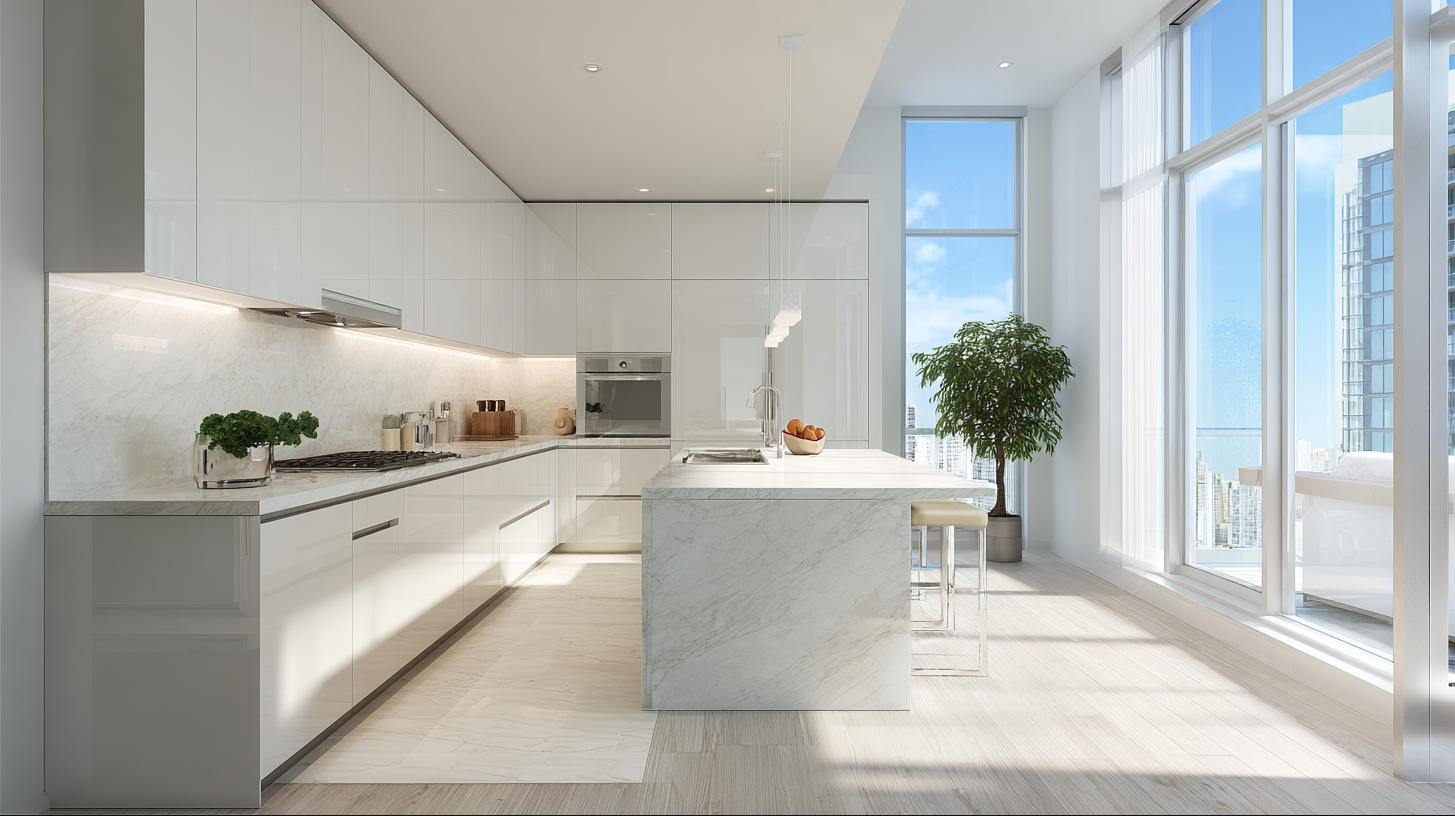
Bright matte white handleless cabinets in an airy modern kitchen with integrated lighting, by PA HOME.
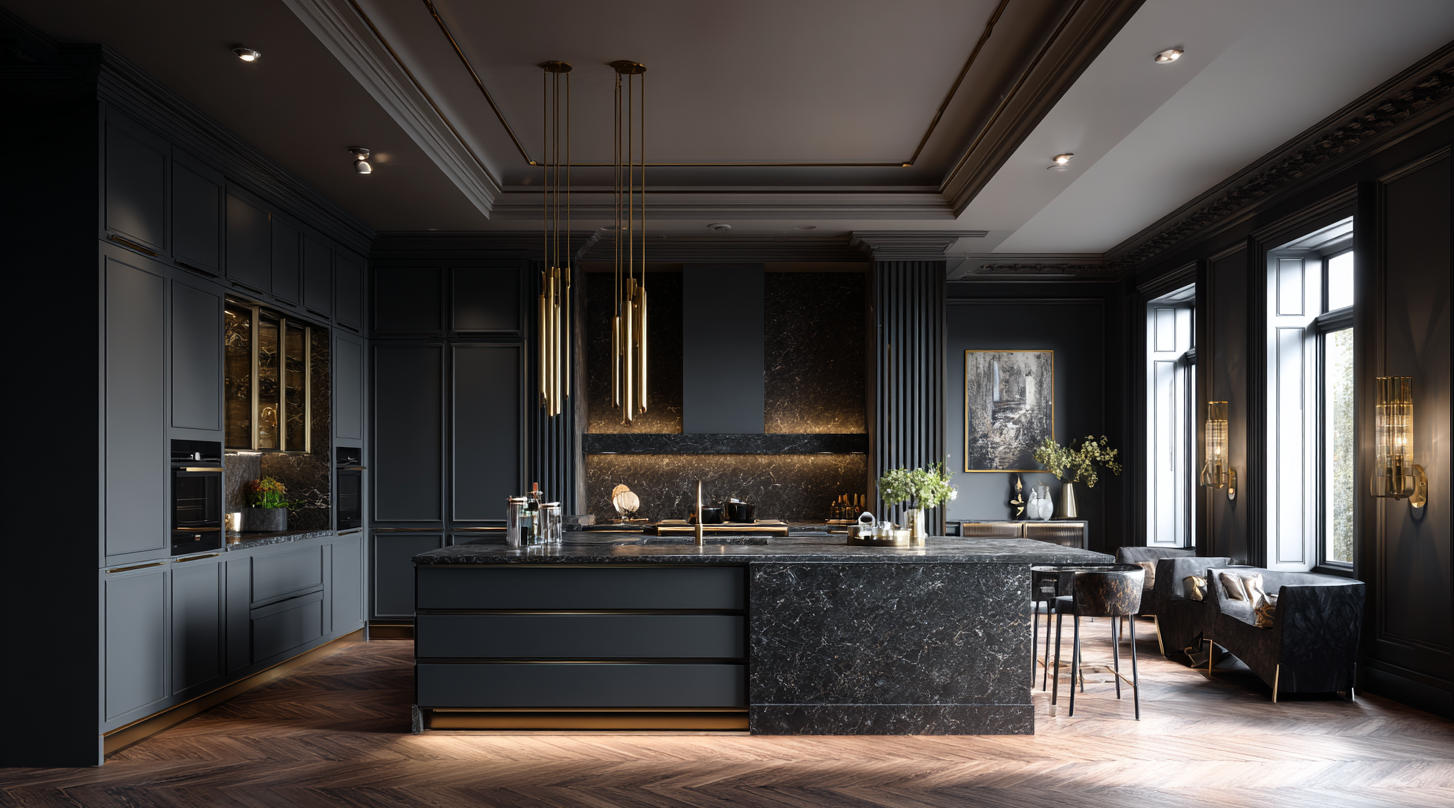
Textured charcoal handleless cabinets with marble countertop in a moody luxury kitchen, by PA HOME
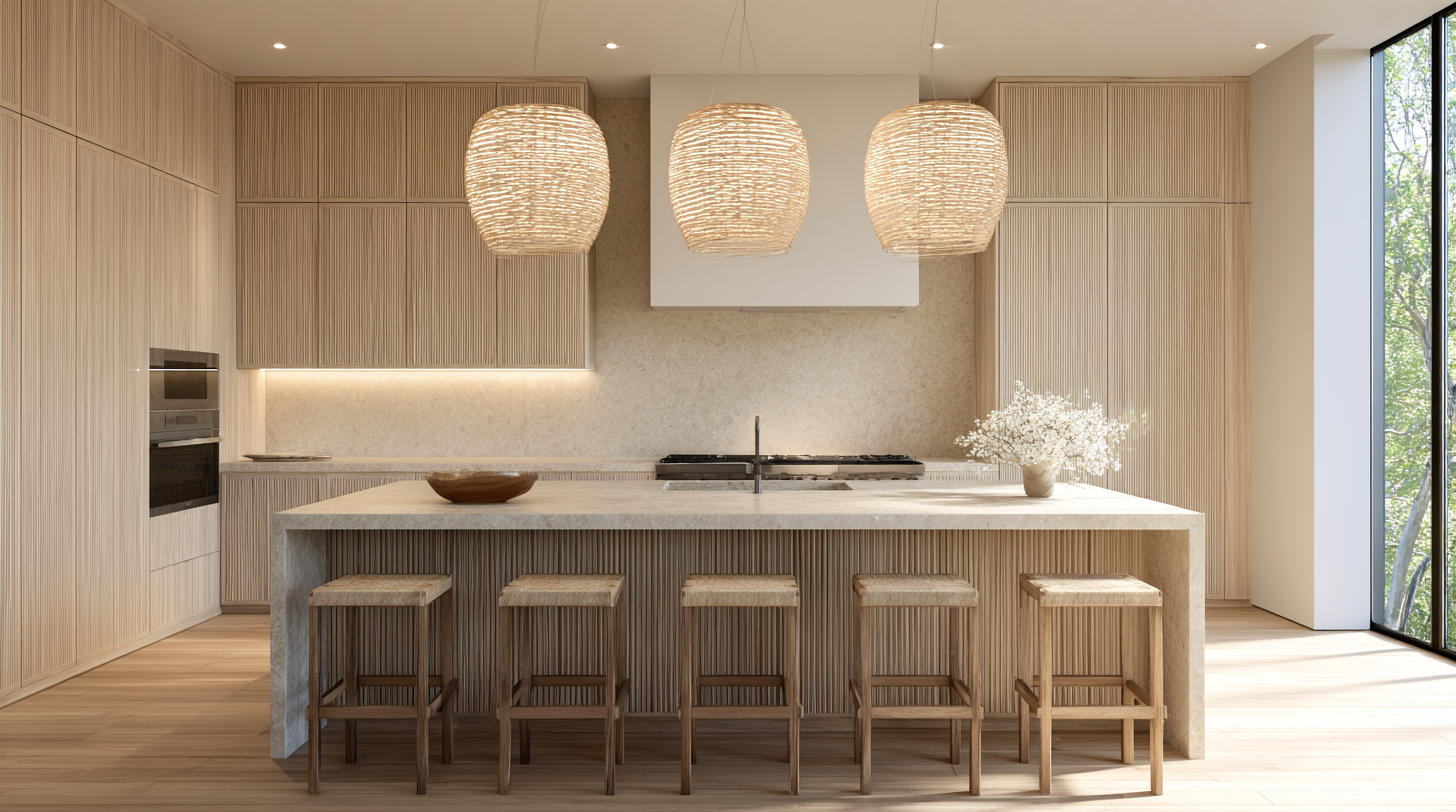
Natural oak wood veneer handleless cabinets in a warm minimalist kitchen, by PA HOME.
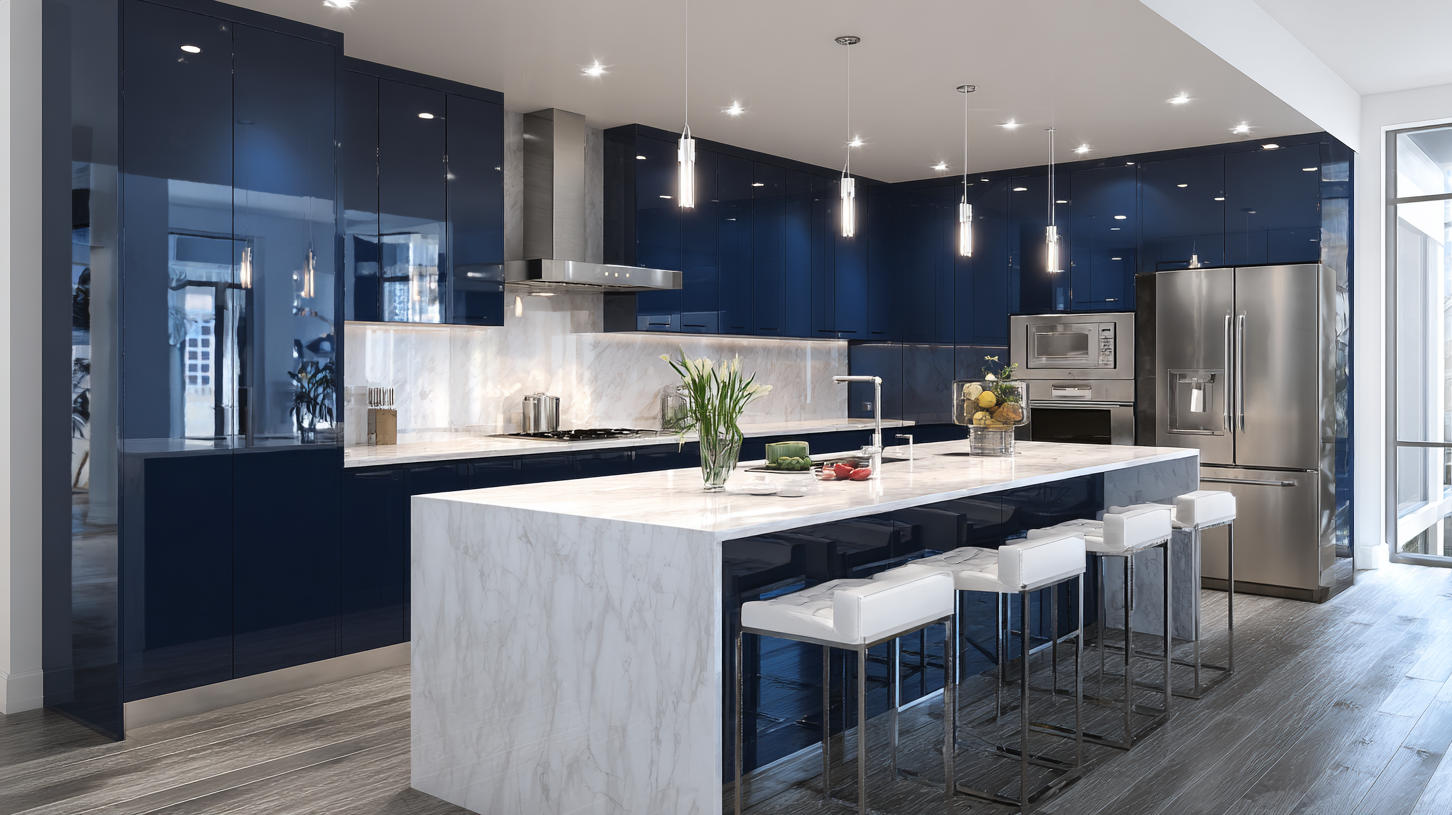
Reflective navy blue high-gloss handleless cabinets in a contemporary luxury kitchen, by PA HOME.
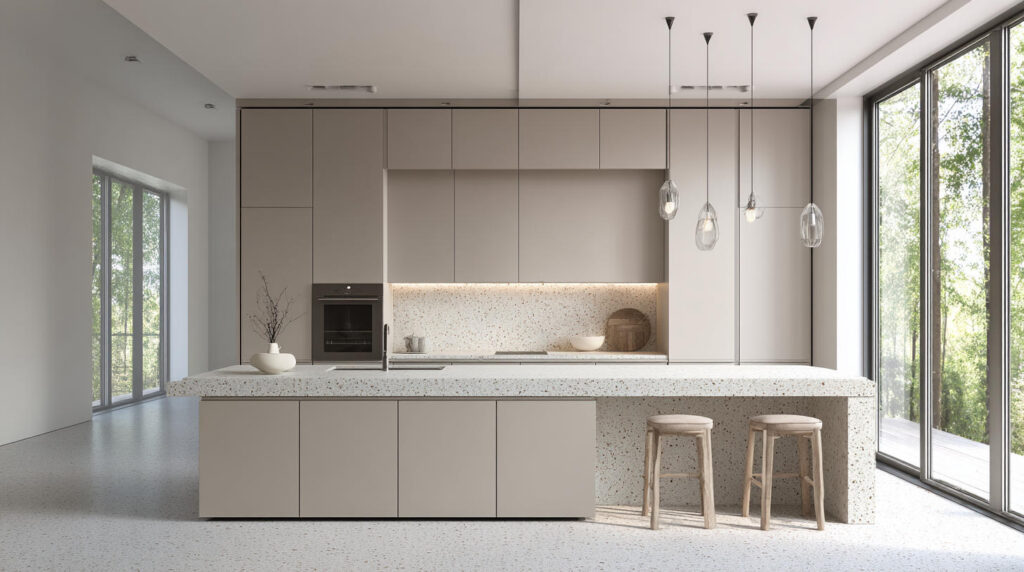
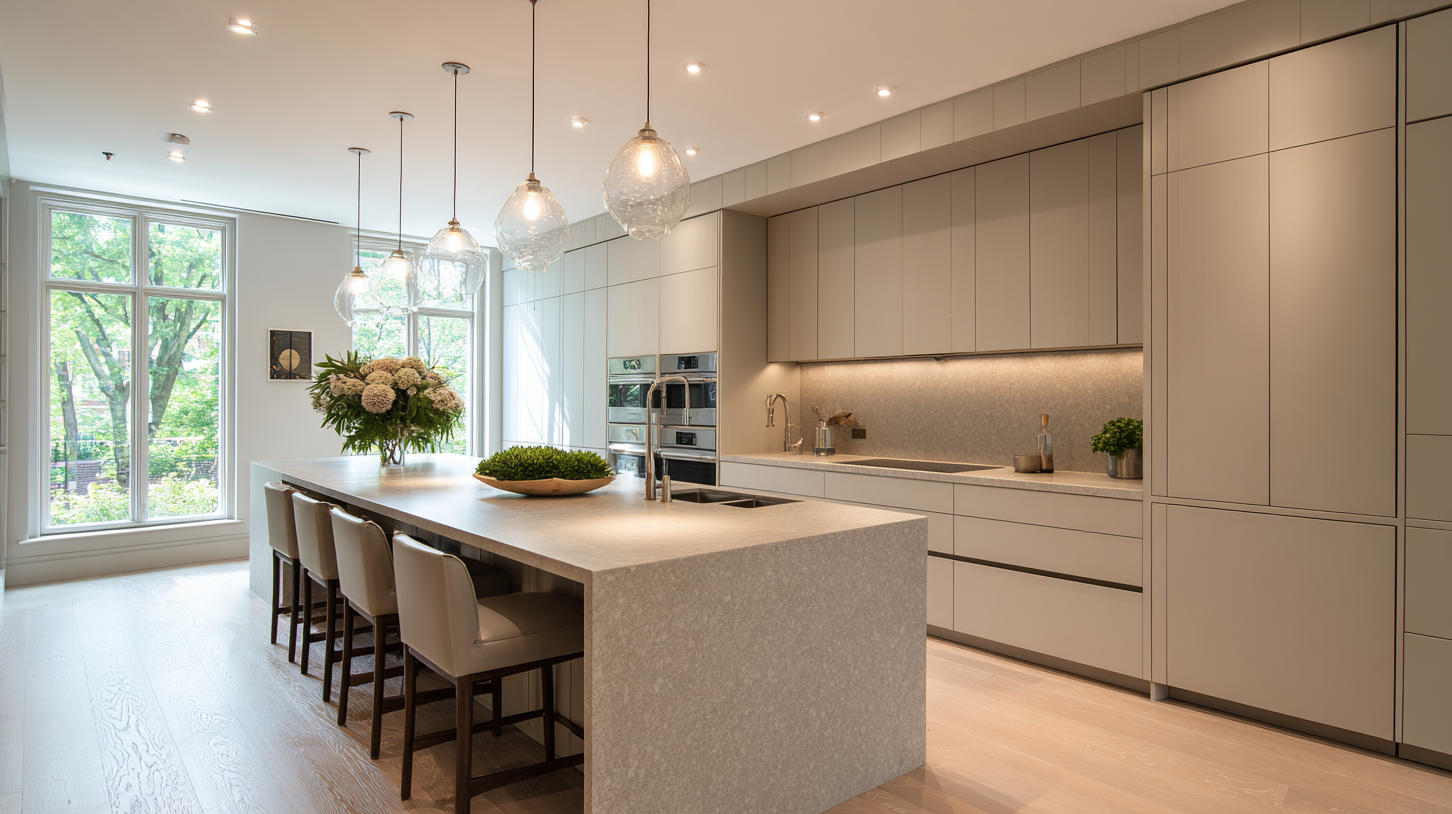
Soft taupe textured matte handleless cabinets with terrazzo countertop in a sophisticated kitchen, by PA HOME.
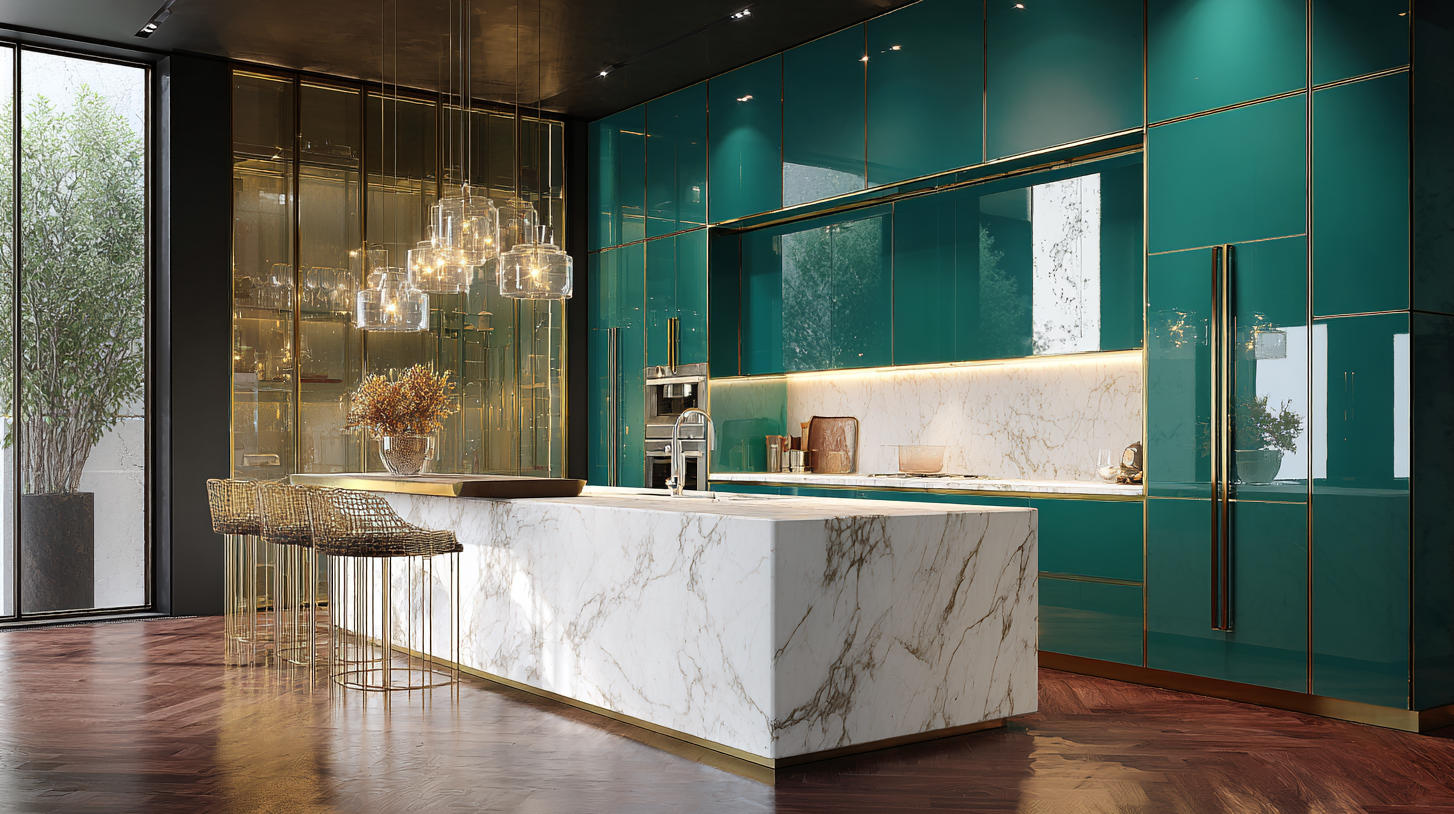
Reflective emerald green high-gloss handleless cabinets with marble waterfall island in a contemporary luxury kitchen, by PA HOME.
In addition to colors, it’s essential to consider materials that are durable and easy to maintain. High-gloss laminates are commonly used for a sleek, shiny finish, while matte finishes are becoming increasingly popular for their subtle, sophisticated look. Wood finishes are ideal for adding character and warmth, while metal surfaces lend a modern industrial feel to the space.
Are Handleless Kitchen Cabinets Practical?
One might wonder if handleless cabinets are as practical as traditional ones. The truth is, they offer several benefits:
Cleaner Look:
Without handles, the cabinet surfaces appear smoother and more unified, creating a chic, modern look that complements contemporary kitchen designs.
Space-Saving:
Handleless cabinets are especially advantageous in smaller kitchens, as they reduce the need for clearance space for handles. This makes them ideal for tight spaces.
Ease of Cleaning:
Without handles to collect dirt and grease, cleaning is easier and more efficient, which is important in a kitchen environment that sees daily use.
Enhanced Safety:
In homes with young children, handleless cabinets reduce the risk of accidents caused by protruding handles, ensuring a safer kitchen environment.
Custom vs. Modular Handleless Kitchen Cabinets
When choosing between custom and modular handleless cabinets, it’s important to consider both your budget and the uniqueness of your space.
Custom Cabinets:
These are ideal for those looking for a completely tailored kitchen that fits their exact needs. They allow for full personalization in terms of design, materials, and finishes. While more expensive, custom cabinets provide a unique and fully integrated solution.
These are pre-designed units that can be combined to fit your kitchen layout. While they offer less flexibility than custom solutions, modular cabinets are often more affordable and quicker to install, making them a great option for those on a tighter budget.
How to Choose the Right Handleless Kitchen Cabinet Design
Choosing the right handleless kitchen cabinet design depends on a variety of factors, including your kitchen’s layout, your style preferences, and your budget. Take the time to visualize your space and think about how you use it on a daily basis. If you love to entertain, consider designs that emphasize open shelving or easy-to-reach storage. If you’re working with a tight space, opt for compact, high-functioning designs that maximize every inch.
It’s also essential to collaborate with a professional designer who can help bring your vision to life while ensuring that the design remains functional. Don’t be afraid to ask questions and explore different materials and mechanisms until you find the perfect fit for your home.
Conclusion
Handleless kitchen cabinets are more than just a design trend; they represent a shift towards simplicity, elegance, and functionality in modern Indonesian homes. With their clean lines, versatility, and practical benefits, these cabinets offer a fresh approach to kitchen design. Whether you’re renovating your existing space or building a new home, handleless cabinets are a stylish and practical choice that can elevate your kitchen to the next level.
PA HOMEnot only on beautiful design, but on creating a space that truly works for your daily life. Contact usnow for a transparent quote and a collaborative design process. Together, let’s build a kitchen that reflects you.
FAQs
1. Are handleless kitchen cabinets practical for everyday use?
Yes, handleless kitchen cabinets are practical when designed correctly. Systems like J-pull and push-to-open are built for daily use and tested for thousands of open-and-close cycles. They reduce visual clutter and are easy to clean since there are no handles to trap grease or dust. For busy households, push-to-open cabinets are especially useful when your hands are full or messy. The key is choosing quality hardware and proper installation to ensure smooth operation over time.
2. What is the difference between J-pull cabinets and push-to-open cabinets?
J-pull cabinets use an integrated groove at the edge of the door, allowing you to pull it open with your fingers. Push-to-open cabinets have completely flat doors and open when you press the surface. J-pull systems feel more mechanical and direct, while push-to-open offers a cleaner, seamless look. Push-to-open designs rely on internal mechanisms, so they work best with precise alignment and high-quality fittings.
3. Are handleless kitchen cabinets good for small kitchens?
Handleless cabinets are an excellent choice for small kitchens. Without protruding handles, the space feels more open and visually calm. This design reduces visual breaks, making the kitchen appear wider and more organized. In compact apartments or narrow layouts, handleless cabinets also improve movement and safety by removing obstacles. Light colors and full-height cabinetry can further enhance the sense of space.
4. Do handleless kitchen cabinets leave fingerprints easily?
Fingerprints can appear on handleless kitchen cabinets, especially on glossy or dark finishes. However, this depends largely on the surface material. Matte finishes, textured laminates, and anti-fingerprint coatings significantly reduce visible marks. Many homeowners choose light colors like white or beige for this reason. Regular wiping with a soft cloth keeps the cabinets looking clean, making maintenance simple in everyday use.
With over 17 years of expertise as a whole-home customization specialist, we curate and publish design solutions, material applications, and space-planning insights specifically for developers, contractors, wholesalers, and project stakeholders.
Professional Whole-Home Customization Solution Manufacturer
PA Home Indonesia is a Professional manufacturer specializing in high-end cabinets (including custom kitchen cabinets, custom wardrobes, bathroom vanities), interior doors, and other related products.
Over 42,000 projects completed across 80+ countries, with deep expertise in global markets.
15,000m² intelligent factory in Indonesia, we command over 105,000m² of global production space.
An in-house team of 300+ professional installers with extensive experience in overseas projects.
A leading Custom Fix Furniture manufacturer in Indonesia, Saudi Arabia, UAE, and China.
Contact Us for Supports
Get Your Quote in 24h
Experience Our Jakarta Showroom
See our custom furniture, materials, and interior solutions firsthand.