Hotel development opportunities are still strong in 2026, but the hardest part is knowing which considerations for hotel developers matter most before costs, guest demand, technology, and competition shift again. The right considerations for hotel developers can reduce risk, improve hotel ROI, and help shape hotels that are easier to operate, upgrade, and reposition over time.
Table of Contents
ToggleThis guide focuses on the real issues hotel developers face today. It covers guest demand, financing pressure, hotel renovation and conversion strategy, hotel sustainability, smart hotel AI, materials, guest experience, and long-term operational value. Each section also explains how one practical considerations for hotel developers can be turned into a clearer development decision.
Three Pressures Hotel Developers Cannot Ignore in 2026
Before looking at design, branding, or fit-out, most hotel projects now face three core pressures that can quickly change the outcome.
Cost Pressure
Rising labor, insurance, and utility costs can weaken hotel ROI quickly if the project is underwritten too loosely.
Demand Shift
More travel does not always mean the right demand. Hotels now need a clearer guest profile and sharper positioning.
Development Speed
In many markets, timing matters more than ever. Renovation, repositioning, or conversion may outperform a slower new build.
1. Why Guest Demand Is the First Considerations for Hotel Developers in 2026
Why it matters?
One important considerations for hotel developers is demand quality. Not all demand is good demand. Hotel guest demand in 2026 is more fragmented than before, and travelers are changing how they research hotels. Deloitte says generative AI use for trip planning tripled from 2023 to 2025, which means discovery behavior is changing as fast as guest preference.
Common pain point:
- Teams approve a concept before they can clearly say which guest segment will support ADR in year three.
- More arrivals are treated as proof of fit, even when demand quality is weak.
- Public areas and room mix try to serve everyone, so the hotel stands for nothing specific.
What developers should do?
- Define the core guest before the room mix is finalized.
- Write that guest in simple terms: trip purpose, stay length, spend level, and booking behavior.
- Build for one strong demand cluster first, then expand only if the market clearly supports it.
2. Can This Location Still Deliver Long-Term Hotel Value?

Why it matters?
Location is still one of the most practical hotel development considerations, but in 2026 it means more than access and visibility. It also means future supply, local identity, infrastructure pressure, and climate exposure. This matters even more in tourism-led island and coastal markets, including Indonesia, where flood risk, stronger rainfall, and water stress already shape long-term asset performance.
Common pain point:
- The site is purchased first, and the story is invented later.
- Future supply and destination fatigue are reviewed too late.
- A weak location is expected to be “fixed” through branding or design.
What developers should do?
- Test the site over five to ten years, not just opening year.
- Review future pipeline, infrastructure quality, climate exposure, and destination relevance.
- Do not approve the concept until the team can explain the site’s long-term advantage in one sentence.
3. Will the Project Still Work After Financing, Operating, and Exit Assumptions Change?
Why it matters?
Another core considerations for hotel developers is financing discipline. A project may look attractive in the first model, but real performance is shaped by debt cost, labor, insurance, utilities, fit-out, and exit timing. JLL sees improving liquidity in 2026, but that does not remove operating pressure.
Common pain point:
- Early underwriting often looks stronger than the real project will be.
- Labor, insurance, and utility costs are frequently underestimated during planning.
- By the time those assumptions are revised, the design and budget are already too far along to adjust easily.
What developers should do?
- Build one base case and one stressed case before the design is locked.
- In the stressed case, raise labor, insurance, utility, and pre-opening costs.
- If the harder model no longer works, reduce scope early rather than carrying the problem into procurement.
4. Should You Build New, Renovate, Reposition, or Convert?

Why it matters?
Hotel renovation and and conversion is no longer a secondary option. It is now a mainstream development path. Lodging Econometrics says the global conversion pipeline reached a record 2,815 projects by Q4 2025, while early planning also hit a record high. That is a clear sign that speed and capital efficiency matter more than before.
Common pain point
- New build is treated as the default path, even when the market window favors speed.
- Renovation is approved, but the product is not changed enough to matter.
- Teams choose a path before they compare basis, timing, and demand window side by side.
Not every hotel project should follow the same route. In 2026, the more useful question is not which path sounds more ambitious, but which one gives the project the best balance of timing, basis, and market fit.
Which Development Path Makes the Most Sense for Your Hotel Project?
Not every hotel project should follow the same route. In 2026, the more useful question is which path gives the project the best balance of timing, basis, and market fit.
| Path | Best for | Main advantage | Main caution |
|---|---|---|---|
| New Build | Prime land and clear long-term conviction | Full concept control | Slowest route and highest basis |
| Renovation | Proven asset in a strong location | Lower reset risk | May not fix weak positioning |
| Repositioning | Good asset with dated market fit | Faster image and pricing reset | Needs sharper concept discipline |
| Conversion | Speed-to-market opportunities | Faster opening and lower basis | Building fit must be right |
This comparison should be done before the concept goes too far. A slower path can still work, but only when the location, demand, and capital structure clearly support it.
What developers should do?
- Compare all four routes before the concept is locked.
- Choose the path that fits timing, capex, and market fit, not the path that sounds most ambitious.
- Re-test the route if demand, debt, or competition shifts during pre-development.
5. Which Brand, Operator, and Distribution Model Best Fits the Asset?
Why it matters?
Hotel brand and operator selection has a direct effect on standards, payroll, channel mix, and demand capture. JLL says brands are leaning into partnerships, conversions, and third-party structures, which gives owners more flexibility but also more ways to get the structure wrong.
Common pain point:
- The wrong brand adds cost without enough demand.
- The wrong operator creates service intensity the hotel cannot support.
- The wrong channel mix leaves the property too dependent on paid intermediaries.
The wrong commercial structure can weaken a strong asset. Before choosing a flag or operator, hotel developers should compare how each model affects demand capture, fee load, staffing pressure, and long-term flexibility.
How to Choose the Right Brand, Operator, and Commercial Model
The wrong commercial structure can weaken a strong asset. Before choosing a flag or operator, hotel developers should compare how each model affects demand capture, fee load, staffing pressure, and long-term flexibility.
| Model | Strength | Watch-out |
|---|---|---|
| Franchise + strong operator | Better brand reach and loyalty access | Fees and standards must fit the asset |
| Third-party operator | More owner flexibility | Execution quality varies widely |
| Independent | More control and local identity | Demand generation is harder |
| Soft brand or collection | Lifestyle appeal with lighter standards | Still needs a strong commercial story |
The goal is not to choose the most recognizable name. It is to choose the structure that gives the asset the clearest path to sustainable performance.
What developers should do?
- Compare brand, operator, and channel mix together, not in separate decisions.
- Judge each option by demand generation, labor burden, fee load, and service fit.
- Choose the structure that helps the asset perform under realistic market conditions.
6. Why Sustainability Is Now a Key Considerations for Hotel Developers?
Why it matters?
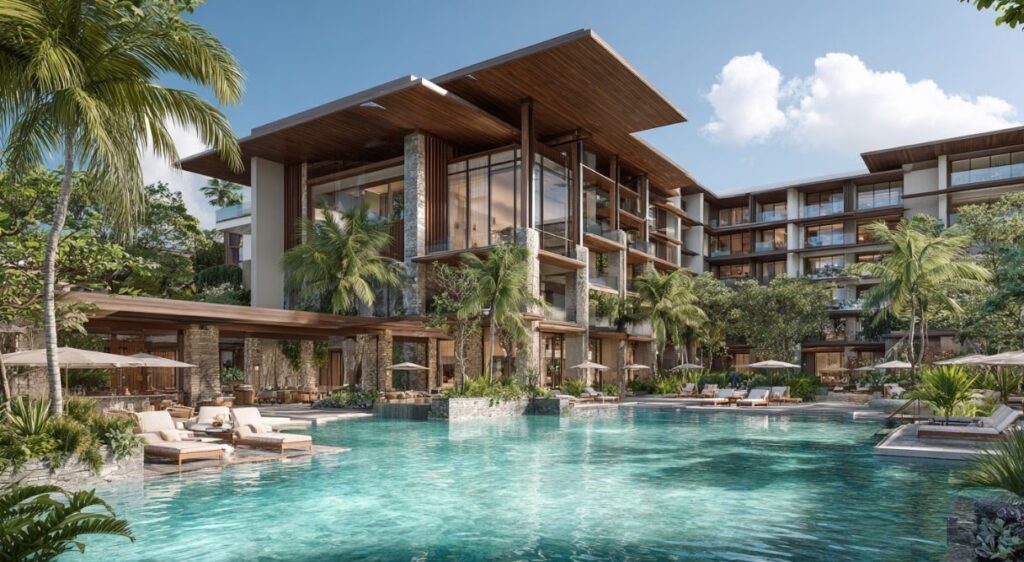
A major considerations for hotel developers, especially in tropical and coastal markets, is hotel sustainability tied to real operating pressure. This is not only a design issue. It affects energy use, water strategy, drainage, durability, and long-term capex. For Indonesia and similar markets, climate resilience for hotels is a practical operating concern because rising rainfall, flood exposure, and water stress can directly affect project performance.
Common pain point
- Sustainability is treated as a visible add-on instead of an operating decision.
- Heat, humidity, drainage, and water use are reviewed too late.
- “Green” choices are approved even when they do not reduce future pressure.
What developers should do?
- Start with envelope performance, water planning, drainage, and maintenance load.
- In tropical or coastal markets, review corrosion, moisture damage, and flood resilience before design freeze.
- Choose measures that reduce future capex and operating pressure, not just presentation value.
7. Are Smart Hotels, AI, and Automation Investments Actually Improving ROI?
Why it matters?
A fast-rising considerations for hotel developers is smart hotel AI. It affects both hotel operations and how guests discover properties. Deloitte’s 2026 travel outlook shows that AI use in trip planning is rising fast, which means hotel marketing, content, and distribution are entering a new phase.
Common pain point:
- Guest-facing tech is approved before the digital backbone is funded.
- Integration is treated like an IT issue instead of a development issue.
- Smart features add complexity, but staff workflows do not improve.
What developers should do?
- Fund the backbone first: pricing tools, guest messaging, automation, and energy control.
- Add a budget line for integration and one for post-opening support.
- Reject “smart” features that do not improve labor, revenue, control, or guest communication.
8. Can Your Materials, Custom Furniture, and Layout Handle Climate, Wear, Hygiene, and Daily Operations?

Why it matters?
Another practical considerations for hotel developers is specification discipline. Hotel custom furniture, finish choices, and layout decisions affect cleaning speed, replacement cycles, maintenance access, acoustic privacy, and guest comfort. This becomes even more critical in tropical and coastal markets, where humidity, salt air, and heavy cleaning cycles can shorten material life faster than many teams expect.
Common pain point:
- Decorative specifications are approved before operating reality is tested.
- Bathroom vanity, wardrobes, and accessories details look good but clean badly.
- Furniture is customized for appearance, not replacement logic.
Hotel interiors do not fail in the showroom. They fail under humidity, repeated cleaning, luggage impact, wet-zone exposure, and constant room turns. That is why material selection should reflect real hotel conditions, not just visual preference.
What Materials Hold Up Best Under Real Hotel Conditions?
Hotel interiors do not fail in the showroom. They fail under humidity, repeated cleaning, luggage impact, wet-zone exposure, and constant room turns. That is why material selection should reflect real hotel conditions, not just visual preference.
| Condition | What often goes wrong | Better specification approach |
|---|---|---|
| Humid or coastal climate | Swelling, corrosion, and mold risk | Moisture-resistant boards, corrosion-resistant hardware, and easy-clean surfaces |
| High-turnover urban hotel | Fast wear and cleaning damage | Contract-grade finishes, durable edges, and stain-resistant upholstery |
| Wellness or resort property | Water exposure and maintenance pressure | Slip-resistant flooring, stable vanity materials, and service-friendly layouts |
| Premium guestroom | Noise and privacy failures | Better acoustic detailing, stronger door performance, and soft-close hardware |
Good specifications should reduce replacement pressure, support faster cleaning, and protect the guest experience over time. In hotel projects, durability is part of profitability.
What developers should do?
- Do not approve bathroom, wardrobe, and loose-furniture specs until housekeeping and maintenance review them.
- Specify for actual climate, cleaning cycles, and luggage impact, not showroom appeal.
- Use hotel custom furniture only where it improves storage, flow, and replacement practicality.
9. Will Wellness, Leisure, Local Culture, and Personalization Actually Drive Demand?

Why it matters?
Wellness, leisure, local culture, and personalization are real hotel development trends in 2026, but they only create value when they support demand, rate, and memory. Experience design is becoming a stronger consideration for hotel developers because guests expect more than a functional stay.
Common pain point:
- Spa, local decoration, or experience-led features are added because they look persuasive in concept decks.
- Not every amenity improves ADR or repeat demand.
- “Local culture” often ends up as decoration instead of a real guest reason to book.
What developers should do?
- Match the experience layer to the target guest, not to design fashion.
- Use local culture through programming, food, and partnerships, not decoration alone.
- Approve only the experience layers that support demand capture, pricing power, or repeat visits.
10. Is the Hotel Easy to Staff, Refresh, Upgrade, and Reposition Over Time?
Why it matters?
Hotel future-proofing is another practical considerations for hotel developers because it directly affects operating cost, refresh cycles, and long-term relevance. A hotel that is hard to staff, hard to refresh, or hard to reposition becomes expensive quickly, especially when demand is steady rather than explosive and every capex decision matters more.
Common pain point:
- Hotels open with a strong concept but weak lifecycle planning.
- Housekeeping flow is inefficient and refresh cycles are disruptive.
- Later repositioning becomes expensive because the original design assumed one fixed operating model.
What developers should do?
- Design for labor efficiency before visual drama.
- Plan the first refresh before opening day.
- Leave room for phased upgrades and later repositioning.
Conclusion
The strongest hotel projects in 2026 will not come from trend-following alone. They will come from better decisions, clearer positioning, and more disciplined execution. For hotel developers who need practical support in turning those decisions into real project outcomes, PA HOME Indonesia can provide customized solutions for hospitality interiors, cabinetry, doors, windows, and other project-based products designed to support both design intent and long-term usability.
FAQ
Hotel developers should focus first on demand quality, not just demand volume. A busy market does not automatically mean a good project. The stronger projects in 2026 are the ones that match the right guest, the right location, and the right development path from the start.
It depends on timing, basis, and building fit. A new build makes more sense when the site is strong and the long-term concept is clear. A conversion often makes more sense when speed matters, capital needs to be tighter, and the existing building can realistically support hotel operations.
They should look for durability, cleanability, maintenance access, and replacement practicality. In hotel projects, materials and custom furniture should do more than look good. They need to hold up under constant cleaning, heavy use, luggage impact, wet zones, and real operating pressure after opening.
Sustainability is now a practical development issue, not just a branding issue. It affects energy use, water planning, maintenance pressure, material life, and future upgrade costs. In tropical and coastal markets, it also affects how well a hotel performs under heat, humidity, heavy rain, and long-term climate exposure.
Long-term hotel ROI improves when developers make disciplined choices early. That means defining the target guest clearly, selecting the right development path, stress-testing financial assumptions, controlling specification quality, and making the hotel easier to staff, refresh, and reposition over time. Stronger ROI usually comes from better decisions, not just bigger budgets.