1. Kitchen Island Countertops
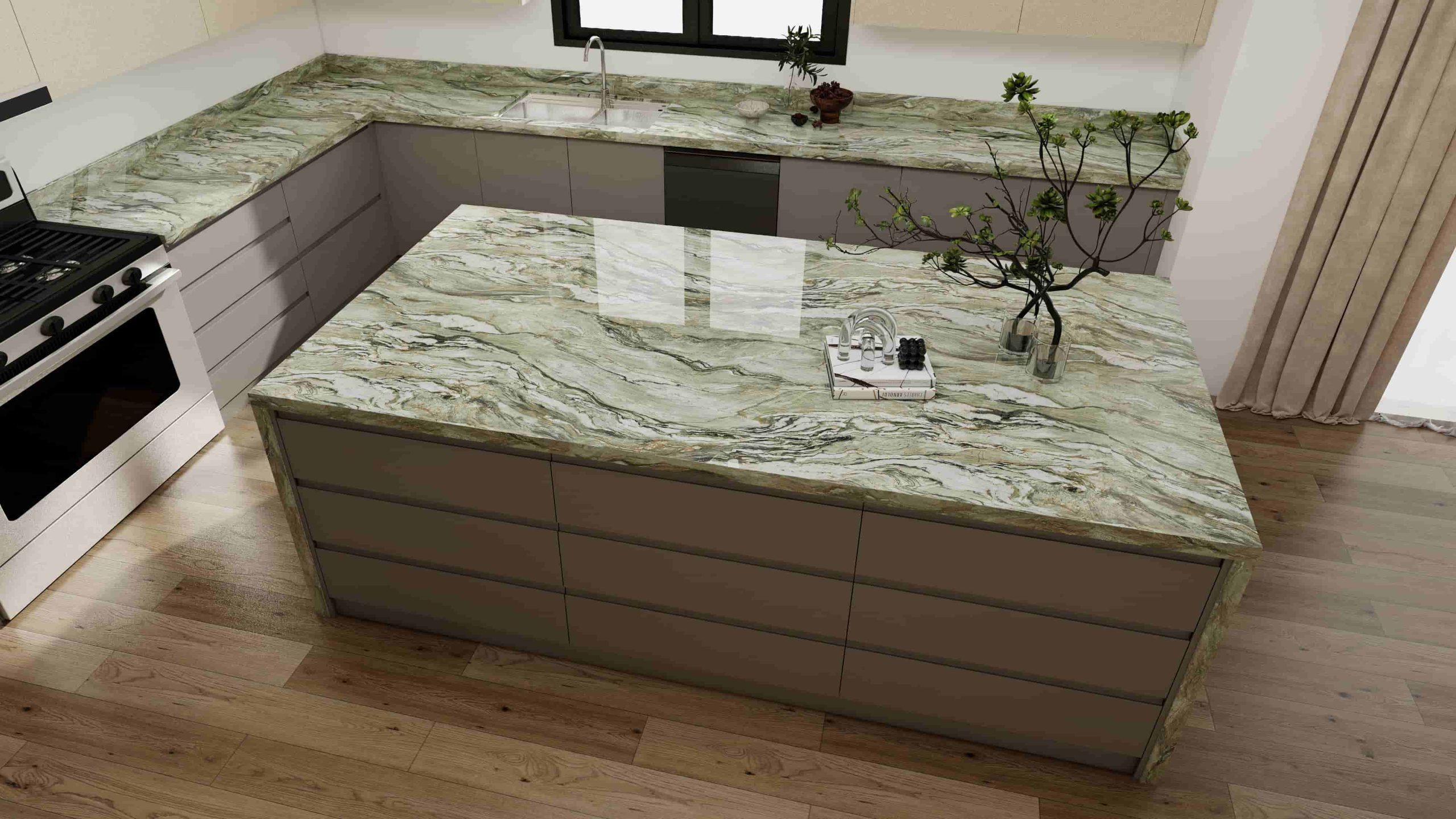
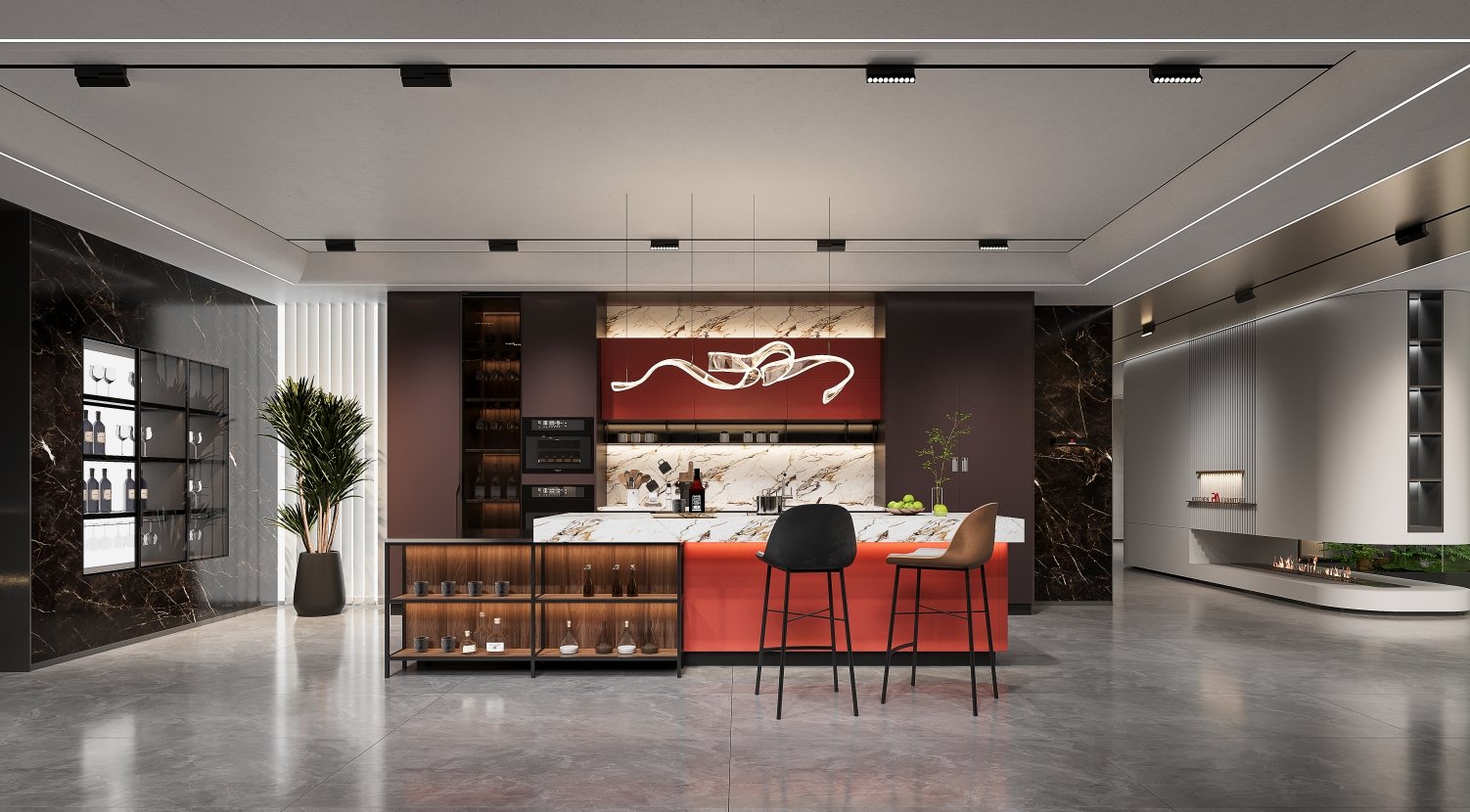
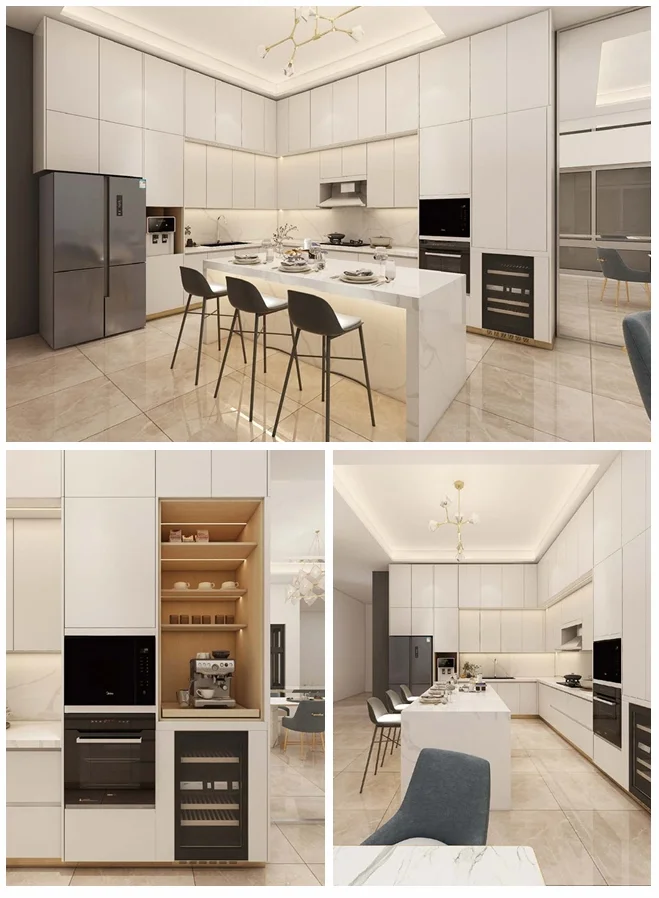
The countertop is often the focal point of a kitchen, especially in island designs. Here are some of the top materials used for kitchen island countertops:
- Engineered Quartz: Known for its high durability, low maintenance, and rich texture, quartz is one of the most popular countertop materials today. It offers a wide range of colors and patterns, making it a great choice for modern kitchens.
- Natural Stone (Granite, Quartzite, Marble): Natural stones have unique, luxurious looks and are perfect for high-end kitchens. While they offer strength and beauty, they can require regular sealing and maintenance to avoid staining.
- Butcher Block (Wood): If you prefer a warmer, more natural look, butcher block is an excellent choice. It’s ideal for creating a rustic or traditional vibe but requires proper sealing and care to prevent damage from moisture and heat.
- Solid Surface (e.g., Corian): This material provides seamless, versatile designs, allowing for integrated sinks and backsplashes. It’s easy to repair but lacks the durability of stone materials.
- Laminate and Concrete: For budget-conscious projects, laminate offers affordability and a variety of styles. Concrete can also be customized but needs more maintenance due to its porous nature.
Recommendation: For luxury and high-end residential projects, consider natural stone or quartz. For budget-conscious or modern styles, engineered quartz or laminate are great options. Remember to factor in the client’s maintenance preferences and climate considerations when choosing the material.
2. Cabinet Doors
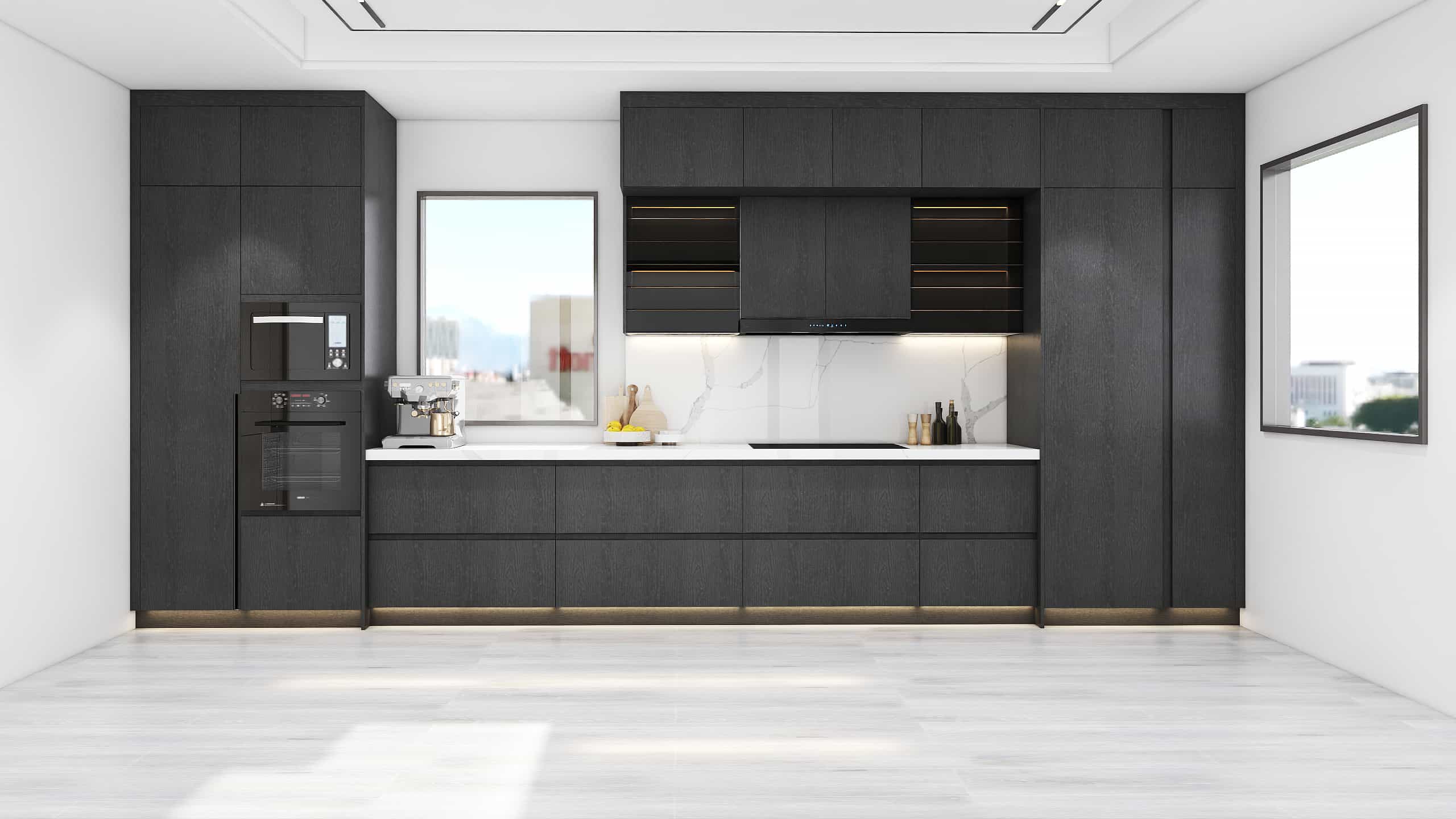
The cabinet doors define the overall aesthetic of the kitchen. Below are popular material choices:
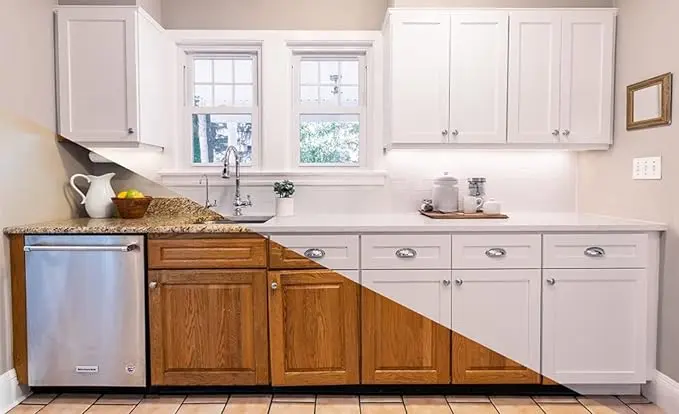
- Solid Wood: Wood cabinets are known for their durability and timeless appeal. Popular woods like maple, oak, and cherry offer a rich, natural look that can be stained or painted to match any décor.
- Wood Veneer: Wood veneer offers the beauty of wood at a more affordable price. It’s thinner than solid wood and is glued to an MDF or plywood base. This material provides a consistent grain pattern, making it an excellent alternative to solid wood.
- MDF + Laminate or Thermofoil: MDF is a smooth, stable material perfect for painted or laminated finishes. Thermofoil is a plastic coating that provides a smooth surface, making it easy to clean and maintain.
- High-Pressure Laminate (HPL): Laminate doors are available in a variety of colors and textures and are cost-effective. They are durable but may not have the same high-end look as solid wood.
- Glass and Metal: For a contemporary, industrial, or luxurious look, consider incorporating glass or metal into cabinet doors. These materials can elevate the design and create a focal point in the kitchen.
Recommendation: For upscale kitchens, solid wood or veneer offers elegance and lasting durability. For more cost-effective options, MDF with laminate or Thermofoil will provide a clean, modern look. Metal or glass doors are ideal for a sleek, modern aesthetic, especially in high-end or commercial kitchens.
3. Cabinet Shelves
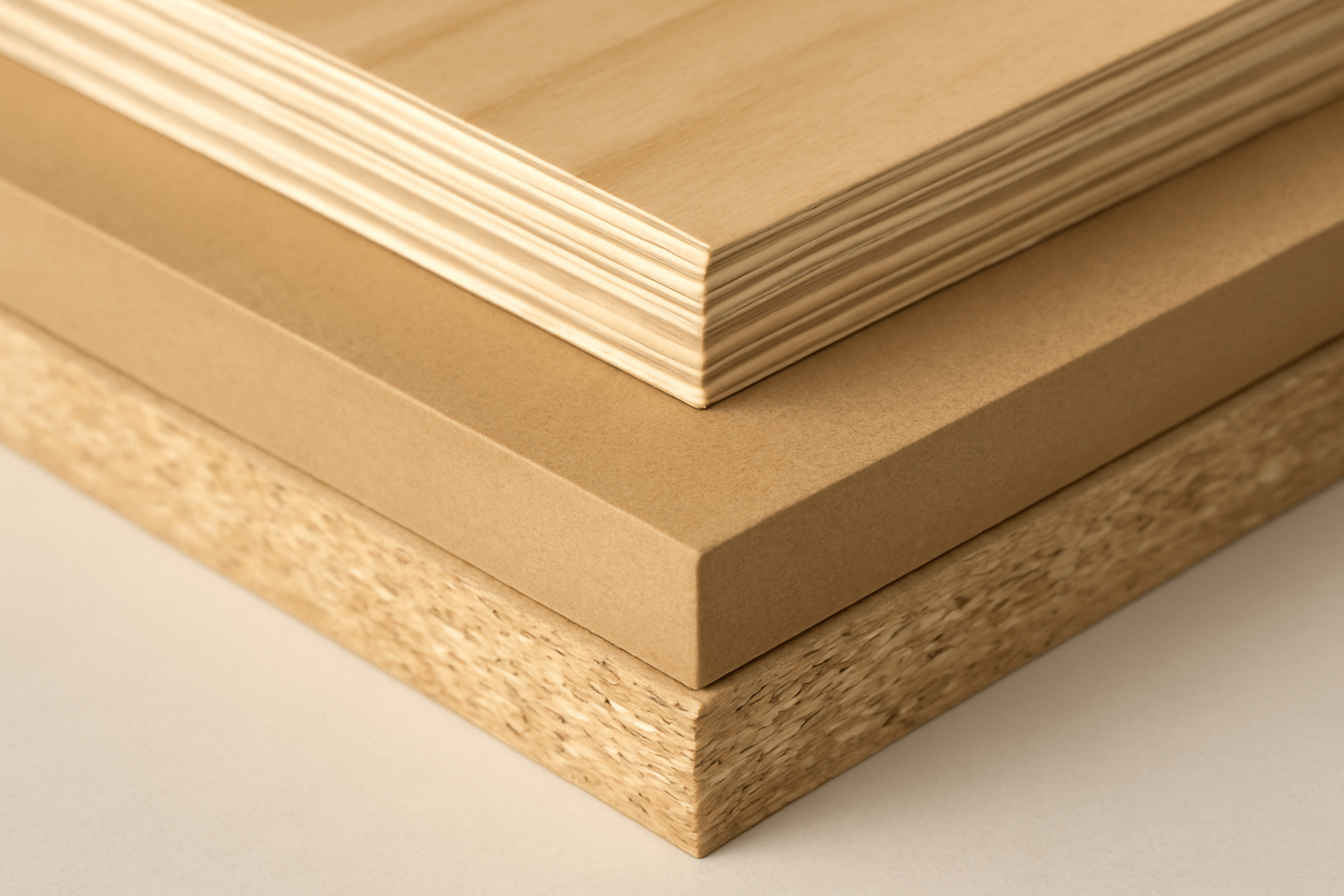
Cabinet shelves need to be sturdy, easy to maintain, and practical. Here’s a look at the best materials for shelves:
- Plywood: Plywood is a popular choice for shelving because it is durable, resists warping, and can support a significant amount of weight. It’s available in various thicknesses and is suitable for both budget and high-end kitchens.
- MDF (Medium-Density Fiberboard): MDF is smooth, easy to paint, and affordable. However, it’s less durable than plywood and may not be suitable for heavy-duty shelving.
- Particle Board: An inexpensive option, particle board is commonly used in lower-budget kitchen designs. It’s not as durable as plywood or MDF but is a viable option for lighter shelving.
- Moisture-Resistant Boards: For kitchens prone to humidity, moisture-resistant boards, often made from plywood or MDF treated with a water-resistant coating, are essential to prevent warping or mold growth.
Recommendation: For heavy-duty shelves, especially in high-end kitchens, plywood or moisture-resistant boards are ideal. MDF is a good choice for lighter, decorative shelving, while particle board is best used in cost-conscious projects.
4. Cabinet Decorative Panels
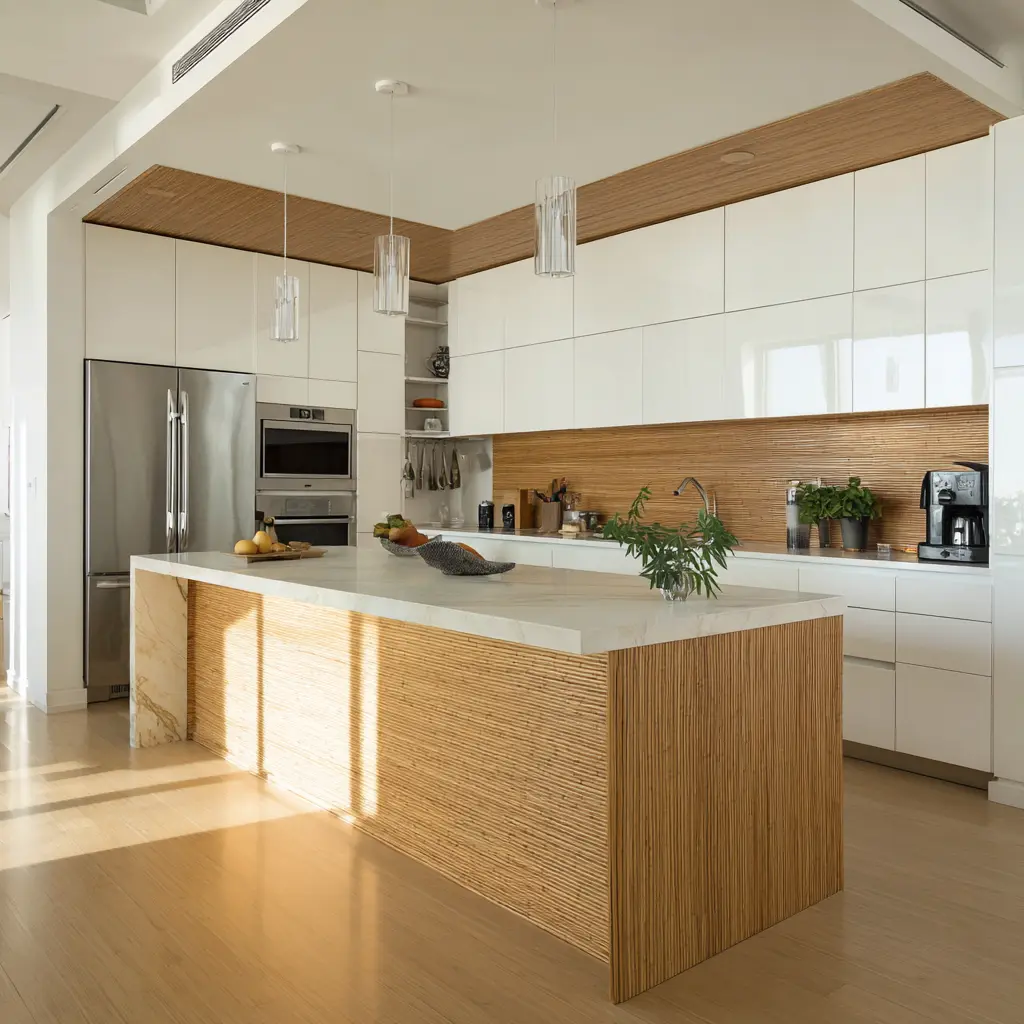
Decorative panels enhance the design of kitchen cabinets, adding texture and style. Here are the best materials for cabinet panels:
- Wood Veneer: Wood veneer provides a natural and luxurious appearance at a fraction of the cost of solid wood. It is perfect for a high-end, organic look and can be used on both doors and panels.
- Thermofoil: Thermofoil panels are durable, easy to clean, and come in a wide variety of finishes. They are a popular choice for budget-friendly kitchen designs, especially in modern or minimalist kitchens.
- High-Pressure Laminate (HPL): HPL is known for its durability, rich colors, and resistance to wear. It is a great option for panels that need to withstand high usage.
- Aluminum Composite Panels: Aluminum panels offer a sleek, modern look and are resistant to corrosion, making them ideal for industrial or contemporary kitchens.
- Glass or Mirror Panels: Glass panels, particularly frosted or tinted glass, are used to create a luxurious, modern aesthetic. Mirror panels can also be used for a bold statement, but they require regular cleaning.
Recommendation: For a luxury kitchen or commercial projects, wood veneer or glass panels will elevate the design. For modern and industrial styles, HPL or aluminum composite panels work well. Thermofoil is a great budget-friendly option for sleek, functional designs.
5.Kitchen Cabinet Material Selection Table
Based on the above, we have organized a simple and easy-to-understand table for you.
| Category | Materials | Advantages | Disadvantages | Recommendation |
|---|---|---|---|---|
| Kitchen Island Countertops | Engineered Quartz, Natural Stone (Granite, Quartzite, Marble), Butcher Block (Wood), Solid Surface (e.g., Corian), Laminate, Concrete | Durable, Low maintenance, Variety of textures | Price, Heavier materials, Maintenance required for some types | For high-end projects, choose Natural Stone or Quartz. For budget-friendly or modern styles, Engineered Quartz or Laminate are recommended. |
| Cabinet Doors | Solid Wood, Wood Veneer, MDF + Laminate or Thermofoil, High-Pressure Laminate (HPL), Glass, Metal | Elegant, Durable, High-end aesthetic, Variety of styles | Costly (for Solid Wood), Less durable (for MDF), Maintenance (for glass) | Solid Wood or Veneer for luxury kitchens. MDF with Laminate or Thermofoil for budget-conscious projects. |
| Cabinet Shelves | Plywood, MDF, Particle Board, Moisture-Resistant Boards | Strong, Easy to maintain, Affordable | Less durable (MDF and Particle Board), Limited moisture resistance (for Particle Board) | For heavy-duty shelves, use Plywood or Moisture-Resistant Boards. MDF is suitable for decorative shelving. |
| Cabinet Decorative Panels | Wood Veneer, Thermofoil, High-Pressure Laminate (HPL), Aluminum Composite Panels, Glass, Mirror | Variety of textures, Durable, High-end appearance | Maintenance (glass), Costly (metal, glass) | Wood Veneer or Glass for luxury designs, HPL or Aluminum Composite Panels for modern styles. Thermofoil is great for budget-friendly projects. |
Conclusion
Choosing the right materials for your kitchen cabinets is essential for creating a kitchen that not only looks good but also stands the test of time. Whether you are working on a high-end residential project, a budget-conscious renovation, or a large-scale commercial design, selecting the best materials based on durability, aesthetics, and functionality will ensure a successful result.
By understanding the advantages and disadvantages of each material, you can make informed decisions that meet both your design vision and the practical needs of your clients.
For further assistance with designing your dream kitchen or to learn more about our high-quality materials, feel free to visit our showrooms or get in touch with our team for expert advice on custom kitchen solutions.
PA Home’s Premium Kitchen Cabinet Panels

At PA Home, we specialize in high-quality, custom kitchen solutions designed to meet the unique needs of every project. With years of expertise in providing full-home customization, we offer a wide range of materials, including premium kitchen cabinet panels, tailored to enhance both style and functionality. Whether you’re struggling to choose the right cabinet materials or looking for professional design assistance, our team is here to help. Visit us for expert guidance, competitive pricing, and tailored solutions. Ready to transform your kitchen? Contact us today for inquiries, design support, or partnership opportunities. Learn more at PA Home.