A dining room cabinet can do more than store plates and table linens. It can keep everyday essentials organized, display favorite pieces, and turn an unused wall into a functional design feature.
Table of Contents
ToggleChoosing the right cabinet comes down to your available space, storage needs, and the way you use the room. The goal is to add function without making the dining area feel crowded or visually heavy.
In this guide, we’ll explore 20 modern dining room cabinet ideas for 2026, from compact storage options to larger built-in designs. You’ll see how different cabinet styles work in different spaces and what to consider when choosing one for your home.
20. Modern Dining Room Cabinet Ideas
1. Sideboards
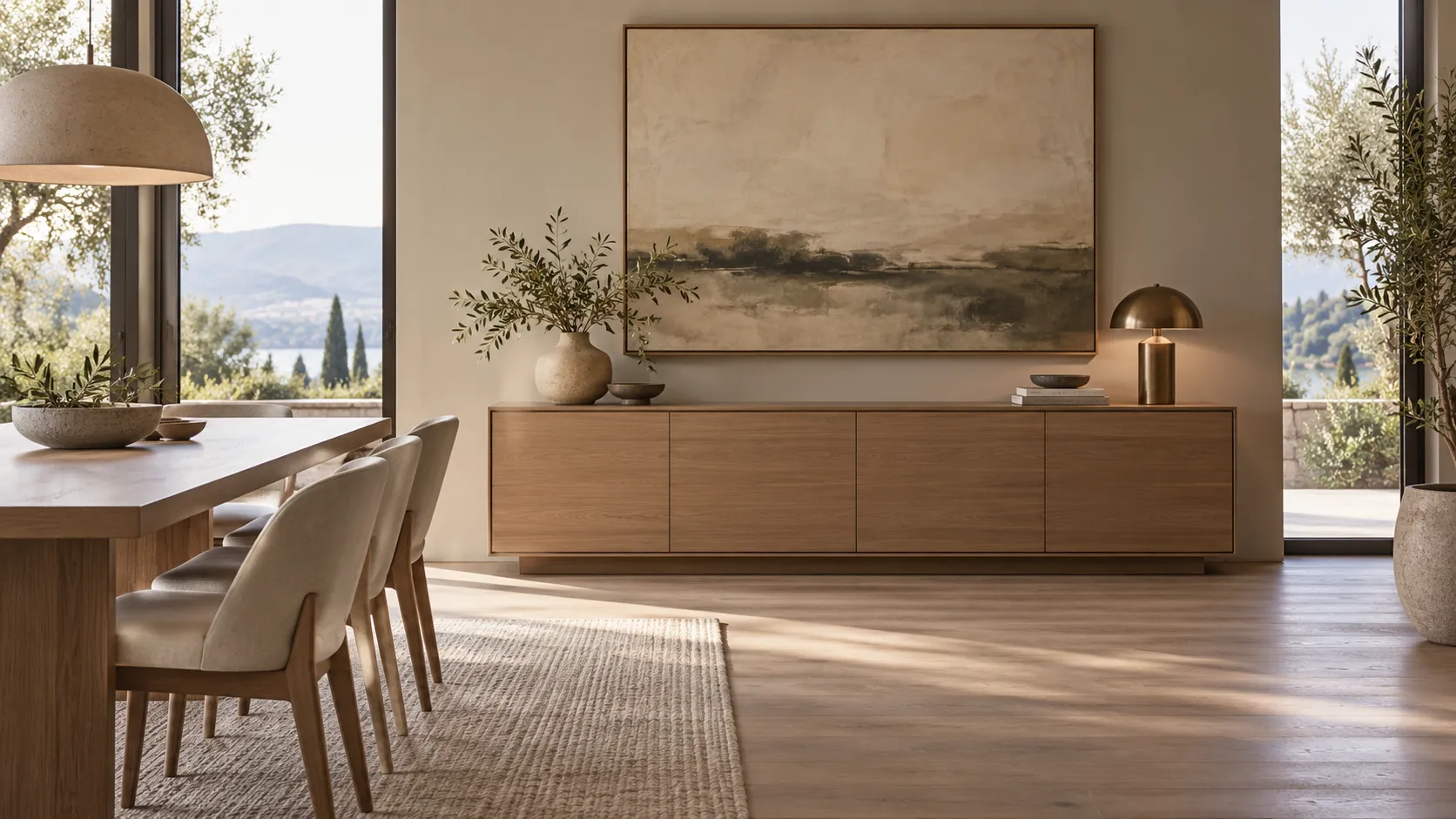
A sideboard is a long, low cabinet that adds storage without taking over the dining room. Its wide surface also gives you a practical place for serving dishes, lamps, or artwork.
It works especially well along a longer dining wall. Use the closed compartments to keep table linens, dinnerware, and occasional serving pieces out of sight. If a large dining table already anchors the room, the low profile adds useful storage without introducing another tall visual element. Choose a width that feels balanced with the table, and leave enough open wall space around the cabinet so the room does not feel overfilled.
2. Buffets

When dinner is served away from the kitchen, a buffet can become the room’s most useful landing spot. Its broad top leaves plenty of space for serving dishes, drinks, or desserts, while the cabinet below keeps extra dinnerware and table linens close at hand.
For a contemporary dining room, choose a buffet with enough surface area to support entertaining without making the room feel heavy. A warm wood finish can soften a minimalist interior, while flat fronts and discreet hardware create a cleaner look. Keep the styling simple so the surface remains ready for serving.
3. Credenzas

A modern credenza is a great option when you want dining room storage that feels stylish rather than purely functional. Its low, wide shape keeps the room visually open while providing concealed space for dinnerware, linens, and serving pieces.
Use the top to display artwork, lamps, books, or decorative objects to make the cabinet feel integrated into the room. For a contemporary look, choose a dining room credenza with clean lines, warm wood tones, or subtle textured finishes that add character without making the space feel heavy.
4. Servers

Not every dining room has enough wall space for a wide cabinet. A dining server offers a narrower, more compact storage solution, providing easy access to essentials without overwhelming the space around the table.
Its slim profile makes it ideal for storing serving dishes, glassware, napkins, and barware within reach during meals. Drawers keep smaller items organized, while closed compartments hide larger pieces away. For smaller dining areas, choose a narrow server cabinet that maintains comfortable movement around the table and chairs while adding practical storage.
5. Hutches

A hutch builds upward with a closed lower cabinet paired with open shelving or glass-front storage above. This two-piece design combines practical dining storage with a dedicated area for displaying items you use and enjoy seeing.
Use the lower section to store everyday essentials such as linens, serving pieces, or tableware, while the upper shelves can showcase dinnerware, glassware, and decorative accents. A dining hutch is especially useful for adding height and character to an empty wall while keeping the room organized and visually balanced.
6. China Cabinets

Some dining pieces are meant to be displayed, not hidden away. A china cabinet provides a dedicated place for fine dinnerware, glassware, and serving collections, turning special pieces into part of the dining room’s visual design.
Unlike a hutch, a china cabinet focuses more on curated display than combined storage. Glass doors and shelves keep collections protected while allowing you to showcase items by color, style, or occasion. For modern dining rooms, choose a clean-lined design with finishes that complement your table and surrounding furniture.
7. Curio Cabinets

A curio cabinet gives smaller collections a dedicated place to stand out in the dining room. Instead of scattering decorative pieces throughout the space, use it to group ceramics, artwork, collectibles, or travel finds into one cohesive display.
Glass panels keep everything visible from different angles, while a slim frame helps the cabinet feel light and modern. Integrated lighting can add depth in the evening and highlight favorite pieces. If your dining room already has plenty of furniture, choose a narrow curio cabinet to add personality and display space without taking up too much floor area.
8. Display Cabinets

Display cabinets are a practical choice when you want both visible storage and concealed space in the dining room. Open sections can showcase dinnerware, ceramics, or decorative objects, while drawers and closed compartments keep everyday essentials neatly out of sight.
This combination works especially well when you need flexible dining room storage without making the wall feel too heavy. Choose a modern display cabinet with clean lines, balanced proportions, and a mix of open and closed storage so the room feels organized, functional, and visually calm.
9. Glass-Front Cabinets

Glass-front cabinets let dinnerware, glassware, and ceramics become part of the dining room while keeping them protected behind closed doors. The transparent panels make favorite pieces easy to see without leaving everything fully exposed.
Glass also helps a larger cabinet feel lighter by allowing more visual depth through the display. Keep the shelves selectively styled instead of filling every space. Leaving some breathing room around key pieces creates a cleaner, more balanced look and prevents the cabinet from feeling visually crowded.
10. Console Cabinets

A console cabinet makes good use of narrow walls where a deeper storage piece might feel intrusive. Its shallow profile provides useful storage and display space while leaving more room around the dining table and walkways.
This makes it particularly useful in open-plan or compact dining areas. Place one against a wall or use it to create a subtle transition between the dining and living spaces. Style the top with artwork, a mirror, or a small lamp, while keeping everyday essentials behind closed doors. Before choosing the size, check the surrounding circulation space so chairs can move comfortably and walkways remain clear.
11. Corner Cabinets

An empty corner can be surprisingly useful in a dining room. A dining room corner cabinet fits into that often-overlooked space, adding storage without taking over the main wall or competing with the dining table.
Use the shelves or enclosed compartments for glassware, serving pieces, or decorative objects that do not need to stay on the dining table. In a compact room, the right corner cabinet can also free up valuable wall space for artwork or other furniture. Choose a finish that relates to the surrounding pieces so the cabinet feels like part of the room rather than an afterthought.
12. Bar Cabinets

A dining room bar cabinet turns part of the space into a ready-to-use entertaining station. Bottles, glassware, bar tools, and cocktail accessories can stay together instead of taking over the kitchen or dining table.
Closed storage keeps the setup looking tidy between gatherings, while glass doors or discreet interior lighting can put your favorite glassware on display. In an open-plan home, placing the cabinet near the dining area also keeps drinks close to the table without adding another piece of furniture to the kitchen.
13. Tall Cabinets

When wall space is limited, tall dining room cabinets can take storage upward rather than outward. Their vertical form makes room for more shelves and compartments while keeping the footprint relatively compact.
Use the upper shelves for glassware or decorative pieces, and reserve the lower sections for dinnerware, linens, and everyday essentials. In a smaller dining room, pay close attention to the cabinet’s height and width. A slim profile and a finish that connects with the dining table or other furniture can help a tall piece feel intentional rather than imposing.
14. Built-In Cabinets

Built-in dining room cabinets can be planned around the room rather than simply placed into it. By following the wall, ceiling, or existing architectural features, the cabinetry feels like a natural extension of the dining space.
The layout can combine drawers, closed cabinets, open shelves, and display niches according to what you actually need to store. Built-in dining room storage is also useful for walls with alcoves, uneven sections, or other features that make standard furniture difficult to place. Choose materials and finishes that echo the surrounding architecture for a dining room cabinetry design that feels considered from the start.
15. Floating & Wall-Mounted Cabinets

When floor space is tight, floating cabinets move storage off the ground and onto the wall. The clear space underneath keeps the floor visible, which can make a dining room feel more open and less crowded.
Use wall-mounted storage for dinnerware, glassware, or pieces you want within easy reach. Closed doors can hide everyday items, while open shelves create room for a few decorative accents. This style suits modern dining rooms with clean lines, especially when you want useful storage without adding visual weight near the floor.
16. Floor-to-Ceiling Cabinets

A floor-to-ceiling cabinet can turn a blank dining wall into a continuous storage feature. By using the full height of the room, it creates generous storage without spreading furniture across the floor.
The key is to give the tall wall some visual rhythm. Combine closed cabinets with open shelves or display niches, and keep the finish consistent across sections. In a modern dining room, this approach works particularly well when you want the cabinetry to feel like part of the architecture rather than a standalone piece of furniture.
17. Modular Cabinets

Modular cabinets let you build a storage setup piece by piece. Instead of committing to one large unit, you can combine cabinets, drawers, shelves, and display sections to suit the room.
The real advantage is flexibility. You can add, remove, or rearrange modules as your storage needs change. This makes modular dining room cabinets useful for homes that may evolve over time. Keep the proportions and finishes consistent, and the separate units can still read as one cohesive dining room storage system.
18. Open Shelving with Lower Cabinets

Open shelving above closed cabinets creates a useful balance between display and everyday storage. The upper shelves keep favorite dinnerware, ceramics, or artwork visible, while the lower section hides items that do not need to be on show.
This arrangement also gives you more freedom to style the wall. Leave some shelf space empty, and group objects by color, material, or height. In a modern dining room, simple shelving paired with streamlined lower cabinets can add character without making the storage feel bulky.
19. Built-In Banquette with Storage

A built-in banquette can turn an overlooked corner into both seating and useful storage. The bench follows the shape of the space, making it a practical option for breakfast nooks, bay windows, or compact dining areas.
Lift-up seats or built-in drawers can store table linens, serving pieces, or items used less often. Keeping the storage beneath the seating also leaves the surrounding walls open for artwork or shelving. Choose upholstery and cabinetry finishes that connect with the dining table and other furniture for a cohesive look.
20. Cabinets with Open Display Niches

Open display niches can break up a run of dining room cabinets and give the wall a more layered appearance. Instead of keeping every section behind doors, selected niches create space for ceramics, artwork, or decorative objects.
The contrast between open and closed sections also adds visual rhythm to a large cabinet wall. Use the niches for pieces you want to highlight, while keeping dinnerware, linens, and everyday items behind closed doors. A consistent finish across the cabinet can tie both elements together without making the design feel too uniform.
Dining Room Cabinet Types at a Glance
Use this quick guide to compare different cabinet styles at a glance and see which options work best for different dining room layouts and storage needs.
| Cabinet Type | Best For | Key Feature |
|---|---|---|
| Sideboard | Long walls | Low, wide storage |
| Buffet | Entertaining | Large serving surface |
| Credenza | Modern interiors | Sleek, low profile |
| Server | Small dining areas | Narrow footprint |
| Hutch | Storage + display | Upper and lower storage |
| China Cabinet | Dinnerware display | Glass-front display |
| Curio Cabinet | Collections and decor | Enclosed display |
| Display Cabinet | Storage + display | Open and closed sections |
| Glass-Front Cabinet | Visible storage | Protected display |
| Console Cabinet | Narrow walls | Shallow depth |
| Corner Cabinet | Unused corners | Space-efficient shape |
| Bar Cabinet | Beverage storage | Dedicated bar storage |
| Tall Cabinet | Limited floor space | Vertical storage |
| Built-In Cabinet | Custom layouts | Integrated design |
| Floating & Wall-Mounted Cabinet | Tight floor space | Open floor underneath |
| Floor-to-Ceiling Cabinet | Full-wall storage | Maximum vertical use |
| Modular Cabinet | Flexible layouts | Reconfigurable setup |
| Open Shelving with Lower Cabinets | Display + storage | Open upper, closed lower |
| Built-In Banquette with Storage | Compact dining areas | Seating + storage |
| Cabinets with Open Display Niches | Large cabinet walls | Breaks up solid cabinetry |
How to Choose the Right Dining Room Cabinet?
The right cabinet should match how you use the dining room, how much storage you need, and how much space you have.
Consider Your Storage Needs
Think about what you actually need to store. Dinnerware, glassware, linens, serving pieces, and barware may need different solutions. Use drawers for smaller items, closed cabinets for everyday essentials, and glass-front or open sections for pieces you want to display.
Match the Cabinet to Your Dining Room Layout
Let the room guide the cabinet choice. A long wall suits a sideboard or credenza, while a corner may call for a corner cabinet. For small dining room cabinet ideas, consider slim servers, console cabinets, or floating designs that provide storage without crowding the table or walking paths.
If your dining room has an unusual wall, alcove, or specific storage requirements, bespoke cabinetry can be designed around the space rather than forcing a standard unit to fit.
Balance Open and Closed Storage
A mix of open and closed storage keeps dining room cabinetry both practical and visually balanced. Display ceramics or artwork on open shelves, while keeping linens and everyday items behind closed doors. This approach also creates useful dining room storage ideas for small spaces without making the room feel cluttered.
Before choosing a cabinet, check the wall width, clearance around the dining table and chairs, storage capacity, door and drawer access, and how the finish relates to the surrounding interior.
Modern Dining Room Cabinet Design Tips for 2026
Modern dining room cabinetry is becoming more integrated, balanced, and intentional. These four design principles can help you create storage that feels natural within the room.
Choose Cabinetry That Blends With the Architecture
Built-in and floor-to-ceiling cabinetry can follow the lines of the room instead of looking like separate furniture. Coordinate the cabinet finish with nearby walls, flooring, or architectural details for a more seamless look. Architectural Digest’s built-in shelving ideas also show how storage and display can work together.
Use consistent materials to help large dining room cabinetry feel like part of the architecture.
Mix Display and Concealed Storage
Combining open shelving, glass-front sections, drawers, and closed cabinets creates a more balanced storage solution. Display ceramics and decorative objects where they add visual interest, while everyday items stay neatly concealed.
Leave some open space around displayed pieces so the cabinet does not feel overcrowded.
Use Vertical Space Without Making the Room Feel Heavy
Tall, floor-to-ceiling, and wall-mounted cabinets can increase storage without taking up more floor area. This works especially well when the dining table already occupies much of the available space.
Balance taller cabinetry with open sections, lighter finishes, or negative space.
Keep the Cabinet Proportional to the Dining Table
The cabinet and dining table should feel connected as part of the same composition. An undersized cabinet may look disconnected, while an oversized one can compete with the table.
Consider visual scale and surrounding space rather than focusing only on exact measurements.
Conclusion
The right dining room cabinet should feel like a natural part of the space, not simply a way to fill an empty wall. It should provide the storage you need while supporting how you use the room every day.
Start with the size of your dining area, what you need to store, and how you move through the space. Then choose a cabinet style that balances function, proportion, and character so the room feels organized, comfortable, and considered.
FAQ
There is no single best cabinet for every dining room. Choose based on your available wall and floor space, storage needs, and how you use the room. A sideboard suits everyday storage, while built-in cabinetry works well when you want a more integrated design.
They are all low storage pieces, but their proportions and typical uses differ.
- Sideboards are versatile for everyday storage
- Buffets often provide more serving space
- Credenzas tend to have a sleek, low-profile design that feels more furniture-led.
Common items include dinnerware, glassware, table linens, serving dishes, barware, and seasonal entertaining pieces. Use drawers for smaller items and closed cabinets for things you do not need to display.
Look for a slim server, shallow console cabinet, floating cabinet, or corner cabinet. Measure the available wall space and keep enough clearance around the dining table and chairs for comfortable movement.
Built-in cabinets can be useful when you want to maximize storage or work around alcoves, uneven walls, or other architectural features. They can also create a more cohesive look when the cabinetry is designed to relate to the room’s architecture.
A combination of both often gives you the most flexibility. Open shelves or glass-front sections can display dinnerware and decorative pieces, while closed cabinets keep everyday items and less attractive essentials out of sight.