An entryway shoe cabinet does more than keep shoes out of sight. It also helps shape the first impression of your home. In a small apartment, a bulky cabinet can make the entrance feel tighter, while the right shoe cabinet design can keep the space calmer and more open.
Table of Contents
ToggleA slim shoe cabinet works well in a narrow hallway. Floating storage keeps more flooring visible, while a built-in cabinet can blend almost seamlessly into the wall.
In this article, we’ll share 14 entryway shoe cabinet ideas for small homes and apartments. You’ll see how different shoe cabinet designs—including slim, floating, wooden, mirrored, modern, and built-in options—can solve common entryway problems without making the space feel crowded.
1. Use a Slim Shoe Cabinet in a Narrow Entryway
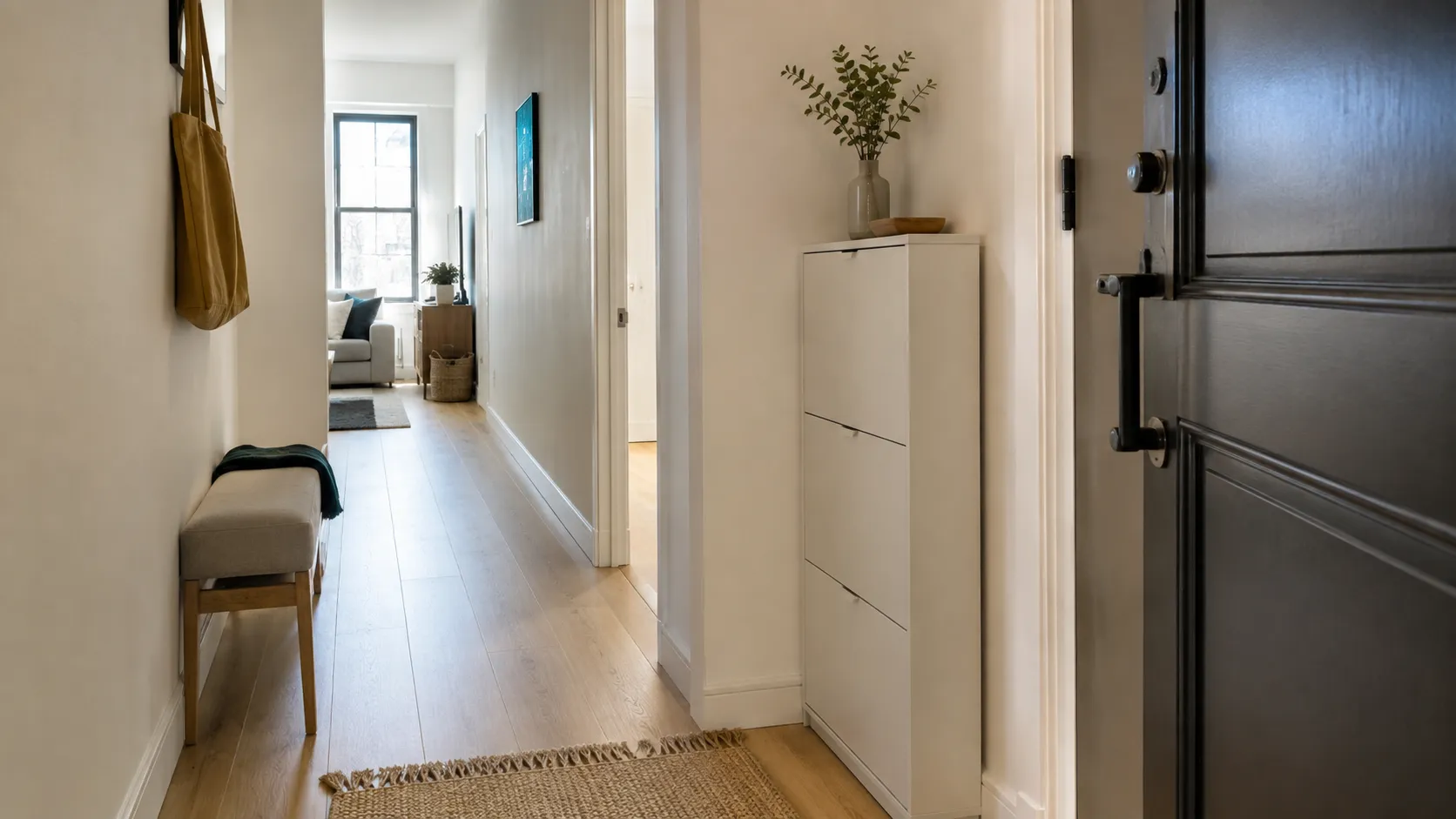
If your apartment opens into a narrow hallway, choose a slim shoe cabinet with a shallow profile. It keeps everyday shoe storage close to the wall and leaves the main walkway clear. This works well between the front door and an adjoining living area. Bulky furniture can interrupt the natural flow there.
Keep the cabinet front simple so the space feels lighter. Flat doors and small handles help a narrow shoe cabinet recede visually. For a very tight apartment entryway, an ultra-slim shoe cabinet can work like a compact console. Choose a finish close to the wall color to reduce contrast and visual depth.
2. Take a Tall Shoe Cabinet Up the Wall

When floor space is limited, the unused wall above becomes valuable. A tall shoe cabinet works especially well on a short foyer wall or beside the front door. It adds useful storage without spreading furniture across a small apartment entryway.
Height can make cabinetry feel heavy, so simplify the vertical surface. Choose uninterrupted doors, subtle hardware, and a consistent finish. One recessed niche can break up a tall narrow shoe cabinet and create a natural drop zone. A vertical shoe cabinet can also look calmer than several smaller units grouped together.
For safety, secure tall cabinetry according to the manufacturer’s instructions. Anchoring top-heavy furniture to reduce tip-over risks.
3. Float a Wall-Mounted Shoe Cabinet Above the Floor

In a compact condo entrance, visual lightness can matter as much as storage. A wall-mounted shoe cabinet lifts the cabinet body off the floor and keeps more flooring visible. That continuous floor line can make a narrow apartment hallway feel more open.
You can pair it with one large mirror rather than several small wall accents. In a dark foyer, soft lighting below a floating shoe cabinet can strengthen the airy effect. Keep the space beneath the cabinet clear so the design can breathe. That negative space helps the storage feel lighter and less intrusive.
4. Hide Shoes Behind Clean Cabinet Doors

Visible shoes can make a small entry feel busier than it really is. A shoe cabinet with doors creates a cleaner backdrop near the front door. This is especially helpful when the entryway is visible from the living or dining area.
For a quieter look, use flat fronts and discreet hardware. A closed shoe cabinet can nearly blend into the wall when the finish stays simple. If you want more character, subtle fluting adds texture without exposing the storage inside.
Pay attention to the cabinet face as a whole. Too many seams, handles, or contrasting details can make a small foyer feel fragmented. A simpler front keeps the entryway calm and visually connected.
5. Warm Up the Entryway With a Wooden Shoe Cabinet

A small entryway can feel cold when most finishes are painted, tiled, or metal. A wooden shoe cabinet adds warmth and makes practical storage feel more like furniture.
For a bright apartment foyer, a pale oak shoe cabinet keeps the look airy. A walnut shoe cabinet brings more depth and suits an entry that opens toward the living room. A dark wood shoe cabinet can also work well against pale walls with plenty of light.
Let the wood relate to something nearby. Repeat a similar tone in a mirror frame, wall hooks, or adjacent furniture. The match does not need to be exact. That repetition helps the cabinet feel intentional beside the front door.
6. Add Texture With a Rattan Shoe Cabinet

A rattan shoe cabinet adds texture without making a small entryway feel too heavy. The woven front catches light and gives the cabinet a softer, more relaxed look.
Pair it with warm white walls, pale wood, or simple flooring. This style works well in a cozy apartment foyer or Scandinavian-inspired hallway. Keep nearby patterns simple so the rattan remains the main feature. Let damp shoes dry before storing them inside. Good moisture control can also help reduce mold problems.
7. Keep It Simple With a Modern Entryway Shoe Cabinet

A modern entryway shoe cabinet works well in a space that already has strong visual details. Patterned flooring, a dark front door, or bold artwork can make the entrance feel busy. Flat cabinet fronts help bring the look back into balance.
Modern does not have to mean plain white. Try muted green, warm oak, or a subtle fluted shoe cabinet for more character. Keep the rest of the design simple so the cabinet does not compete with the room. Use simple hardware with textured fronts. Pair stronger colors with cleaner door designs. This keeps a modern shoe cabinet stylish without making a small entryway feel crowded.
8. Make a Mid-Century Shoe Cabinet Feel Like Furniture

A mid-century modern shoe cabinet can make shoe storage feel much less utilitarian. Warm walnut, tapered legs, and simple hardware give it the look of a small credenza.
That furniture-like feel is especially useful in a studio apartment or open-plan home. A mid-century shoe cabinet may stay visible from the sofa or dining area, so it should feel connected to the living room. Raised legs also keep more flooring visible and soften its visual weight. Carry the walnut tone into a nearby side table or chair frame. That small repeat helps the cabinet feel like part of the room.
9. Use a Mirrored Shoe Cabinet in a Dark Entryway

A mirrored shoe cabinet can make a dark entryway feel brighter and more open. In a small apartment, it also combines shoe storage with a full-length mirror in one piece.
Think about what you want the mirror to reflect. Place it toward daylight, artwork, or a tidy hallway. Keep coat hooks, open shelves, and everyday clutter out of the main reflection. Check the view from the front door before choosing a spot. A clean reflection can make the entrance feel calmer while helping the shoe cabinet and mirror sit more naturally in the foyer.
10. Style a Low Shoe Cabinet Like an Entryway Console

A low shoe cabinet works nicely in a small apartment entryway where taller furniture might feel too heavy. Its lower profile also leaves more open wall space near the front door.
Style the top like an entryway console. Add a lamp, framed artwork, or a simple vase, then leave a little breathing room between pieces. A shoe cabinet with a drawer is handy for keys, sunglasses, and other small essentials.
Try to keep the surface from turning into a daily drop zone. A small tray can hold loose items, while some empty space keeps the entry looking relaxed and put together.
11. Break Up a Large Shoe Cabinet With Two-Tone Finishes

A large shoe cabinet feels easier to live with when one finish does most of the work. Keep the main doors warm white, greige, or another quiet tone, then add a second finish to the top, frame, or lower section. This creates contrast without making the cabinet look pieced together.
A white shoe cabinet blends easily into light walls. Darker accents can add definition, while a full black shoe cabinet may feel heavier in a compact foyer. Keep the contrast simple and let the cabinet read as one piece. That balance gives you more storage without letting it dominate a small entryway.
12. Blend a Built-In Shoe Cabinet Into the Wall

A built-in shoe cabinet works best when you barely notice it. Paint the doors the same color as the wall, keep the hardware discreet, and follow the trim already used nearby.
This is especially useful along a long entry wall or narrow apartment hallway near the front door. Instead of adding several racks or baskets, one full-height cabinet can keep everything behind a cleaner surface. For an even softer look, choose recessed pulls or push-open doors. A hidden shoe storage cabinet can hold plenty without making a small foyer feel filled with furniture.
13. Turn an Awkward Entryway Niche Into Shoe Storage

An awkward niche near the front door can be a useful place for shoe storage. In older apartments, shallow recesses and short wall sections often sit empty because regular furniture does not fit well.
Use an entryway shoe storage cabinet that fits the opening without sticking too far into the hallway. A corner shoe cabinet can also work well where two walls meet. Keep the cabinet aligned with nearby trim or wall edges. A good fit can make the space feel intentional and give an awkward corner a clear purpose.
14. Use a Shoe Cabinet to Define an Open-Plan Entryway
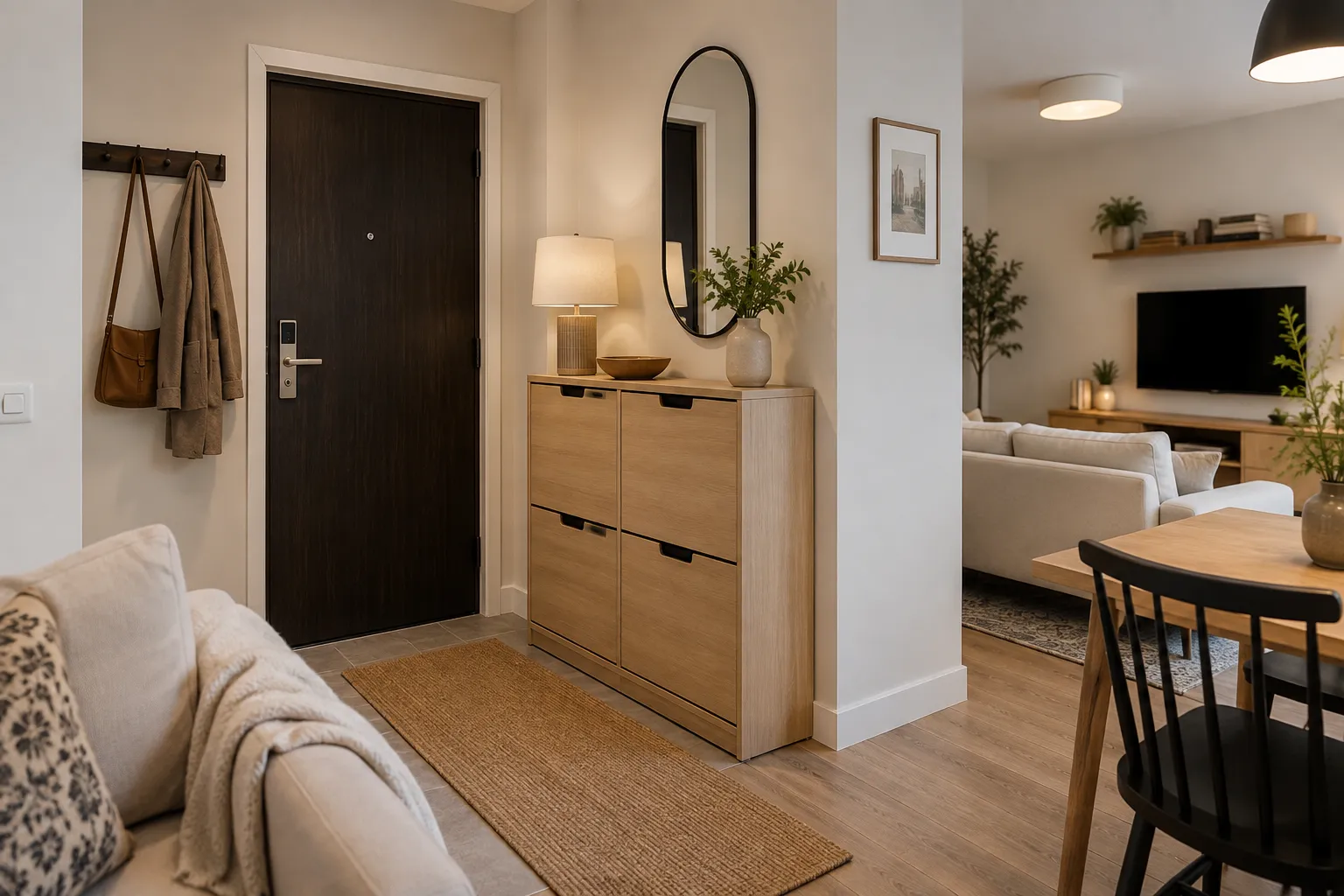
In an open-plan home, a shoe cabinet can mark the entry without adding a wall. A runner or a few simple hooks nearby can make the front door area feel more complete without closing it off.
A little breathing room between the cabinet and the sofa or side table helps separate the two areas naturally. This is especially useful when the entrance flows straight into the living room. For a studio apartment, a shoe storage cabinet for the entryway also stays visible from different parts of the room. A simple finish and tidy shape help it sit comfortably alongside the living and dining furniture.
Which Entryway Shoe Cabinet Is Best for Your Space?
Not every entryway shoe cabinet suits the same layout. The best shoe cabinet idea depends on your available wall space, entryway shape, and the look you want to create. This quick comparison can help you find an option that fits your space and the way you use your entry.
| Shoe Cabinet Idea | Best For | Main Benefit |
|---|---|---|
| Slim shoe cabinet | Narrow hallways and apartment entries | Keeps the walkway clear |
| Tall shoe cabinet | Short walls with limited floor space | Uses vertical storage |
| Wall-mounted shoe cabinet | Compact condos and dark foyers | Keeps more floor visible |
| Shoe cabinet with doors | Entries visible from living areas | Hides visual clutter |
| Wooden shoe cabinet | Warm, neutral interiors | Adds natural warmth |
| Rattan shoe cabinet | Cozy or Scandinavian-style entries | Adds soft texture |
| Modern shoe cabinet | Contemporary apartments | Keeps the look clean and simple |
| Mid-century shoe cabinet | Studios and open-plan homes | Looks more like living-room furniture |
| Mirrored shoe cabinet | Dark or small entryways | Combines storage with reflection |
| Low shoe cabinet | Small foyers with open wall space | Doubles as an entryway console |
| Two-tone shoe cabinet | Larger storage needs | Reduces visual bulk |
| Built-in shoe cabinet | Long entry walls and narrow hallways | Blends storage into the architecture |
| Niche shoe cabinet | Awkward recesses and short walls | Makes unused space practical |
| Open-plan entryway cabinet | Homes without a separate foyer | Helps define the entrance |
Once you know which cabinet idea suits the layout, it becomes much easier to style the rest of the entry around it. For an entryway with an unusual layout or specific storage needs, PA Home Indonesia can create a custom shoe cabinet that fits the space more naturally.
Conclusion
The right entryway shoe cabinet should make everyday storage easier without making the entrance feel crowded. The best shoe cabinet ideas also work with the layout, materials, and furniture already in the room.
In a small home, that might mean choosing a slimmer profile, using more wall height, or picking a finish that blends naturally with the space. A well-chosen cabinet can keep shoes organized while helping the entryway feel calmer, more open, and more connected to the rest of the home.
FAQ
The best entryway shoe cabinet depends on the layout. A slim shoe cabinet suits a narrow hallway, while taller storage makes better use of a short wall.
A floating cabinet can also work well when you want more flooring to remain visible. For an awkward recess, a fitted or built-in design may use the available space more efficiently.
Simple doors, subtle hardware, and a finish close to the wall color can make a shoe cabinet feel lighter. Keeping some floor visible also helps, especially with floating cabinets or designs on raised legs.
Sometimes one larger cabinet looks calmer than several smaller storage pieces. Keeping the surrounding area uncluttered makes a difference too.
White, light wood, greige, and wall-matched finishes can help a shoe cabinet blend into a small entryway. Darker colors can also work well when the surrounding walls and flooring are light.
Look at the front door, floor, hardware, and nearby furniture before choosing a finish. A repeated color or material can help the cabinet feel more connected to the room.
- Boxes are useful for seasonal or occasional footwear.
- An entryway shoe cabinet is usually more convenient for shoes you wear every day.
Closed storage also keeps the area near the front door looking tidier. Let wet or damp shoes dry before putting them away, and keep moisture under control inside the cabinet.
Start with the pairs you wear most often and keep them easiest to reach. Less-used shoes can go on higher or lower shelves.
Your footwear mix also matters. Sneakers, heels, flats, and boots may need different shelf arrangements, so adjustable storage can make a small cabinet easier to use.