Standard interior doors often break the clean, seamless look that minimalist interiors are meant to have. Hidden door design offers a smarter solution by blending the door into the wall, reducing visual clutter, and keeping the space calm and refined. That is why more homeowners and designers are using hidden doors in modern bedrooms, living rooms, kitchens, and home offices. Some are painted to match the wall, while others disappear into paneling, wallpaper, or feature walls. The right design can make a room feel more open, more intentional, and more custom. In this hidden door design ideas, you will discover different hidden door systems, inspiring design ideas, material and hardware options, and practical tips to help you choose the best hidden door for your minimalist interior.
Table of Contents
ToggleWhat Is a Hidden Door Design Ideas for Interior?
A hidden door is an interior door designed to blend into the wall around it. In most cases, it uses a concealed frame, minimal gaps, and reduced trim so the opening reads as part of the architecture rather than as a separate element. Many systems remove jambs and architraves entirely, which is what creates that clean, flush look.
You can think of it like editing a room. A standard door adds extra punctuation. A hidden door removes it.
That does not mean every hidden door becomes completely invisible. Some are painted to match the wall. Some are covered in wood veneer or wall panels. Others use wallpaper, glass, or dark finishes to reduce contrast rather than erase it completely. The idea is not always to hide the door perfectly. Sometimes it is enough to make it feel calmer.
Why Hidden Doors Are Perfect for Minimalist Interiors
Visual Simplicity (No Visual Clutter)
Minimalist interiors depend on restraint. Too many edges, frames, and surface changes can make even a beautiful room feel busy. A hidden door reduces those extra visual details. No heavy casing. No decorative trim. Often no visible hinges either. That makes the wall look cleaner and the room feel more refined. Flush-mounted concealed hinge systems are made for exactly this kind of reduced, detail-driven design.
Space Continuity (Seamless Walls)
A hidden door helps the wall read as one continuous surface. That matters in hallways, living rooms, and open-plan homes where every wall is part of the visual experience. Instead of cutting the room into smaller pieces, the door supports a smoother flow. Flush swing systems and trimless pocket systems are both designed to create that seamless wall effect.
Functional Concealment (Storage + Privacy)
Not every room needs attention. A pantry, linen closet, utility area, or home office often works better when it stays in the background. Hidden doors make that possible. They keep access easy while protecting the clean look of the room. ECLISSE even offers flush solutions specifically for closets, technical compartments, and concealed storage areas, which shows how strongly this idea is tied to function, not just style.
12 Hidden Door Design Ideas for Minimalist Interiors
Category A: Seamless Wall Integration
1. Seamless Flush Hidden Door Design Ideas

This is the purest version of a hidden door. Paint the slab and the wall the same color. Keep the reveals tight. Skip decorative trim. It feels calm, simple, and hard to mess up stylistically.
2. Wall Panel Integrated Hidden Door Design Ideas
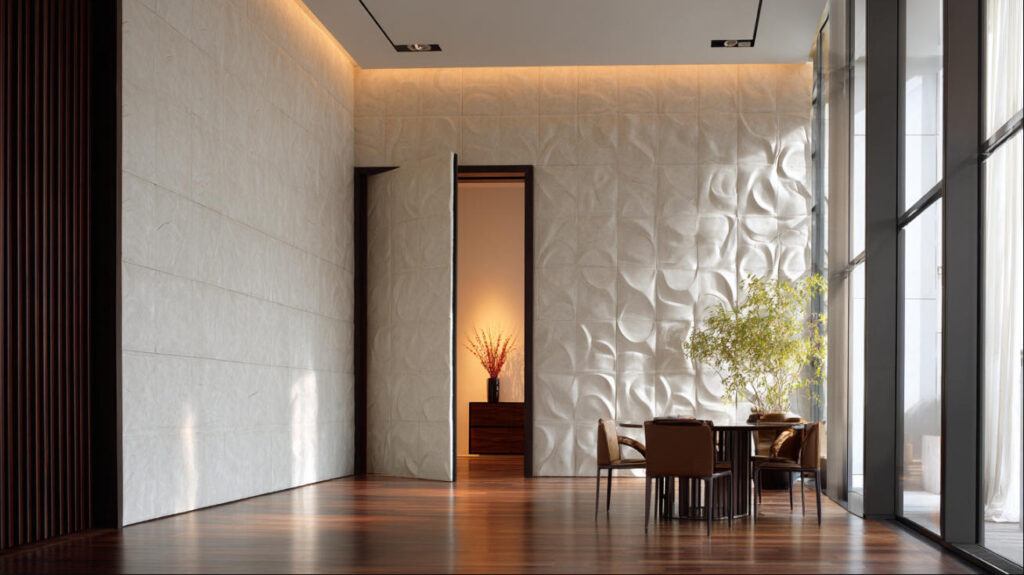
If your room uses wall paneling, do not stop the pattern at the door. Carry the panels right across it. This creates a built-in look that feels more custom and more expensive.
3. Wallpaper Camouflaged Hidden Door Design Ideas

Wallpaper can make a door dissolve surprisingly well. Recent design coverage highlights matching wallpaper on doors and surrounding walls as a way to create a more unified composition, especially when the repeat aligns cleanly across the opening. It works best on flush or jib-style doors with the right hinges and detailing.
Category B: Architectural Statement Doors
4. Floor-to-Ceiling Hidden Door Design Ideas

A full-height door stretches the eye upward and makes the wall feel more architectural. It is one of the easiest ways to make a room look taller and more custom.
5. Pivot Hidden Door with Concealed Frame

This is the showpiece option. A pivot hidden door adds a little drama without becoming flashy. Because concealed pivot systems can work with large slabs and minimal gaps, the door can feel bold while still staying refined.
6. Frameless Glass Hidden Door Design Ideas

This is a smart choice for offices, studies, or rooms that need light to travel through. It is not fully invisible, but it is visually quieter than a framed opening. dormakaba’s glass systems highlight that balance between physical separation and visual openness.
Category C: Functional Hidden Doors
7. Hidden Pantry Door

A hidden pantry door makes an open kitchen feel cleaner. That idea aligns closely with the “invisible kitchen” trend gaining momentum in 2026, where storage, appliances, and support spaces are increasingly concealed to keep the main kitchen visually calm.
8. Hidden Home Office Door
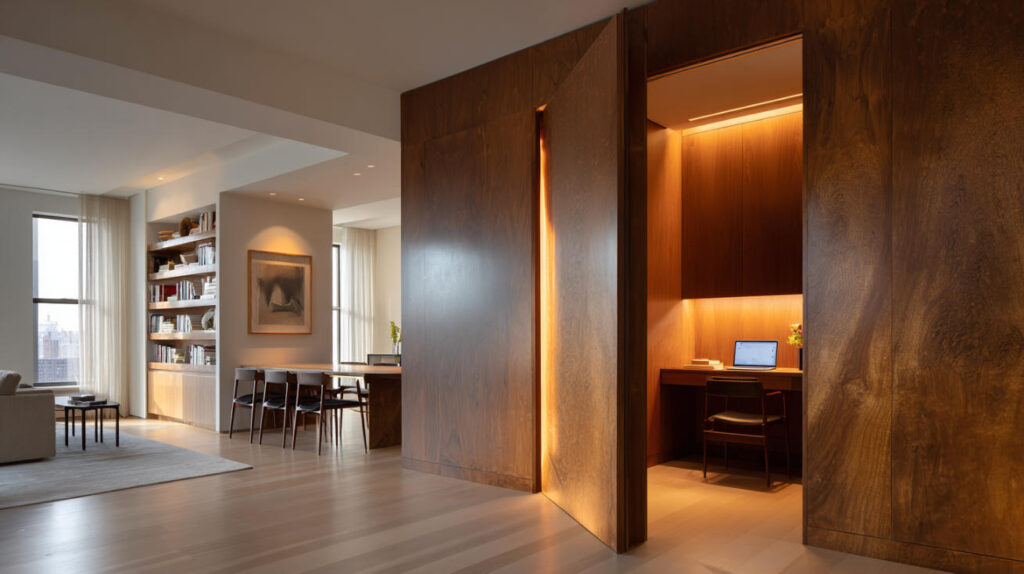
Not everyone wants a desk in full view all day. A concealed office door helps work zones disappear after hours. In a home where living, dining, and working overlap, that visual boundary can make the whole space feel calmer.
9. TV Feature Wall Hidden Door Design Ideas

This is one of the most practical ideas on the list. When a door cuts through a media wall, the composition can feel messy. Hide the opening inside the feature wall and the room immediately looks more organized.
Category D: Material & Style-Based Designs
10. Wood Slat Hidden Door Design Ideas

Wood slats add rhythm and warmth. When the slat pattern runs across the door, the surface reads like one continuous plane. This works especially well now because 2026 trend coverage points toward architectural wood surfaces and integrated timber features coming back in a big way.
11. Matte Black Hidden Door Design Ideas

A hidden door does not always have to vanish into white walls. In darker interiors, a matte black slab can blend into shadow and still look sleek. It is a great choice if you want more depth and contrast without adding ornament.
12. Push-to-Open Hidden Door Design Ideas
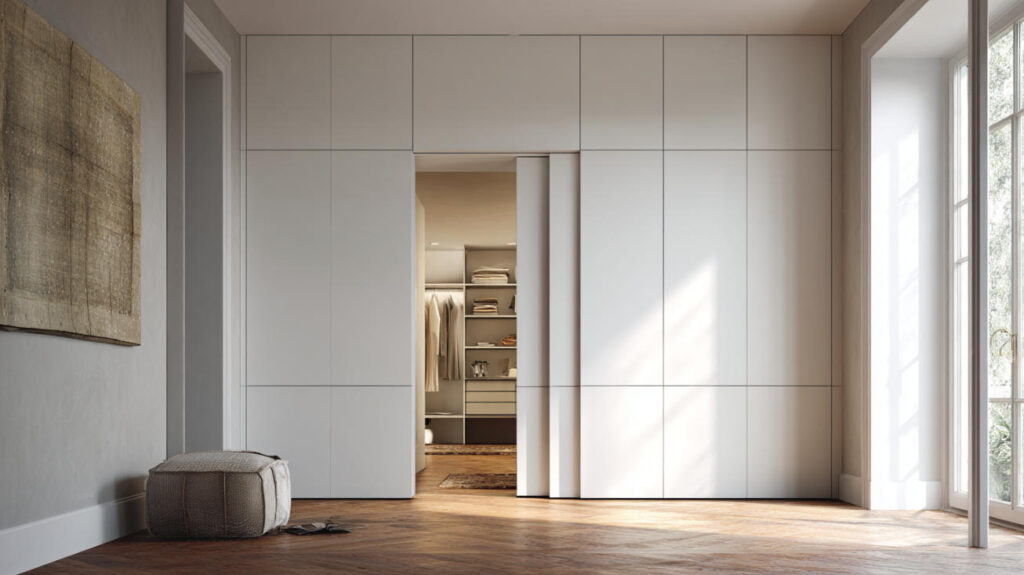
Sometimes the smallest detail changes everything. Remove the handle, and the door instantly looks quieter. Push latches are especially useful when you want a true minimalist surface with no visible hardware.
Hidden Door vs Traditional Door
A hidden door and a traditional door do the same basic job, but they create very different results.
That difference is not just aesthetic. Hidden doors rely on trimless frames, concealed hinges, precision gaps, and better coordination between wall finish and installation. Traditional doors are far less demanding.
| Comparison Point | Hidden Door | Traditional Door |
|---|---|---|
|
Overall Look |
Clean, flush, and minimalist |
More visible and decorative |
|
Visual Impact |
Reduces visual clutter |
Creates stronger visual separation |
|
Wall Integration |
Blends into the wall for a seamless look |
Stands out with frame, trim, and hardware |
|
Privacy for Utility Spaces |
Great for hiding pantry, storage, or service rooms |
More obvious and easier to identify |
|
Installation |
Requires precise alignment and skilled installation |
Easier and more straightforward |
|
Maintenance & Replacement |
Can be more complex to adjust or replace |
Easier to repair or replace later |
Common Mistakes When Designing a Hidden Door
1. Ignoring wall alignment
❎If the wall is uneven, the door will never look truly integrated.
2. Choosing the wrong finish
❎A glossy slab in a matte wall usually gives the game away.
3. Using weak hardware
❎This is a fast way to get sagging, noisy movement, or poor closing over time. Concealed systems are not the place to cut corners.
4. Forgetting the edge detail
❎The side edge, shadow gap, and reveal all matter. A hidden door is a detail-driven product.
5. Misusing wallpaper
❎Wallpaper camouflage only works when the pattern aligns and wraps correctly. Designers interviewed by Good Housekeeping stressed that alignment and the right flush door setup are critical.
6. Overusing hidden doors
❎If every door disappears, the home can start to feel confusing. You still need visual cues in some spaces.
Hidden Door Trends 2026
First, seamless millwork is getting bigger. The 2026 “invisible kitchen” direction reflects a broader desire for rooms that feel quieter, more integrated, and less visually busy. That favors hidden pantry doors, concealed storage, and doors blended into custom wall systems.
Second, camouflaged doors are becoming more playful and more polished. Wallpapered doors are gaining attention because they let the architecture recede while adding texture and surprise.
Third, warm wood is back. Architectural Digest’s 2026 trend coverage points to wood paneling, architectural wood surfaces, and richer timber finishes returning to interiors, which makes wood slat hidden doors and veneer-finished concealed doors especially relevant now.
Fourth, minimalist no-handle doors are staying strong. As surfaces become cleaner and storage becomes more integrated, push-to-open systems and concealed hardware make more sense than ever.
Conclusion
A good hidden door does not try too hard. That is exactly why it works. In a minimalist interior, it keeps the wall calm, helps functional spaces stay quiet, and makes the whole design feel more complete. Some hidden doors disappear almost completely, while others create a subtle architectural statement. The best choice always comes down to balance between style, function, materials, and hardware.
If you are planning a minimalist interior and want a hidden door that looks clean, practical, and well-integrated, PA HOME can help you explore the right solution for your space. From modern interior door designs to custom finishes that match your wall style, our team can support you with ideas that fit both aesthetics and daily use. Contact us today to discuss your project and find the right hidden door design for your home.
FAQs
1. What is the difference between a hidden door and a flush door?
A flush door has a flat surface, but it does not always blend into the wall. A hidden door goes further. It usually uses a concealed frame, minimal reveals, and less visible hardware so the door feels integrated into the wall. In simple terms, every hidden door is designed to look clean, but not every flush door is truly hidden.
2. Are hidden doors good for minimalist interiors?
Yes, hidden doors work very well in minimalist interiors because they reduce visual clutter and keep walls looking more continuous. They help the space feel cleaner, calmer, and more refined. They are especially useful in living rooms, hallways, bedrooms, and open-plan layouts where too many visible door frames can break the design flow.
3. Where should you use a hidden door in a home?
Hidden doors work best in spaces you want to keep visually quiet, such as pantries, storage rooms, home offices, closets, utility rooms, and TV feature walls. They are also a smart choice for bedrooms and hallways if you want a more seamless architectural look. The best location depends on whether your goal is better wall continuity, more privacy, or cleaner storage concealment.
4. Do hidden doors need special hardware?
Yes, most hidden doors need specialized hardware to achieve the right look and performance. This often includes a concealed frame, hidden hinges, magnetic locks, or push-to-open systems. If you choose a pivot hidden door, it will also need a pivot mechanism instead of standard hinges. Good hardware matters because a hidden door depends on precise alignment and smooth operation.