Lemari sepatu di area pintu masuk bukan hanya berfungsi untuk menyimpan sepatu agar tidak terlihat. Lemari ini juga membantu membentuk kesan pertama rumah Anda. Di apartemen kecil, lemari yang besar dapat membuat area pintu masuk terasa lebih sempit, sementara desain lemari sepatu yang tepat dapat membuat ruangan terasa lebih tenang dan terbuka.
Daftar Isi
BeralihLemari sepatu ramping sangat cocok untuk lorong yang sempit. Lemari gantung memungkinkan lebih banyak lantai terlihat, sementara lemari tanam dapat menyatu hampir tanpa cela dengan dinding.
Dalam artikel ini, kami akan berbagi 14 ide lemari sepatu untuk area pintu masuk rumah dan apartemen kecil. Anda akan melihat bagaimana berbagai desain lemari sepatu—termasuk pilihan ramping, gantung, kayu, cermin, modern, dan terintegrasi—dapat memecahkan masalah umum di area pintu masuk tanpa membuat ruangan terasa sempit.
1. Gunakan Lemari Sepatu Ramping di Lorong yang Sempit
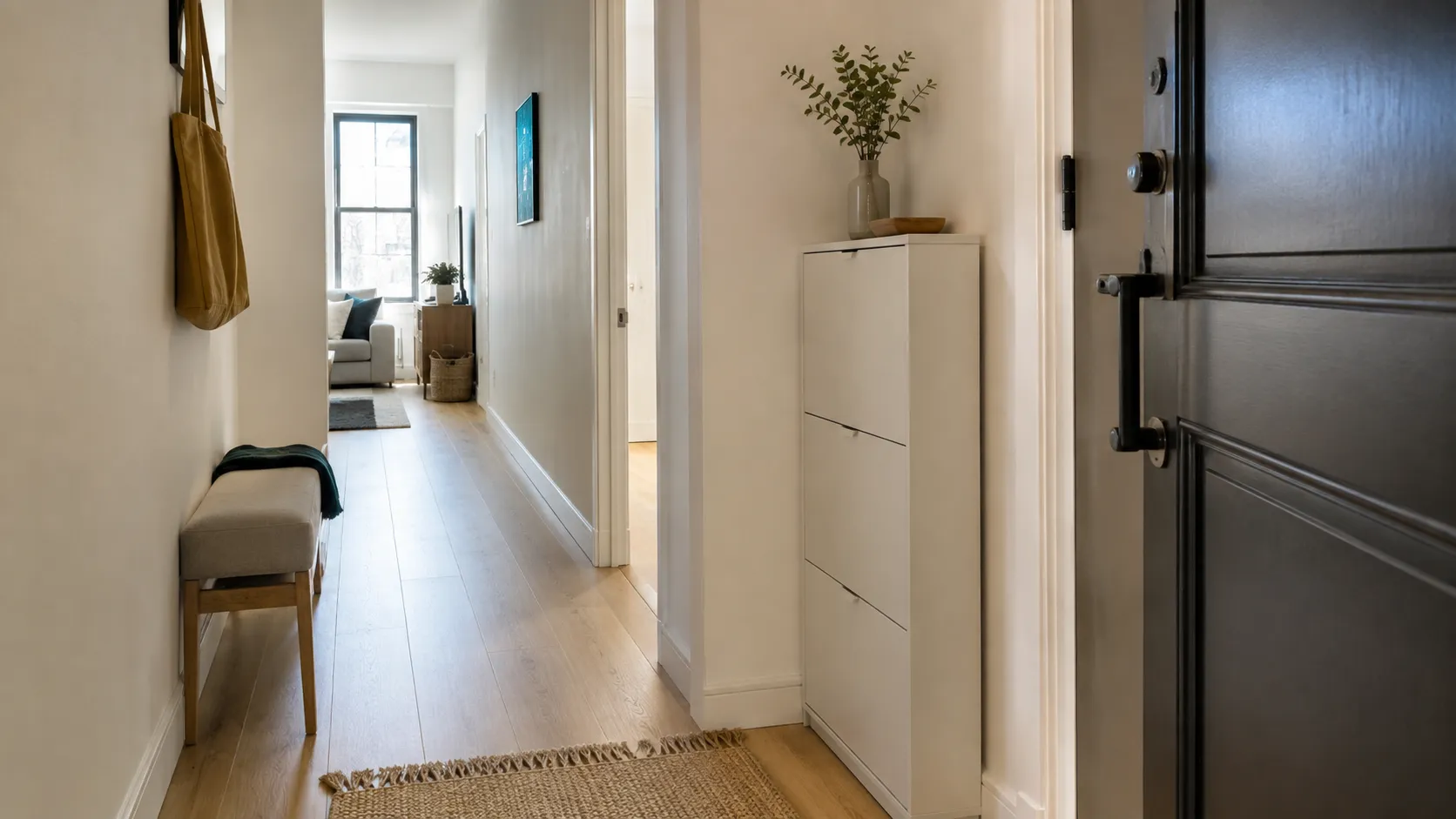
Jika apartemen Anda memiliki lorong yang sempit, pilihlah lemari sepatu ramping dengan profil rendah. Ini membuat penyimpanan sepatu sehari-hari tetap dekat dengan dinding dan membiarkan jalan utama tetap bebas. Ini sangat cocok ditempatkan di antara pintu depan dan ruang tamu yang berdekatan. Furnitur yang besar dapat mengganggu aliran alami di sana. Letakkan bangku di sampingnya dan tambahkan bantalan bangku pintu masuk khusus —tempat yang sama memungkinkan Anda untuk duduk sambil mengenakan sepatu dan menyimpan sepatu tambahan di bawahnya.
Jaga agar bagian depan kabinet tetap sederhana sehingga ruangan terasa lebih ringan. Pintu yang rata dan pegangan kecil membantu kabinet sepatu yang sempit tampak lebih kecil secara visual. Untuk lorong apartemen yang sangat sempit, kabinet sepatu ultra-ramping dapat berfungsi seperti konsol kompak. Pilih warna yang mendekati warna dinding untuk mengurangi kontras dan kedalaman visual.
2. Naikkan Lemari Sepatu Tinggi ke Dinding

Ketika ruang lantai terbatas, dinding yang tidak terpakai di atasnya menjadi berharga. Lemari sepatu tinggi sangat cocok untuk dinding foyer yang pendek atau di samping pintu depan. Ini menambah ruang penyimpanan yang berguna tanpa perlu menyebar furnitur di lorong apartemen yang kecil.
Tinggi lemari dapat membuatnya terasa berat, jadi sederhanakan permukaan vertikalnya. Pilih pintu tanpa sekat, perangkat keras yang simpel, dan finishing yang konsisten. Satu ceruk tersembunyi dapat memecah lemari sepatu yang tinggi dan sempit serta menciptakan area penyimpanan alami. Lemari sepatu vertikal juga dapat terlihat lebih tenang daripada beberapa unit kecil yang dikelompokkan bersama.
Demi keamanan, amankan lemari tinggi sesuai petunjuk pabrikan. Pasang jangkar pada furnitur yang berat di bagian atas untuk mengurangi risiko terguling.
3. Pasang Lemari Sepatu yang Dipasang di Dinding di Atas Lantai

Di lorong apartemen yang sempit, kesan lapang secara visual sama pentingnya dengan ruang penyimpanan. Lemari sepatu yang dipasang di dinding mengangkat badan lemari dari lantai dan membuat lebih banyak lantai terlihat. Garis lantai yang berkesinambungan tersebut dapat membuat lorong apartemen yang sempit terasa lebih terbuka.
Anda bisa memadukannya dengan satu cermin besar daripada beberapa aksen dinding kecil. Di ruang foyer yang gelap, pencahayaan lembut di bawah lemari sepatu gantung dapat memperkuat efek lapang. Jaga agar ruang di bawah lemari tetap kosong sehingga desainnya terlihat lebih lapang. Ruang kosong tersebut membantu penyimpanan terasa lebih ringan dan tidak terlalu mengganggu.
4. Sembunyikan Sepatu di Balik Pintu Lemari yang Bersih

Sepatu yang terlihat dapat membuat area masuk yang kecil terasa lebih ramai daripada sebenarnya. Lemari sepatu dengan pintu menciptakan latar belakang yang lebih bersih di dekat pintu depan. Ini sangat membantu terutama jika area masuk terlihat dari ruang tamu atau ruang makan.
Untuk tampilan yang lebih tenang, gunakan bagian depan yang rata dan perangkat keras yang sederhana. Lemari sepatu tertutup hampir dapat menyatu dengan dinding jika finishing-nya tetap simpel. Jika Anda menginginkan karakter yang lebih, alur halus menambahkan tekstur tanpa memperlihatkan penyimpanan di dalamnya.
Perhatikan bagian depan kabinet secara keseluruhan. Terlalu banyak sambungan, pegangan, atau detail yang kontras dapat membuat ruang foyer yang kecil terasa terpecah-pecah. Bagian depan yang lebih sederhana menjaga area pintu masuk tetap tenang dan terhubung secara visual.
5. Hangatkan Area Pintu Masuk dengan Lemari Sepatu Kayu

Area pintu masuk yang kecil bisa terasa dingin jika sebagian besar material yang digunakan berupa cat, ubin, atau logam. Lemari sepatu kayu menambah kehangatan dan membuat penyimpanan praktis terasa lebih seperti furnitur.
Untuk lobi apartemen yang terang, lemari sepatu kayu ek pucat menjaga tampilan tetap lapang. Lemari sepatu kayu kenari memberikan kedalaman lebih dan cocok untuk pintu masuk yang terbuka ke arah ruang tamu. Lemari sepatu kayu gelap juga dapat berfungsi dengan baik di dinding pucat dengan banyak cahaya.
Biarkan kayu tersebut berpadu dengan sesuatu di sekitarnya. Ulangi warna yang serupa pada bingkai cermin, gantungan dinding, atau furnitur di sebelahnya. Kesamaan tidak perlu persis sama. Pengulangan tersebut membantu kabinet terasa sengaja ditempatkan di samping pintu depan.
6. Tambahkan Tekstur dengan Lemari Sepatu Rotan

Lemari sepatu rotan menambah tekstur tanpa membuat lorong kecil terasa terlalu berat. Bagian depan yang dianyam menangkap cahaya dan memberikan tampilan yang lebih lembut dan santai pada lemari.
Padukan dengan dinding putih hangat, kayu pucat, atau lantai sederhana. Gaya ini cocok untuk lobi apartemen yang nyaman atau lorong bergaya Skandinavia. Jaga agar motif di sekitarnya tetap sederhana sehingga rotan tetap menjadi fitur utama. Biarkan sepatu yang lembap mengering sebelum menyimpannya di dalam ruangan. Pengendalian kelembapan yang baik juga dapat membantu mengurangi masalah jamur.
7. Tetap Sederhana dengan Lemari Sepatu Modern untuk Area Masuk Rumah

Lemari sepatu modern di area pintu masuk sangat cocok untuk ruangan yang sudah memiliki detail visual yang kuat. Lantai bermotif, pintu depan berwarna gelap, atau karya seni yang mencolok dapat membuat area pintu masuk terasa ramai. Bagian depan lemari yang rata membantu menyeimbangkan tampilan keseluruhan.
Modern tidak harus berarti putih polos. Cobalah warna hijau lembut, kayu ek hangat, atau lemari sepatu berlekuk halus untuk menambah karakter. Jaga agar desain lainnya tetap sederhana sehingga lemari tidak bersaing dengan ruangan. Gunakan perangkat keras sederhana dengan bagian depan bertekstur. Padukan warna yang lebih kuat dengan desain pintu yang lebih bersih. Ini membuat lemari sepatu modern tetap bergaya tanpa membuat lorong kecil terasa sempit.
8. Buat Lemari Sepatu Gaya Pertengahan Abad Terasa Seperti Furnitur

Lemari sepatu bergaya modern pertengahan abad dapat membuat penyimpanan sepatu terasa jauh lebih fungsional. Kayu walnut yang hangat, kaki yang meruncing, dan perangkat keras yang sederhana memberikan tampilan seperti credenza kecil.
Nuansa seperti furnitur sangat berguna di apartemen studio atau rumah dengan konsep ruang terbuka. Lemari sepatu bergaya pertengahan abad mungkin tetap terlihat dari sofa atau ruang makan, jadi sebaiknya terasa terhubung dengan ruang tamu. Kaki yang ditinggikan juga membuat lebih banyak lantai terlihat dan mengurangi kesan berat secara visual. Lanjutkan warna walnut ke meja samping atau rangka kursi di dekatnya. Pengulangan kecil itu membantu lemari terasa seperti bagian dari ruangan.
9. Gunakan Lemari Sepatu dengan Cermin di Lorong yang Gelap

Lemari sepatu dengan cermin dapat membuat lorong yang gelap terasa lebih terang dan terbuka. Di apartemen kecil, lemari ini juga menggabungkan tempat penyimpanan sepatu dengan cermin panjang dalam satu perabot.
Pikirkan apa yang ingin Anda pantulkan oleh cermin. Letakkan menghadap cahaya siang hari, karya seni, atau lorong yang rapi. Jauhkan gantungan mantel, rak terbuka, dan barang-barang berantakan sehari-hari dari pantulan utama. Periksa pemandangan dari pintu depan sebelum memilih tempat. Pantulan yang bersih dapat membuat pintu masuk terasa lebih tenang sekaligus membantu lemari sepatu dan cermin terlihat lebih alami di ruang foyer.
10. Tata Lemari Sepatu Rendah Seperti Konsol di Area Pintu Masuk

Lemari sepatu rendah sangat cocok untuk lorong apartemen kecil di mana furnitur yang lebih tinggi mungkin terasa terlalu berat. Profilnya yang lebih rendah juga menyisakan lebih banyak ruang dinding terbuka di dekat pintu depan.
Tata bagian atasnya seperti konsol di area pintu masuk. Tambahkan lampu, karya seni berbingkai, atau vas sederhana, lalu sisakan sedikit ruang di antara setiap item. Lemari sepatu dengan laci sangat berguna untuk menyimpan kunci, kacamata hitam, dan barang-barang kecil penting lainnya.
Usahakan agar permukaan tersebut tidak menjadi tempat barang-barang berserakan setiap hari. Baki kecil dapat digunakan untuk menampung barang-barang kecil, sementara sedikit ruang kosong akan membuat area masuk terlihat rapi dan teratur.
11. Berikan sentuhan berbeda pada lemari sepatu besar dengan finishing dua warna.

Lemari sepatu berukuran besar akan terasa lebih nyaman jika hanya menggunakan satu warna sebagai elemen utama. Pilih warna putih hangat, abu-abu kecoklatan, atau warna kalem lainnya untuk pintu utama, lalu tambahkan warna kedua pada bagian atas, bingkai, atau bagian bawah. Ini akan menciptakan kontras tanpa membuat lemari terlihat seperti gabungan beberapa bagian.
Lemari sepatu putih mudah menyatu dengan dinding berwarna terang. Aksen yang lebih gelap dapat menambah definisi, sementara lemari sepatu hitam sepenuhnya mungkin terasa lebih berat di ruang foyer yang sempit. Jaga agar kontras tetap sederhana dan biarkan lemari terlihat sebagai satu kesatuan. Keseimbangan itu memberi Anda lebih banyak ruang penyimpanan tanpa membuatnya mendominasi ruang masuk yang kecil.
12. Padukan Lemari Sepatu Built-In ke Dinding

Lemari sepatu yang menyatu dengan dinding akan terlihat paling bagus jika Anda hampir tidak menyadarinya. Cat pintu dengan warna yang sama seperti dinding, gunakan perangkat keras yang tidak mencolok, dan ikuti pola lis yang sudah ada di sekitarnya.
Ini sangat berguna terutama di sepanjang dinding masuk yang panjang atau lorong apartemen yang sempit di dekat pintu depan. Alih-alih menambahkan beberapa rak atau keranjang, satu lemari setinggi penuh dapat menyimpan semuanya di balik permukaan yang lebih bersih. Untuk tampilan yang lebih lembut, pilih pegangan tersembunyi atau pintu dorong. Lemari penyimpanan sepatu tersembunyi dapat menampung banyak barang tanpa membuat ruang foyer kecil terasa penuh dengan furnitur.
13. Ubah Ceruk di Area Masuk yang Canggung Menjadi Tempat Penyimpanan Sepatu

Ceruk yang canggung di dekat pintu depan bisa menjadi tempat yang berguna untuk menyimpan sepatu. Di apartemen lama, ceruk dangkal dan bagian dinding yang pendek seringkali kosong karena furnitur biasa tidak muat dengan baik.
Gunakan lemari penyimpanan sepatu di area pintu masuk yang pas dengan bukaan tanpa terlalu menjorok ke lorong. Lemari sepatu sudut juga bisa berfungsi dengan baik di tempat pertemuan dua dinding. Pastikan lemari sejajar dengan lis atau tepi dinding di dekatnya. Penempatan yang tepat dapat membuat ruangan terasa terencana dan memberikan fungsi yang jelas pada sudut yang canggung.
14. Gunakan Lemari Sepatu untuk Menentukan Area Masuk yang Terbuka
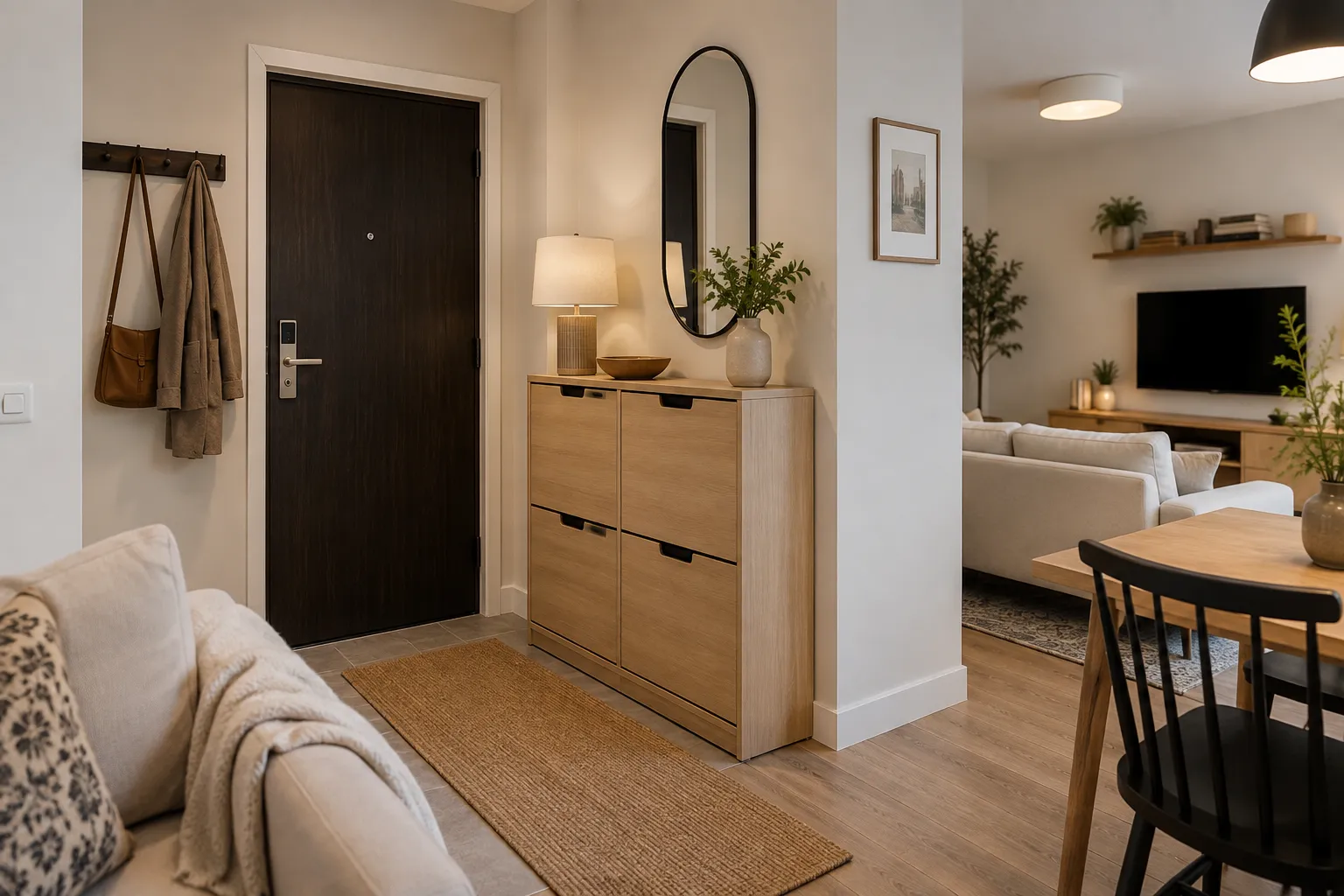
Di rumah dengan konsep ruang terbuka, lemari sepatu dapat menandai pintu masuk tanpa perlu menambahkan dinding. Karpet panjang atau beberapa gantungan sederhana di dekatnya dapat membuat area pintu depan terasa lebih lengkap tanpa menutupnya sepenuhnya.
Sedikit ruang antara lemari dan sofa atau meja samping membantu memisahkan kedua area tersebut secara alami. Ini sangat berguna terutama jika pintu masuk langsung terhubung ke ruang tamu. Untuk apartemen studio, lemari penyimpanan sepatu di area pintu masuk juga tetap terlihat dari berbagai bagian ruangan. Finishing yang sederhana dan bentuk yang rapi membuatnya tampak serasi dengan furnitur ruang tamu dan ruang makan.
Lemari Sepatu Mana yang Paling Sesuai untuk Ruangan Anda?
Tidak semua lemari sepatu di area pintu masuk cocok untuk tata letak yang sama. Ide lemari sepatu terbaik bergantung pada ruang dinding yang tersedia, bentuk area pintu masuk, dan tampilan yang ingin Anda ciptakan. Perbandingan singkat ini dapat membantu Anda menemukan pilihan yang sesuai dengan ruang Anda dan cara Anda menggunakan area pintu masuk.
| Ide Lemari Sepatu | terbaik Untuk | Manfaat Utama |
|---|---|---|
| Lemari sepatu ramping | Lorong dan pintu masuk apartemen yang sempit | Menjaga jalan setapak tetap bersih. |
| Lemari sepatu tinggi | Dinding pendek dengan ruang lantai terbatas | Menggunakan penyimpanan vertikal |
| Lemari sepatu yang dipasang di dinding | Kondominium kompak dan lobi yang gelap | Menjaga agar lebih banyak area lantai tetap terlihat. |
| Lemari sepatu dengan pintu | Pintu masuk terlihat dari ruang tamu. | Menyembunyikan kekacauan visual |
| Lemari sepatu kayu | Interior yang hangat dan netral | Menambah kehangatan alami |
| Lemari sepatu rotan | Pintu masuk yang nyaman atau bergaya Skandinavia | Menambah tekstur lembut |
| Lemari sepatu modern | Apartemen kontemporer | Menjaga tampilan tetap bersih dan sederhana. |
| Lemari sepatu pertengahan abad | Studio dan rumah berdesain terbuka | Lebih mirip furnitur ruang tamu |
| Lemari sepatu bercermin | Pintu masuk yang gelap atau sempit | Menggabungkan penyimpanan dengan refleksi |
| Lemari sepatu rendah | Lobi kecil dengan ruang dinding terbuka. | Berfungsi ganda sebagai konsol di area pintu masuk. |
| Lemari sepatu dua warna | Kebutuhan penyimpanan yang lebih besar | Mengurangi kesan bulky secara visual. |
| Lemari sepatu terintegrasi | Dinding masuk yang panjang dan lorong-lorong yang sempit | Mengintegrasikan penyimpanan ke dalam arsitektur. |
| Lemari sepatu ceruk | Ceruk yang canggung dan dinding yang pendek | Membuat ruang yang tidak terpakai menjadi praktis. |
| Lemari di area pintu masuk dengan desain terbuka. | Rumah tanpa ruang foyer terpisah | Membantu menentukan pintu masuk |
Setelah Anda mengetahui ide lemari mana yang sesuai dengan tata letak, akan jauh lebih mudah untuk menata bagian lain dari area masuk di sekitarnya. Untuk area masuk dengan tata letak yang tidak biasa atau kebutuhan penyimpanan khusus, PA Home Indonesia dapat membuat lemari sepatu khusus yang lebih sesuai dengan ruang tersebut.
Kesimpulan
Lemari sepatu di area pintu masuk yang tepat seharusnya memudahkan penyimpanan barang sehari-hari tanpa membuat area pintu masuk terasa sempit. Ide lemari sepatu terbaik juga harus selaras dengan tata letak, material, dan furnitur yang sudah ada di ruangan.
Di rumah kecil, itu mungkin berarti memilih profil yang lebih ramping, menggunakan lebih banyak tinggi dinding, atau memilih finishing yang menyatu secara alami dengan ruangan. Kabinet yang dipilih dengan baik dapat menjaga sepatu tetap rapi sekaligus membantu area pintu masuk terasa lebih tenang, lebih terbuka, dan lebih terhubung dengan bagian rumah lainnya.
FAQ (Pertanyaan Umum)
Lemari sepatu terbaik untuk lorong bergantung pada tata letak ruangan. Lemari sepatu ramping cocok untuk lorong yang sempit, sementara penyimpanan yang lebih tinggi lebih efektif untuk memanfaatkan dinding yang pendek.
Kabinet gantung juga bisa berfungsi dengan baik jika Anda ingin lebih banyak bagian lantai tetap terlihat. Untuk ceruk yang sulit dijangkau, desain yang terpasang atau terintegrasi mungkin dapat memanfaatkan ruang yang tersedia dengan lebih efisien.
Pintu sederhana, perangkat keras yang simpel, dan finishing yang mendekati warna dinding dapat membuat lemari sepatu terasa lebih ringan. Membiarkan sebagian lantai terlihat juga membantu, terutama dengan lemari gantung atau desain dengan kaki yang ditinggikan.
Terkadang satu lemari besar terlihat lebih tenang daripada beberapa lemari penyimpanan kecil. Menjaga area sekitarnya tetap rapi juga berpengaruh.
Warna putih, kayu terang, abu-abu kecoklatan, dan warna senada dengan dinding dapat membantu lemari sepatu menyatu dengan lorong kecil. Warna yang lebih gelap juga dapat berfungsi dengan baik jika dinding dan lantai di sekitarnya berwarna terang.
Perhatikan pintu depan, lantai, perangkat keras, dan furnitur di sekitarnya sebelum memilih lapisan akhir. Warna atau material yang berulang dapat membantu kabinet terasa lebih menyatu dengan ruangan.
- Kotak berguna untuk alas kaki musiman atau acara khusus.
- An lemari sepatu pintu masuk Biasanya lebih praktis untuk sepatu yang Anda pakai setiap hari.
Penyimpanan tertutup juga membuat area di dekat pintu depan terlihat lebih rapi. Biarkan sepatu yang basah atau lembap mengering sebelum disimpan, dan jaga kelembapan di dalam lemari agar tetap terkontrol.
Mulailah dengan sepatu yang paling sering Anda pakai dan simpan di tempat yang mudah dijangkau. Sepatu yang jarang dipakai bisa diletakkan di rak yang lebih tinggi atau lebih rendah.
Kombinasi alas kaki Anda juga penting. Sepatu kets, sepatu hak tinggi, sepatu datar, dan sepatu bot mungkin memerlukan pengaturan rak yang berbeda, sehingga penyimpanan yang dapat disesuaikan dapat membuat lemari kecil lebih mudah digunakan.